Booms, Bones, and Boondoggles in Valencia

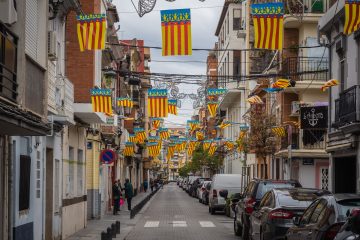
Valencia wasn’t originally on our list of cities to see, so it’s funny that it was our longest non-Madrid stay in Spain. However, we were looking to slow down a bit and also kill a little bit of time in Spain before we had to be back in Madrid to pick up our foreigner identity cards, and a beach town seemed like as good an option as any.

Read more
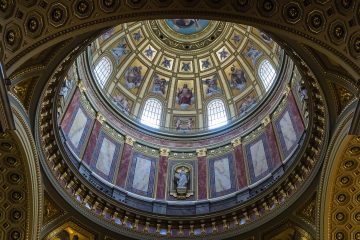
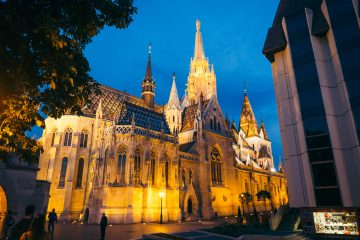
The North Facade of Matthias Church in Fisherman's Bastion

Photos of Matthias Church

Matthias Church is not the biggest church that I’ve seen (seven chapels?), and I was thinking that I could do a quick pop-in, snap a few pics, and be back in Pest quicker than you can say “Neo Gothic.” It did turn out to be the most ornately painted churches I’ve seen. Every square centimeter was covered in floral or geometric patterns, and I really had to restrain myself photographing literally every wall.

Read more

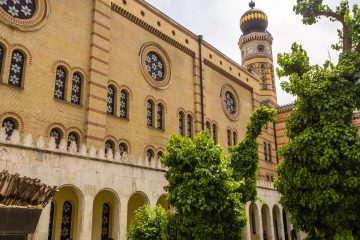
Photos of Dohány Street Synagogue

We haven’t visited that many synagogues on this trip, and so I don’t know why I should be surprised at how church-like the few that we’ve seen are. According to our tour guide at the Dohány Street Synagogue, in this case, it was no accident, as the Jewish community who built it were working very hard to show Budapest that they were “integrated” into Hungarian culture.

Read more

Cathedrals Old and New in Salamanca

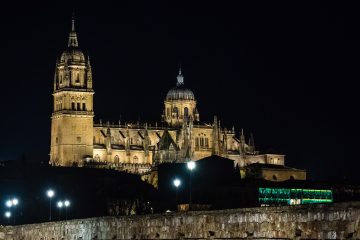
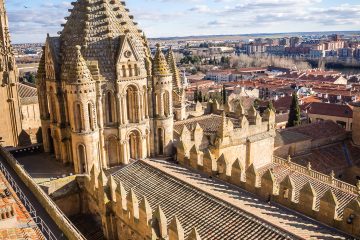
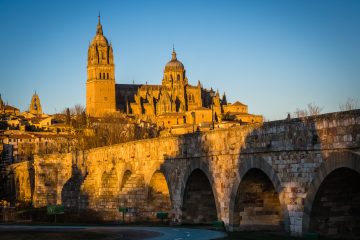
The star attraction in Salamanca, at least for us, was the cathedral, or more accurately, cathedrals. When the parish outgrew their 14th-century cathedral, they decided to leave it standing and just build the much larger “new” cathedral. The Cathedral of the Assumption of the Virgin (Catedral de la Asunción de la Virgen), more commonly known as the New Cathedral (Catedral Nueva), was built between 1513-1733 (consecrated in 1733). The cathedrals share a wall, and it was really neat to see the two styles literally next to each other.

Read more

Photos of La Catedral de Santa María de Salamanca (Catedral Vieja)

Construction on La Catedral de Santa María, now known as the “Old Cathedral” of Salamanca, was started in the 12th century and completed in the 13th. Owing to the availability of space for a replacement and the need for a place of worship, the Old Cathedral was saved from destruction when the New Cathedral (Catedral de la Asunción de la Virgen) was built starting in 1520 (and lasting until 1733). The New Cathedral was built astride the Old Cathedral, and so share a wall; the Old Cathedral lost its northern transept and width in its left aisle (Evangelical nave).

Read more