Triana
Triana is a neighborhood in Seville on the west bank of the Guadalquivir. Founded as a city by the Roman emperor Trajan, Triana has been, among other things, the center of a traditional pottery and tile industry since the Almohad period (and possibly as early as the 3rd century)
Triana and the Guadalquivir River Triana is a neighborhood in Seville on the west bank of the Guadalquivir. Founded as a city by the Roman emperor Trajan, Triana has been, among other things, the center of a traditional pottery and tile industry since the Almohad period (and possibly as early as the 3rd c.)
P2190425 OLYMPUS DIGITAL CAMERA
Puente de Isabel II over the Guadalquivir and Torre Sevilla 46710543955_286c6d2748_b
Chapel of El Carmen in Triana Triana is a neighborhood in Seville on the west bank of the Guadalquivir. Founded as a city by the Roman emperor Trajan, Triana has been, among other things, the center of a traditional pottery and tile industry since the Almohad period (and possibly as early as the 3rd c.)
Triana Triana is a neighborhood in Seville on the west bank of the Guadalquivir. Founded as a city by the Roman emperor Trajan, Triana has been, among other things, the center of a traditional pottery and tile industry since the Almohad period (and possibly as early as the 3rd c.)
P2190419 OLYMPUS DIGITAL CAMERA
Calle Pureza in Triana Triana is a neighborhood in Seville on the west bank of the Guadalquivir. Founded as a city by the Roman emperor Trajan, Triana has been, among other things, the center of a traditional pottery and tile industry since the Almohad period (and possibly as early as the 3rd c.).
Calle Pelay Correa in Triana Triana is a neighborhood in Seville on the west bank of the Guadalquivir. Founded as a city by the Roman emperor Trajan, Triana has been, among other things, the center of a traditional pottery and tile industry since the Almohad period (and possibly as early as the 3rd c.)
A Balcony in Triana Triana is a neighborhood in Seville on the west bank of the Guadalquivir. Founded as a city by the Roman emperor Trajan, Triana has been, among other things, the center of a traditional pottery and tile industry since the Almohad period (and possibly as early as the 3rd c.)
Calle Pelay Correa with the Bell Tower of Iglesia de Santa Ana Triana is a neighborhood in Seville on the west bank of the Guadalquivir. Founded as a city by the Roman emperor Trajan, Triana has been, among other things, the center of a traditional pottery and tile industry since the Almohad period (and possibly as early as the 3rd c.)
South Facade the Church of Santa Ana The Church of St. Anne (Iglesia de Santa Ana) in Seville’s Triana neighborhood is a Gothic-Mudéjar parish church. Construction began in 1266 on the order of King Alfonso X, and it was finished in the 14th c. After being damaged by the 1755 Lisbon earthquake, it was restored with baroque design, which survives as the facade. In 1972, the interior was restored to its Gothic origins.
The Bell Tower of the Church of Santa Ana The tower the Church of St. Anne (Iglesia de Santa Ana) dates to the first half of the 14th c. The top two levels were added in 1623 and 1630.
Patrons from Bar Bistec Gather at the Foot of the Church of Santa Ana in Triana Triana is a neighborhood in Seville on the west bank of the Guadalquivir. Founded as a city by the Roman emperor Trajan, Triana has been, among other things, the center of a traditional pottery and tile industry since the Almohad period (and possibly as early as the 3rd c.).
Image of the Divine Shepherdess on the West Facade of the Church of Santa Ana The Church of St. Anne (Iglesia de Santa Ana) in Seville’s Triana neighborhood is a Gothic-Mudéjar parish church. Construction began in 1266 on the order of King Alfonso X, and it was finished in the 14th c. After being damaged by the 1755 Lisbon earthquake, it was restored with baroque design, which survives as the facade. In 1972, the interior was restored to its Gothic origins.
P2190393 OLYMPUS DIGITAL CAMERA
Plaza de España
Plaza de España was built from 1914 to 1928 for the 1929 Ibero-American Exposition. Designed by Spanish architect Aníbal González, the ensemble is a mix of Neo-Mudéjar and Renaissance Revival. Today, the buildings house various government buildings and Seville’s archaeology collections.
Plaza de Espana Plaza de España is collection of buildings and open space in Seville’s Maria Luisa Park (Parque de María Luisa). They were built from 1914 to 1928 for the 1929 Ibero-American Exposition. Designed by Spanish architect Aníbal González, the ensemble is a mix of Neo-Mudéjar and Renaissance Revival. Today, the buildings house various government buildings and Seville’s archaeology collections.
Logia of the Plaza de Espana Plaza de España is collection of buildings and open space in Seville’s Maria Luisa Park (Parque de María Luisa). They were built from 1914 to 1928 for the 1929 Ibero-American Exposition. Designed by Spanish architect Aníbal González, the ensemble is a mix of Neo-Mudéjar and Renaissance Revival. Today, the buildings house various government buildings and Seville’s archaeology collections.
Central Building of the Plaza de Espana Plaza de España is collection of buildings and open space in Seville’s Maria Luisa Park (Parque de María Luisa). They were built from 1914 to 1928 for the 1929 Ibero-American Exposition. Designed by Spanish architect Aníbal González, the ensemble is a mix of Neo-Mudéjar and Renaissance Revival. Today, the buildings house various government buildings and Seville’s archaeology collections.
Ceramic Balustrade and North Tower of the Plaza de Espana Plaza de España is collection of buildings and open space in Seville’s Maria Luisa Park (Parque de María Luisa). They were built from 1914 to 1928 for the 1929 Ibero-American Exposition. Designed by Spanish architect Aníbal González, the ensemble is a mix of Neo-Mudéjar and Renaissance Revival. Today, the buildings house various government buildings and Seville’s archaeology collections.
Ceramic Detail of the Plaza de Espana Plaza de España is collection of buildings and open space in Seville’s Maria Luisa Park (Parque de María Luisa). They were built from 1914 to 1928 for the 1929 Ibero-American Exposition. Designed by Spanish architect Aníbal González, the ensemble is a mix of Neo-Mudéjar and Renaissance Revival. Today, the buildings house various government buildings and Seville’s archaeology collections.
South Tower of the Plaza de Espana Plaza de España is collection of buildings and open space in Seville’s Maria Luisa Park (Parque de María Luisa). They were built from 1914 to 1928 for the 1929 Ibero-American Exposition. Designed by Spanish architect Aníbal González, the ensemble is a mix of Neo-Mudéjar and Renaissance Revival. Today, the buildings house various government buildings and Seville’s archaeology collections.
Around Seville
A View of Metropol Parasol from Calle Regina Metropol Parasol is a 85 ft. (26 m.) tall structure in Seville’s Plaza Encarnacion. Completed in 2011, after years of cost and schedule overuns, the structure is said to be the largest wooden structure in the world.
A Balcony in Triana Triana is a neighborhood in Seville on the west bank of the Guadalquivir. Founded as a city by the Roman emperor Trajan, Triana has been, among other things, the center of a traditional pottery and tile industry since the Almohad period (and possibly as early as the 3rd c.)
Torre del Oro (Gold Tower) The Gold Tower (Torre del Oro) was part of Seville’s defenses on the Guadalquivir, built in the Almohad period, with additions in the 14th and 18th centuries. The original structure was the lower, dodecagonal base, which was built in 1220. The shorter dodecagonal middle part was built later by Pedro I, with the uppermost level built in 1760.
P2190309 OLYMPUS DIGITAL CAMERA
Calle Dormitorio 33754034418_da14d14574_b
City Wall of Sevile The largest remains of Seville’s city walls are a 500 meter stretch between the Puerta de la Macarena (Macarena gate) and the Puerta de Córdoba (Córdoba gate). The origins of the walls date back to the Roman period (~65 BCE), but what is visible today is largely from the Almohad period (12th c.).
Image of the Virigin del Carmen on the South Facade of the Church of Santa Ana The Church of St. Anne (Iglesia de Santa Ana) in Seville’s Triana neighborhood is a Gothic-Mudéjar parish church. Construction began in 1266 on the order of King Alfonso X, and it was finished in the 14th c. After being damaged by the 1755 Lisbon earthquake, it was restored with baroque design, which survives as the facade. In 1972, the interior was restored to its Gothic origins.
Metropol Parasol Metropol Parasol is a 85 ft. (26 m.) tall structure in Seville’s Plaza Encarnacion. Completed in 2011, after years of cost and schedule overuns, the structure is said to be the largest wooden structure in the world.
Puente de Isabel II over the Guadalquivir and Torre Sevilla 46710543955_286c6d2748_b
Neo Mudejar Bank Building in Seville 46937116764_fd409a5a65_b
Calle Peñuelas, Sevilla 46937118334_b19aa35e03_b
Calle Bustos Tavera, Sevilla 46937120054_313c979c1b_b
The Corner of Calle Doña María Coronel and Calle Bustos Tavera 46937121934_e349fa23c2_b
Plaza los Terceros, Sevilla 47608351912_659a44fe42_b
Bar Dueñas 47608354582_fec2bc8f15_b
Calle Argote de Molina 47608357492_25782ef852_b
El Rinconcillo 47608360442_c33d12083a_b
Facade of Iglesia de San Luis De los Franceses 47628988411_e93f1d4d36_b
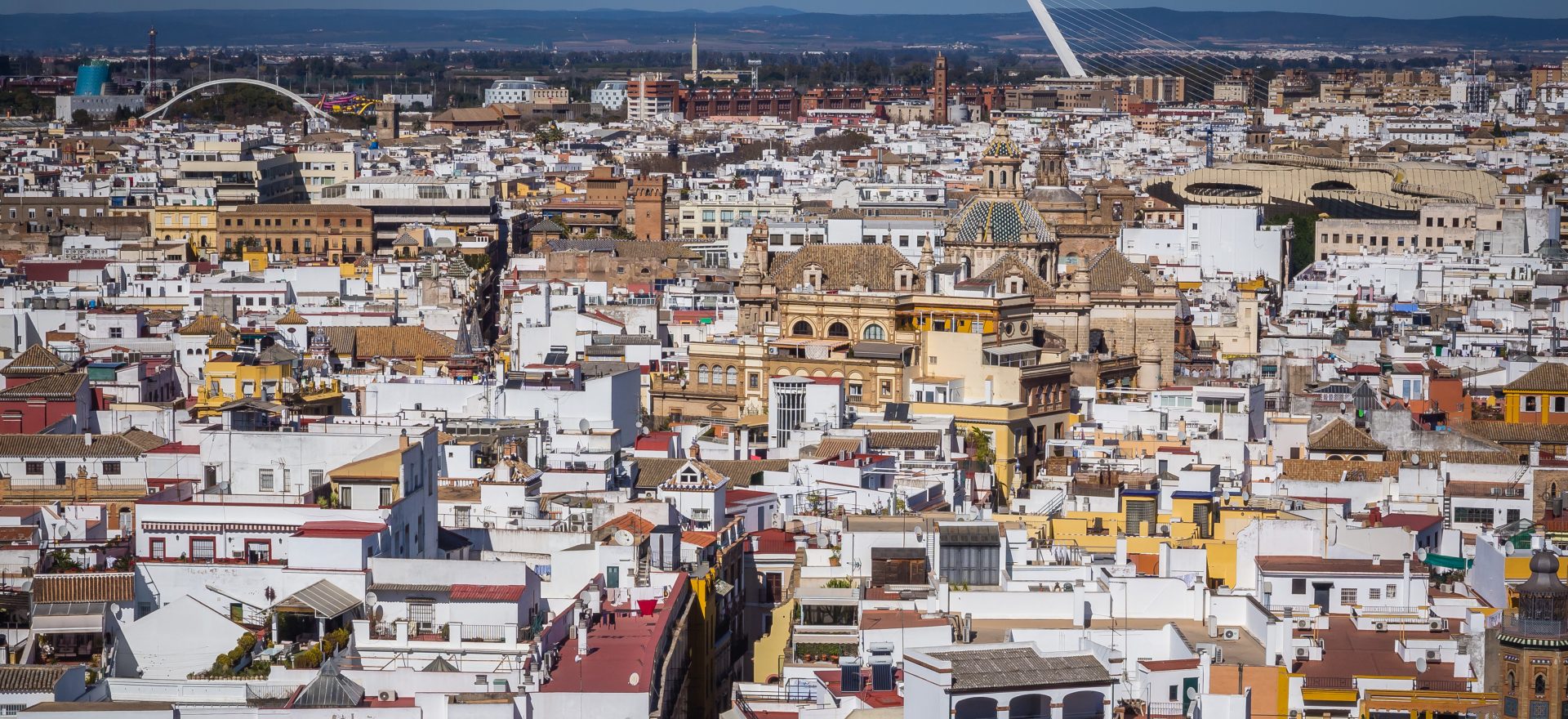
Seville Seen from the Giralda 47632912681_f2099aa031_b