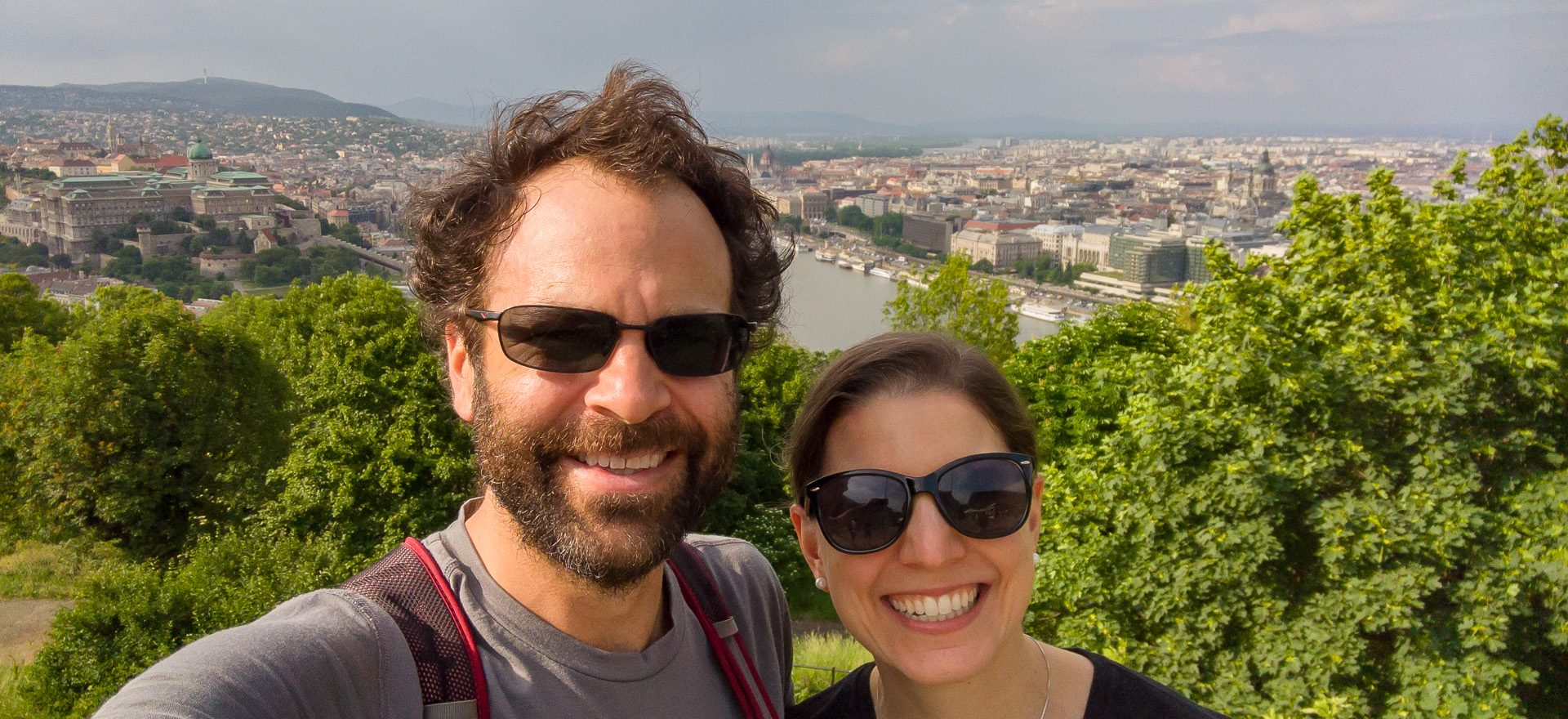
My relationship with Budapest got off to a rocky start. Our flight didn’t get in until 9 PM, and I was tired and sad from saying good-bye to my parents in Barcelona that morning. I had carefully mapped out how to get from the airport to our Airbnb apartment, but our flight got in later than expected. This meant that we had to navigate the taxi process in Hungarian language (Magyar) and currency (Forint), which shouldn’t have been hard except that we had to go to one desk and get a little slip of paper, which we then took to another window outside the airport to get another little slip of paper, which we then handed to a driver who did not say anything to us. The whole thing felt a little uncomfortable and I’m pretty sure we didn’t have to go with that particular cab company, but we were so confused and tired that we chose to believe that “official taxi” actually meant what it said.
See all our photos of Budapest
The next morning, we had to go to the store to get breakfast. We should have just gone to a café so that we weren’t having to shop while hungry, but we genuinely like eating at home so we thought we’d go get something from the store. We had no idea how much we’d been relying on our knowledge of Spanish (and its Latin roots) to help us in Spain, France, and Italy. Hungary was a whole ‘nother ballgame, especially with the new currency in the mix, too. It would have been challenging even if we’d had breakfast and coffee already. On empty stomachs sans caffeine, it was… not pretty. I was also appalled by the produce options, both fresh and frozen. I had been so spoiled by the red peppers and spinach in Spain and the carrots in France. In Budapest, they have tiny, sad little bags of wilty spinach and carrots with all kinds of spots on them. The first morning here, I thought that we might have made a mistake in coming to Budapest rather than chilling out somewhere in Spain.
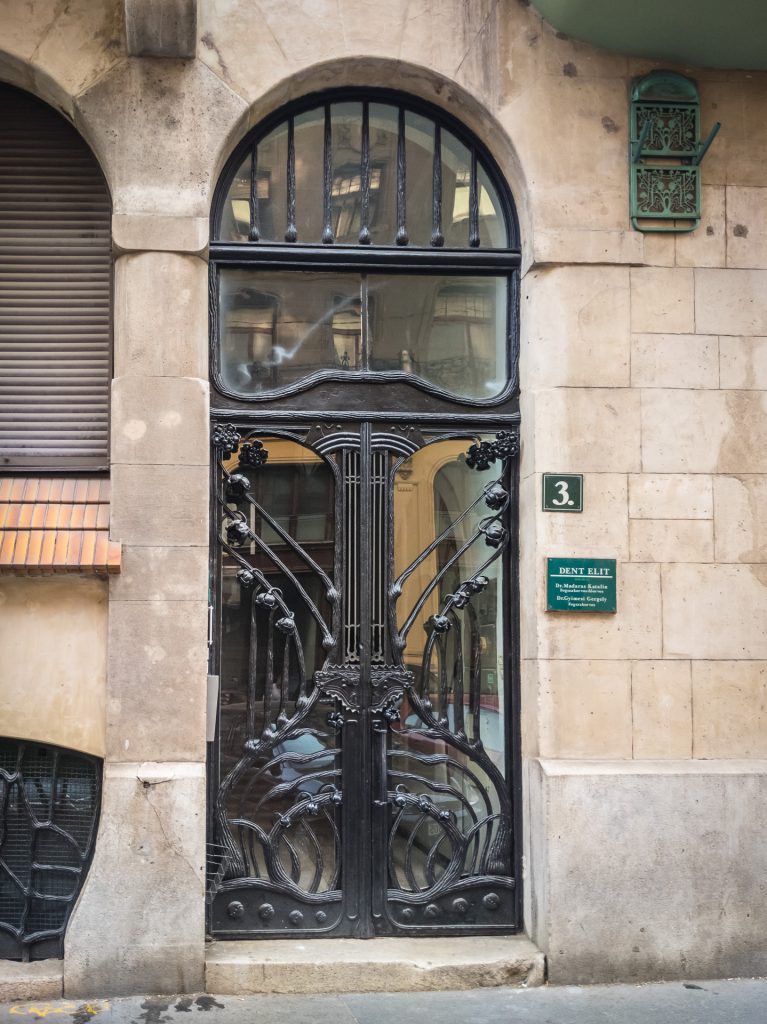
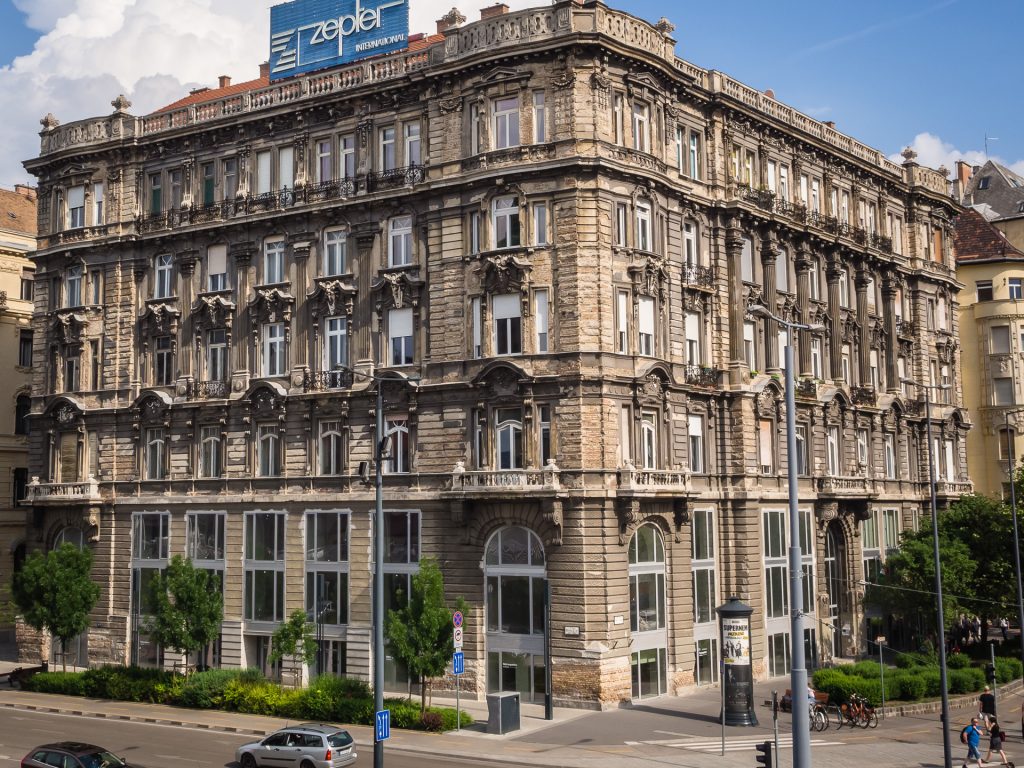
After the first day or so, though, things got much better. It turns out that Budapest has some really lovely architecture. There are stone buildings with all kinds of neat decorations, and there are also striking Art Nouveau flourishes here and there. Some of the stone buildings are really dirty and sometimes broken-looking, and that makes me appreciate the pretty ones even more. I hadn’t really thought about what goes into maintaining the lovely stone you see in Paris and other European cities, but it makes sense that they wouldn’t automatically stay beautiful for decades if not cared for. In Budapest, the grimy buildings next to glowing ones are a great metaphor for the rocky history of this city and this country. I think I like the contrast just as much as I enjoyed the continuous beauty in Paris, if only because it gives me pause and makes me think.
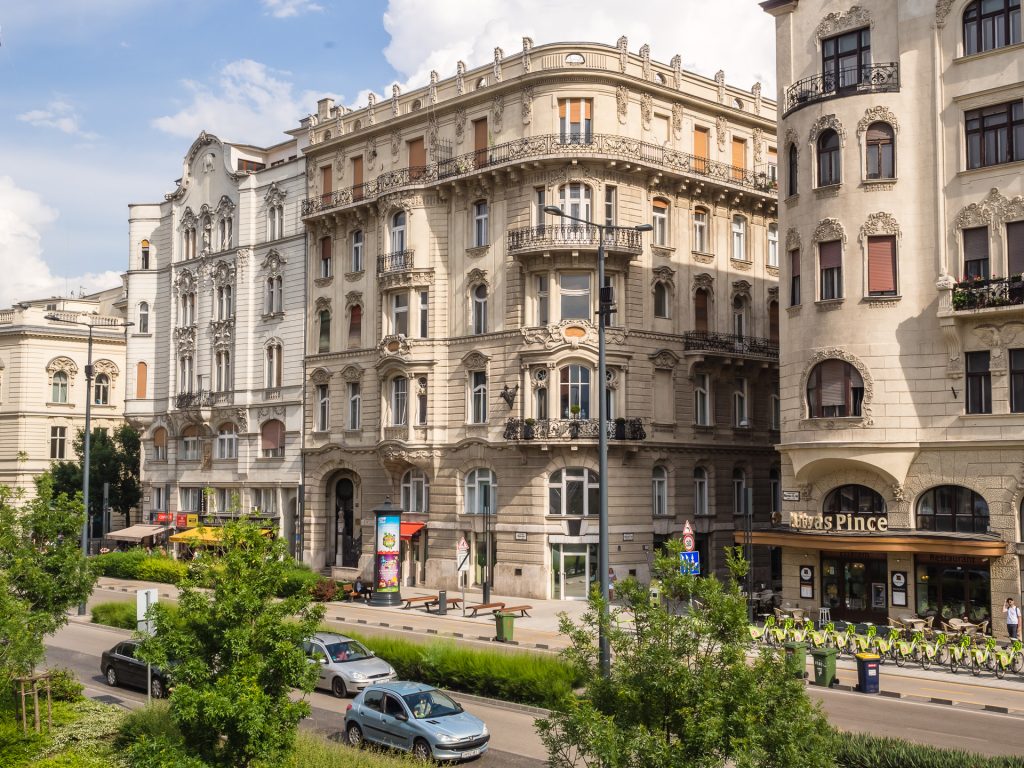
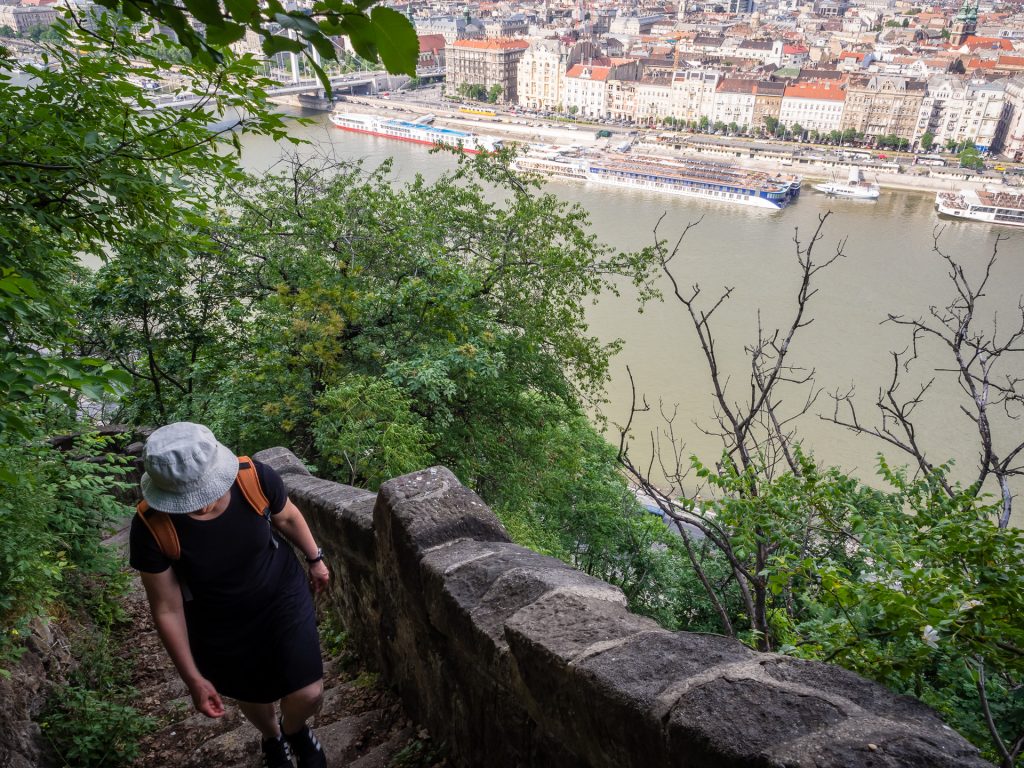
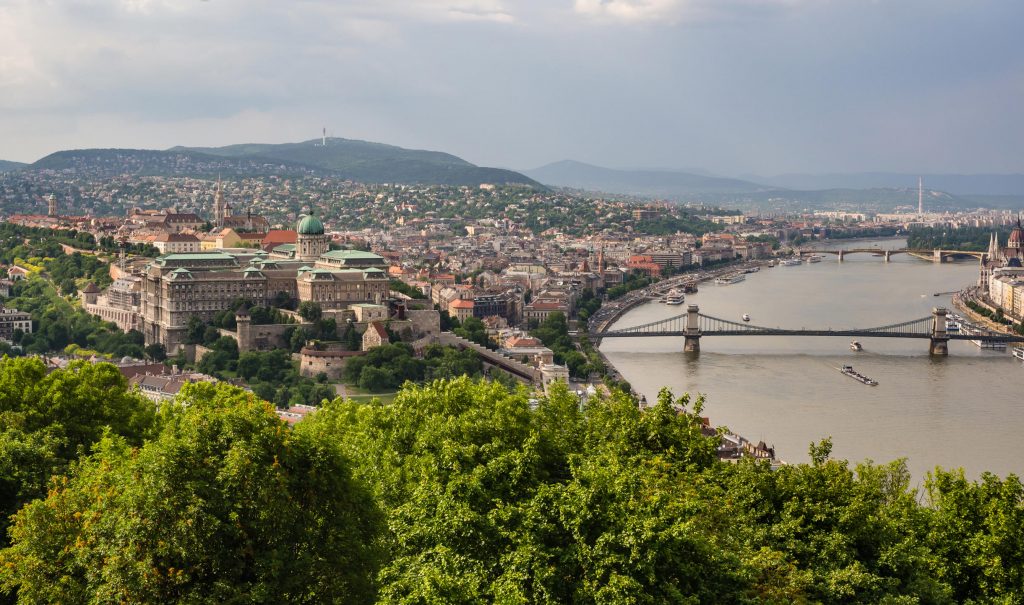
The other thing that I didn’t expect about Budapest is how green it is. It has some really nice streets with tons of trees that create a green canopy for pedestrians. Even though it has been in the 80s for much of our time here, it doesn’t feel like it very often because the combination of the cool stone buildings and the shade provided by the trees makes it feel much cooler. There are also some great hillside paths up to the castle area where a lot of museums are, and they have fantastic lookout points where you can see the Danube and the buildings across the river, including the iconic Parliament building and St. Stephen’s cathedral.
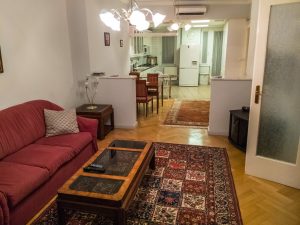
We stayed in an Airbnb near Hild Square, and this is a terrific location for being able to walk everywhere. We walked to some of the touristy areas but we also walked just to get steps in, and it’s a great area. There are many streets that are blocked off for pedestrians, which makes it really easy. Our apartment was really spacious and comfortable, which was a nice change from some of the closet-like places we’ve stayed at so far.
Budapest’s tourist attractions are oddly expensive. I don’t know why that is, because it certainly doesn’t correspond to the quality of the attractions. However, they’re still cheap compared to a lot of American museums and sites, so maybe I just had unrealistic expectations based on this being Eastern Europe. We had already planned on this being a chance to relax and not do a lot, and the admission prices helped us to really hone in on just a few things we wanted to see.
St. Stephen’s Basilica
See our photos of St. Stephen’s Basilica
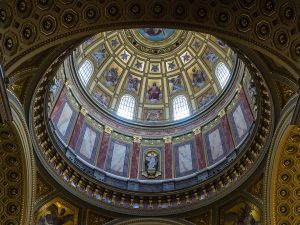
This church was completed in 1905, which is really recent compared to a lot of European churches but still over a century old. It’s in neoclassical style, with columns and gilding, and it’s quite pretty. It doesn’t have the elaborate side-altars of older cathedrals, so it doesn’t take that long to see. There is not a required fee to enter, but there is a donation box that is watched over by a person who is clearly keeping track of whether each person puts in their “voluntary donation.” The recommended amount is 200 HUF per person, or $0.75, so it’s not outrageous – just annoying that it’s being observed carefully by someone with apparently nothing better to do.
Hungarian National Gallery
This is a gallery of Hungarian art. We went because the Museum of Fine Arts, usually our first choice in any city we visit, was closed for renovations. This museum is interesting because it’s full of artists you’ve never heard of…but there is a reason you haven’t heard of most of them. The most striking part of the collection is probably the Gothic altarpieces, not because they are the best examples but just because of the sheer number of them in this little museum. On the plus side, the museum was not at all crowded when we were there.
Great Synagogue
See our photos of the Dohány Street Synagogue
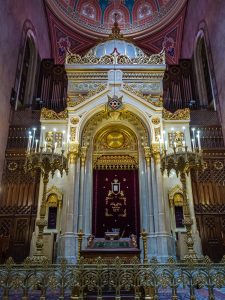
The Dohány Street Synagogue of Budapest, also referred to as the Great Synagogue, is the largest synagogue in Europe and the second-largest in the world. It’s also surprisingly similar to many of the Christian churches we’ve visited on the trip. This is not an accident, as the synagogue was built during a time of assimilation and increased rights for Jews. It was built by the Neolog Jewish community of Budapest, and they wanted to show that Judaism was not so different from the other faiths. The building has a basilica layout, with a rectangular shape. It has an organ, which can only be played by a Gentile due to Jewish religious strictures. The architecture of the building is fascinating, as it combines a little bit of Moorish with features from Catholic churches (which had Moorish features at times as well), but is still set up for Jewish services.
The tour of the synagogue includes a visit to a small courtyard with several raised areas with tombstones leaning against them. Towards the end of World War II, the area around the synagogue was turned into a ghetto, with movement into or out of the area strictly controlled by the Hungarian fascists. When the ghetto was liberated by the Russian Army seven weeks after its establishment, there were so many bodies piled in the streets that they had to bury them in 24 (!!!) mass graves in the courtyard next to the synagogue. The tombstones are for the people they were able to identify, but many of the victims were never identified and are still unknown. The photos from just after the liberation, as they were trying to deal with the situation, are just horrifying.
There is also a museum connected to the synagogue. It is small and not that impressive at first, until you realize how amazing it is that they were able to save so many artifacts through both Nazi and Communist rule in Hungary. The items that were used by families in their homes are a record of not just people who were wiped out but in some cases entire towns. It was a sobering visit.
We really enjoyed our twelve days in Budapest. It was a nice place to relax a bit, and the architecture and nature are great for afternoon walks.