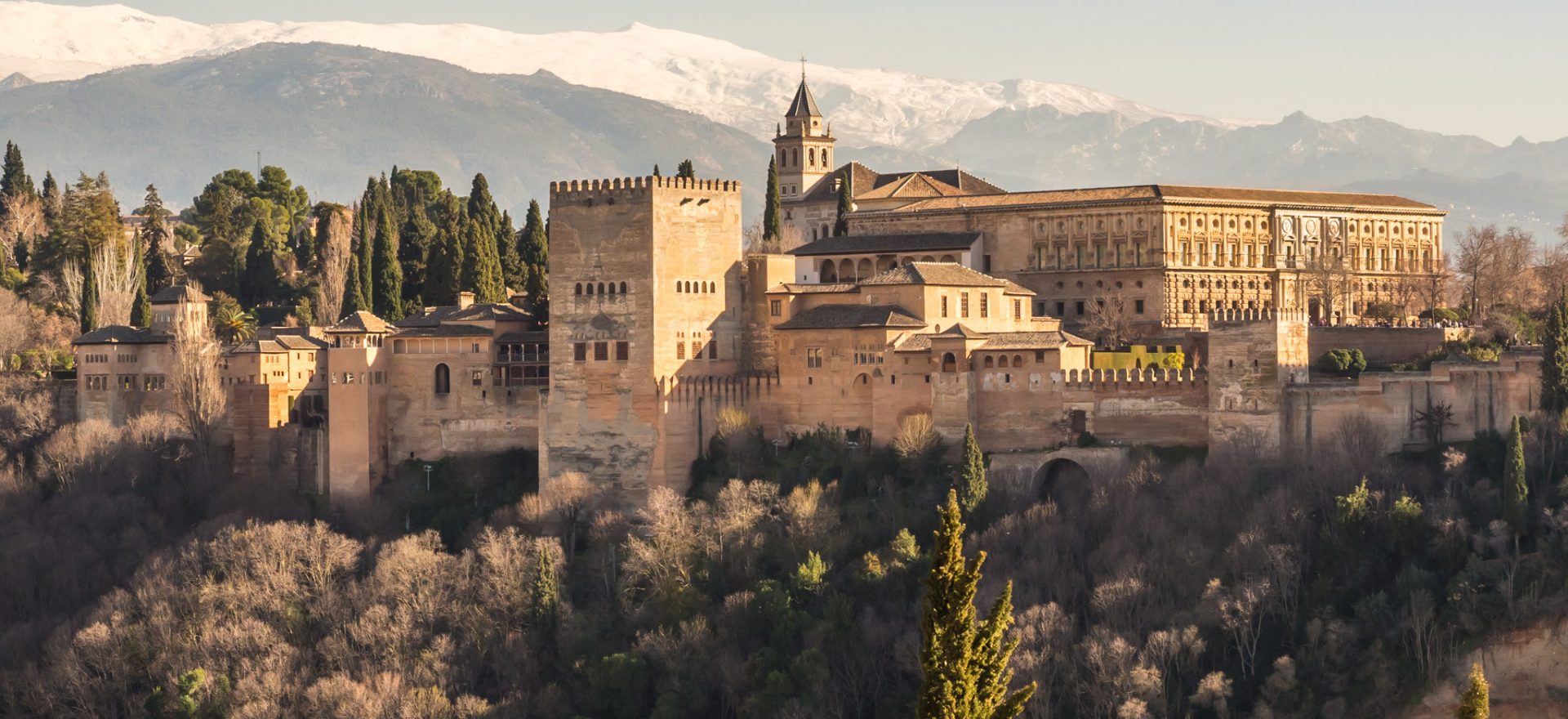
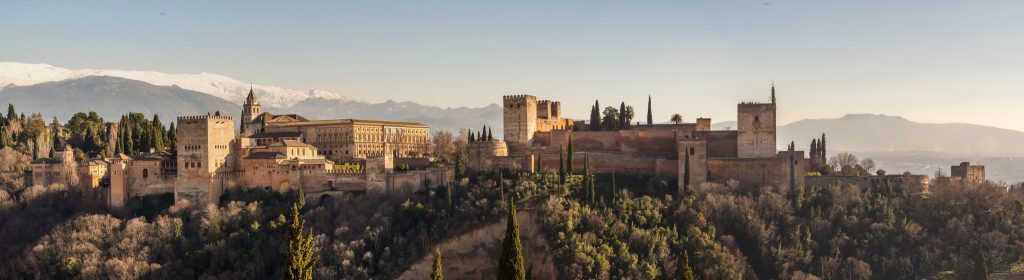
What we see today of the Alhambra dates from the early 14th century when two successive Nasrid kings made improvements to the fortress-palace complex on top of the hill al-Sabika on the east side of Granada. It’s origins, however, go all the way back to the Roman era and the subsequent construction in the 9th century of a small fortress on top of the remains of Roman fortifications. In the 13th century, the fortress was improved to become the royal palace of the first king of the Nasrid dynasty. After the Christian conquest of Spain, it became the home of the court of Isabella and Ferdinand in 1492.
Nasrid Palaces
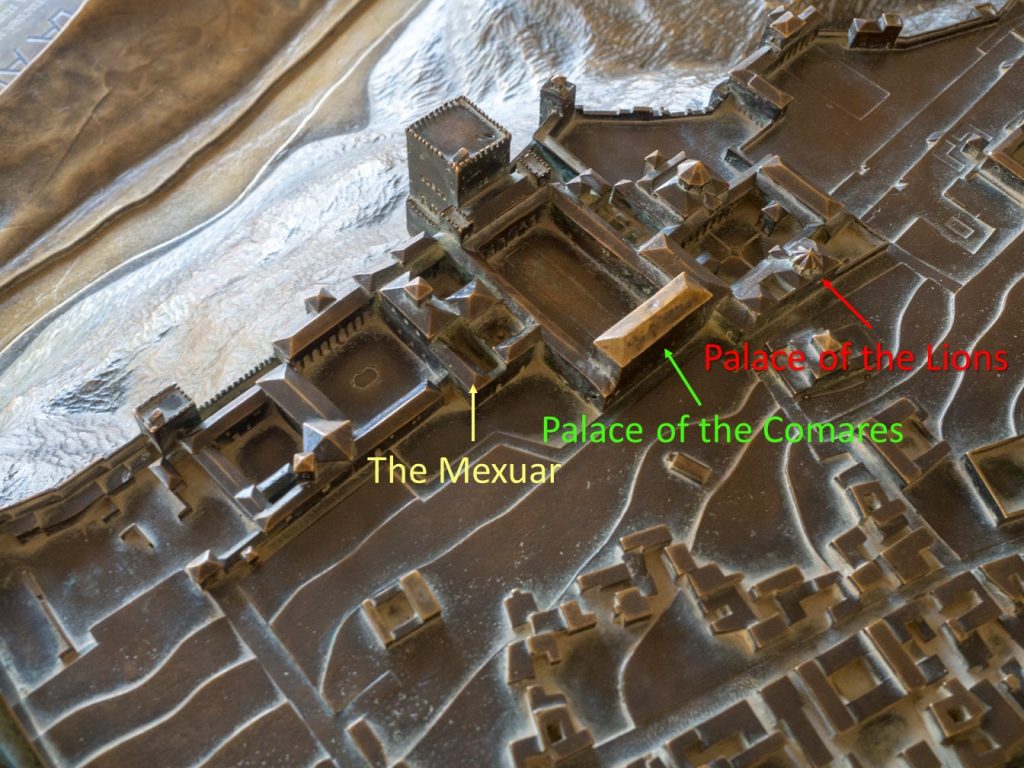
The Nasrid Kingdom, also known as the Emirate of Granada was founded in the 13th century, with the seat of power at the Alhambra. The Nasrid Palaces are a series of palaces and structures built in succession and next to each other – and in some cases over each other – build during the reign of the Nasrid dynasty. There are three main areas of the Nasrid Palaces: the Mexuar, the Palace of the Comares (Palacio de Comares), and the Palace of the Lions (Palacio de los Leones)
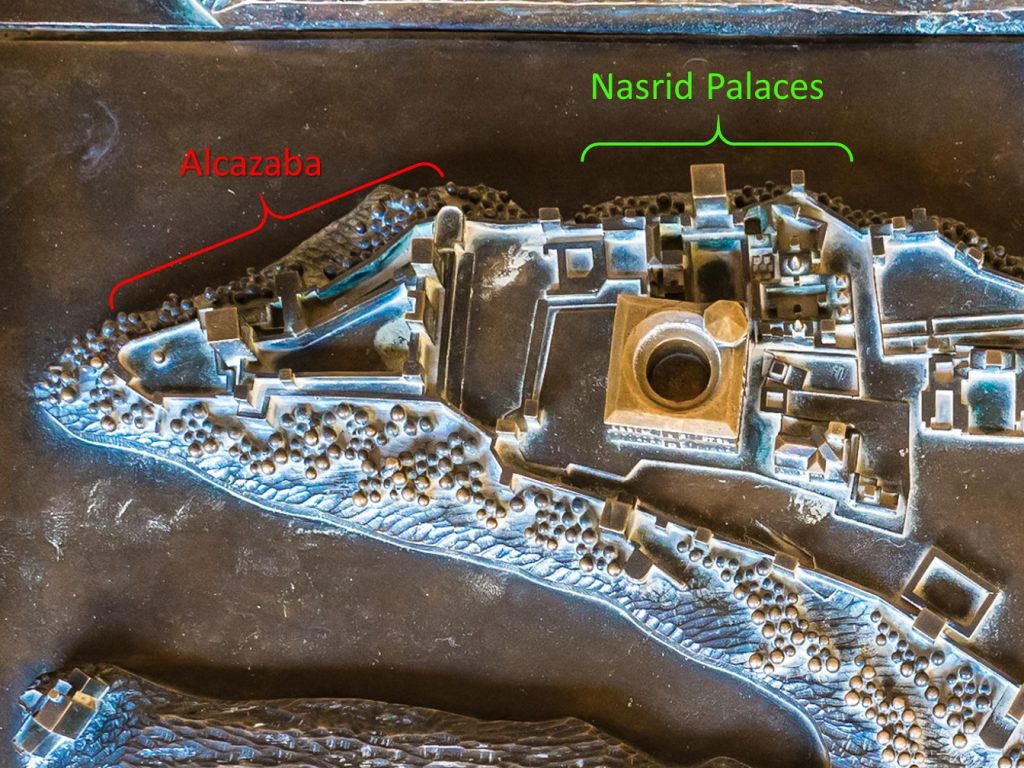
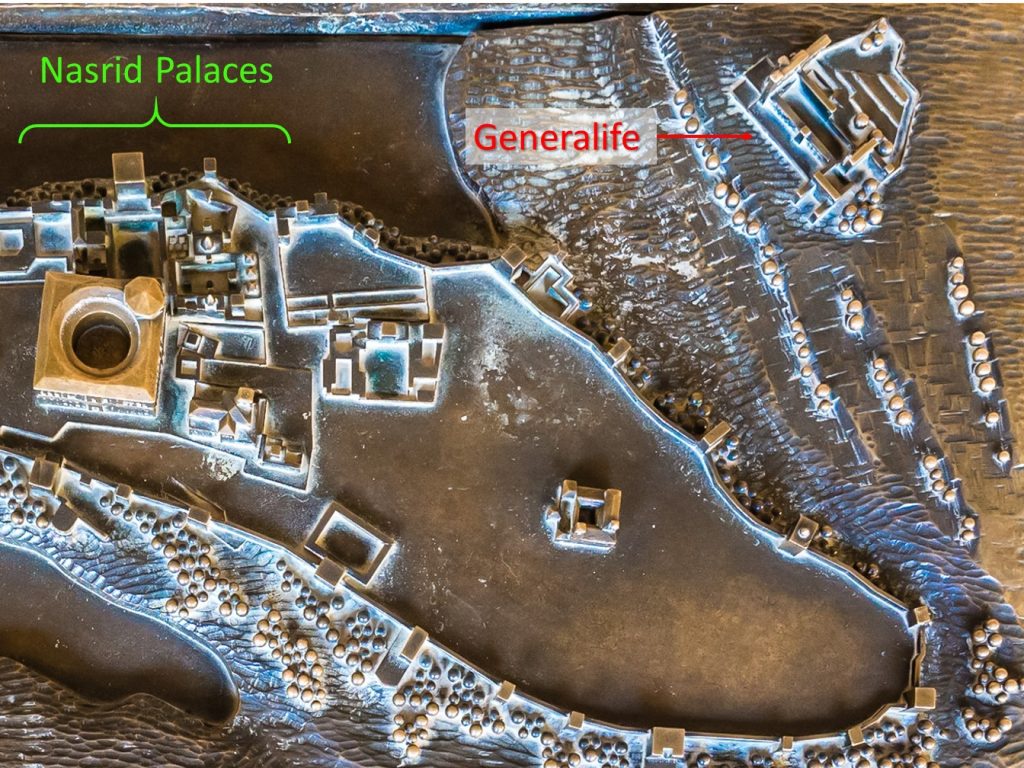
The relative locations of the three palaces that compose the Nasrid Palaces at the Alhambra The Mexuar
The Mexuar was a public reception hall for the Sultan built in the early 14th century by Isma’il. It has since undergone so many alterations and restorations that it is difficult to determine the original layout of the space. The coffered ceiling is from the Christian period. Attached to the Muxar is an oratory.
Plasterwork in the the Gilded Room (Cuarto Dorado) in the Nasrid Palaces of the Alhambra
Plasterwork in the Mexuar in the Nasrid Palaces of the Alhambra
Plasterwork in the Oratory behind the Mexuar in the Nasrid Palaces of the Alhambra
Tiles and Plasterwork of the Skirting Board in the Mexuar in the Nasrid Palaces of the Alhambra
Carved and Painted Wood Ceiling in the Mexuar in the Nasrid Palaces of the Alhambra
Tiles with the Double Eagle of the Habsburgs in the Mexuar in the Nasrid Palaces of the Alhambra
Tiles in the Mexuar in the Nasrid Palaces of the Alhambra
View of the Albaicín from the Oratory behind the Mexuar in the Nasrid Palaces of the Alhambra
Carved Wood Ceiling in the Mexuar in the Nasrid Palaces of the Alhambra
Tiles and Plasterwork in the Mexuar in the Nasrid Palaces of the Alhambra
The Mexuar in the Nasrid Palaces of the Alhambra
Painted Carved Wood of the Gilded Room (Cuarto Dorado) in the Nasrid Palaces of the Alhambra
Capital Decorated with Mocárabes in the Mexuar in the Nasrid Palaces of the Alhambra
Palace of the Comares (Palacio de Comares)
The Palace of the Comares (Palacio de Comares) was the residence of the king. Its center is the Court of the Myrtles (Patio de los Arrayanes) and includes the throne room and rooms for the king’s family.
Niche with Mocarabe Dome in the North Portico of the Court of the Myrtles (Patio de los Arrayanes)
Facade of the Comares (Fachada de Comares) in the Nasrid Palaces of the Alhambra
Hall of the Ambassadors (Salón de Embajadores) in the Nasrid Palaces
Court of the Myrtles (Patio de los Arrayanes) in the Nasrid Palaces of the Alhambra
Arch Connecting the Hall of the Boat (Sala de la Barca) to the Court of the Myrtles (Patio de los Arrayanes) in the Nasrid Palaces
Plasterwork in the Hall of the Ambassadors (Salón de Embajadores) in the Nasrid Palaces
Court of the Myrtles (Patio de los Arrayanes) in the Nasrid Palaces of the Alhambra
Facade of the Comares (Fachada de Comares) in the Nasrid Palaces of the Alhambra
Hall of the Boat (Sala de la Barca) in the Nasrid Palaces
Palace of the Lions (Palacio de los Leones)
The Palace of the Lions (Palacio de los Leones) was built by Muhammad V in the late 14th century as the private chambers of the royal family. Centered around the the Patio of the Lions (Patio de los Leones), the palace is situated east of the Palace of the Comares (Palacio de Comares).
Tile in the Hall of the Two Sisters (Sala de Dos Hermanas) in the Nasrid Palaces
Patio of the Lions (Patio de los Leones) in the Nasrid Palaces of the Alhambra
Patio of the Lions (Patio de los Leones) in the Nasrid Palaces of the Alhambra
Vault of the Hall of the Mocarabes (Sala de los Mocárabes) in the Nasrid Palaces of the Alhambra
Carved Wood Door in the Nasrid Palaces of the Alhambra
Plasterwork in the Hall of the Mocarabes (Sala de los Mocárabes)
Plasterwork in the Hall of the Abencerrajes (Sala de los Abencerrajes) in the Nasrid Palaces
Coat of Arms of the Emerite of Granada in Plasterwork in the Hall of the Mocarabes (Sala de los Mocárabes)
Patio of the Lions (Patio de los Leones) in the Nasrid Palaces of the Alhambra
Cupola of the Hall of the Abencerrajes (Sala de los Abencerrajes) in the Nasrid Palaces
Arches in the Hall of the Abencerrajes (Sala de los Abencerrajes) in the Nasrid Palaces
Detail of the Cupola of the Hall of the Abencerrajes (Sala de los Abencerrajes) in the Nasrid Palaces
Central Hall of the Bath of Comares (Baño de Comares) in the Nasrid Palaces
Daraxa's Mirador (Mirador de Daraxa) in the Nasrid Palaces
Court of Lindaraja (Patio de Lindaraja) in the Nasrid Palaces of Alhambra
Stone Mosaic in the Patio de Lindaraja in the Nasrid Palaces
The Albaicín District in Granada Seen from the Nasrid Palaces
Cupola of the Hall of the Two Sisters (Sala de Dos Hermanas) in the Nasrid Palaces
El Partal
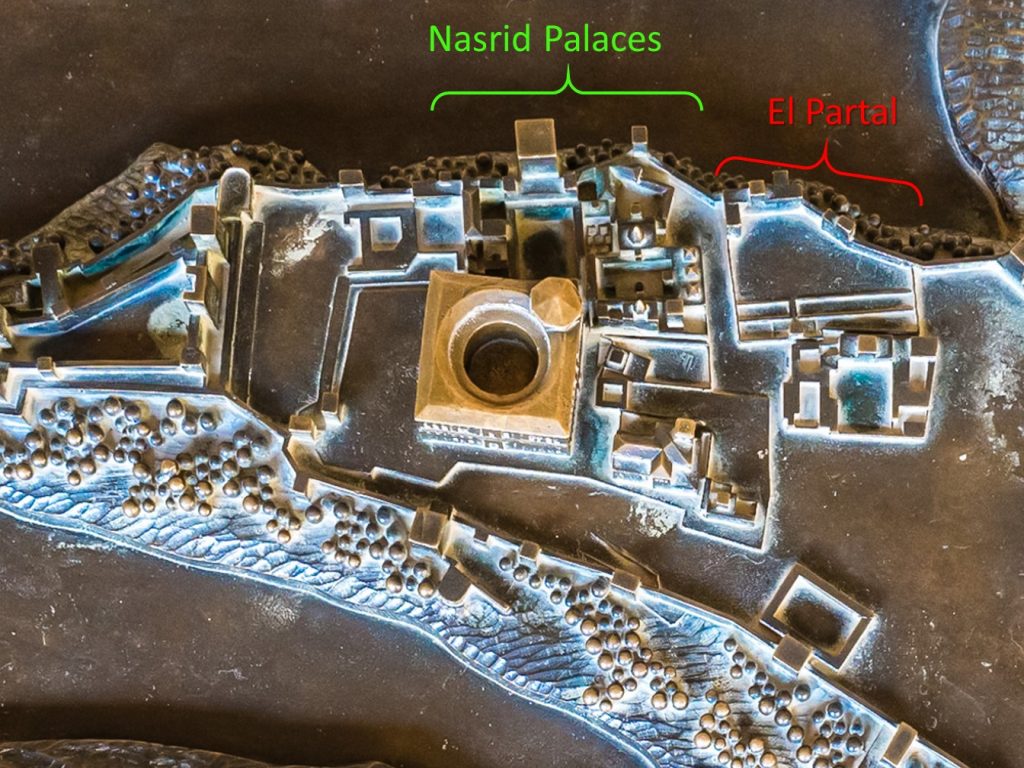
East of the Palace of the Lions (Palacio de los Leones), is El Partal, an area of structures around the Palace of the Portico (Palacio del Pórtico) that includes a pool, the Tower of the Ladies (Torre de las Damas) and the Tower of the Mihrab (Torre del Mihrab). It may have been built by Sultan Muhammad III in the early 14th century, which would make it the oldest palace in the Alhambra.
This scale model of the Alhambra shows where palaces for rulers were built over time
Stairs Connecting El Partal to Gardens in the Nasird Palaces
Tower of the Mihrab (Torre del Mihrab) in the Nasrid Palaces
Palace of the Portico (Palacio del Pórtico) in the Nasrid Palaces of Alhambra
Goldfish in the Pond of El Partal in the Nasrid Palaces
The Court of the Fig Tree in the Nasrid Palaces of Alhambra
Carved Woode Vault of El Partal in the Nasrid Palaces
El Partal in the Nasrid Palaces
Water Channel in the Nasrid Palaces in the Court of the Fig Tree
Alcazaba
Greatly improved in the 13th century by the founder of the Nasrid dynasty, Muhammad I, the Alcazaba is the military fortress of the Alhambra. It is one of the oldest parts of the complex, dating as far back as the 9th century, with evidence of a Roman fortification on the site.
Cathedral of Granada from Torre de la Vela of the Alcazaba at the Alhambra
The Walls of the Alcazaba of the Alhambra
The Alcazaba of the Alhambra from Mirador San Nicolas
Torre de la Vela (Left) Rises above Torre de las Armas (Right) at the Alcazba in Alhambra
Stairs Descending from Torre Homenaje in the Alcazaba at Alhambra
The Walls of the Alcazaba and the Tower of Arms (Torre de las Armas) (below) of the Alhambra from Torre de la Vela
Plaza de las Armas in the Alcazaba of the Alhambra
Plaza de las Armas in the Alcazaba of the Alhambra
Mosaic of Polifemo y Galatea (Polyphemus and Galatea)
Roman Column (Columna Romana)
Puente Romano Seen from Alcázar de los Reyes Cristianos
Entry to Alcázar de los Reyes Cristianos in the Tower of Homage (La torre del Homenaje)
Patio Morisco
Torre de los Leones
Water Source of the Upper Gardens (Jardines del Alcázar)
Jardines del Alcázar
Torre del Homenaje
Upper Gardens (Jardines del Alcázar)
Upper Gardens (Jardines del Alcázar)
Paseo de los Reyes, Jardines del Alcázar
Generalife
The Generalife Palace was built in the early 14th century as a pleasure garden for the Nasrid kings. Close to but is outside of the Alhambra, the Generalife has been renovated and altered numerous times over the centuries, eventually falling into disrepair. Renovations in the 19th and and early 20th century are what gives the site its current appearance.
The Court of the Main Canal (Patio de la Acequia)
Irrigation System for the Water Stairs (Escalera del Agua) in the Generalife
The Water Stairs (Escalera del Agua) in the Generalife
Patio de la Sultana in the Generalife
Walls, Towers, and Church in the Alhambra Seen from Generalife
Lower Gardens of the Generalife
The Court of the Main Canal (Patio de la Acequia)
Observation Point in the North Pavilion (Pabellón Norte) of the Generalife
Patio de la Sultana in the Generalife
Fountain in the Lower Gardens of the Generalife
Patio of the Irrigation Ditch (Patio de la Acequia) in Generalife Palace
Santa María de la Alhambra
Santa María de la Alhambra was built from 1581 to 1618 on the site of the Alhambra’s Great Mosque.
Cupola of Santa María de la Alhambra
West and South Facades of the Santa Maria de la Alhambra
Main Altar in Santa María de la Alhambra
Chapel in Santa María de la Alhambra
Bell Tower and North Facade of Santa María de la Alhambra Seen from El Partal
Pulpit of Santa María de la Alhambra
Nave of Santa María de la Alhambra
Nave of Santa María de la Alhambra
Madinat al Hamra
The Madinat al Hamra was the village near the royal complex of the Alhambra that housed the high-ranking court officials. In the Madinat al Hamra were administrative and religious facilities as well as a few palaces and gardens.
The Royal Canal (Acequia Real) of the Alhambra
Irrigation Channel in the Alhabra
Palacio de Abencerrajes in theV illage of the Alhambra (Madinat al Hamra)
The Royal Canal (Acequia Real) of the Alhambra








Wow! Beautiful and breathtaking! Thanks so much for sharing!
Thank you. I’m glad you like them!