In Seville, at a housewares chain called Muy Mucho, we purchased a plastic placemat to use as a cutting board. The words on that placemat, under a silhouette of a unicorn, couldn’t sum up Seville any better: It’s magical.
There is a palpably rich and communal social life with the wine, vermouth, olives, and tapas that makes just being in Seville relaxing. Sevillans of all ages (well, above 16) stand around bars and tables drinking cañas (small glasses of beer), snacking on the free olives for hours and hours. We first encountered this at a neighborhood bar/restaurant that was shoulder-to-shoulder at lunchtime when we arrived. This was not a young crowd, either. A few days later, we went out for vermouth on a Saturday evening to a bar, which was like most Sevillan bars, whose seating and standing area is on the plaza on which they are situated, usually near a church. A party of well but conservatively dressed patrons with young children running about the plaza were enjoying drinks after, we assumed, mass at the nearby church.
We walked for hours and hours through canyons of buildings outlined in mustard yellow, seeing what felt like several cities. Triana, a distinct neighborhood of Seville on the other side of the Guadalquivir was founded in the Roman period, and wasn’t linked to Seville proper until the 12th century. Home to sailors, artisans, and potters, Triana developed its own identity over the centuries that it retains to this day.
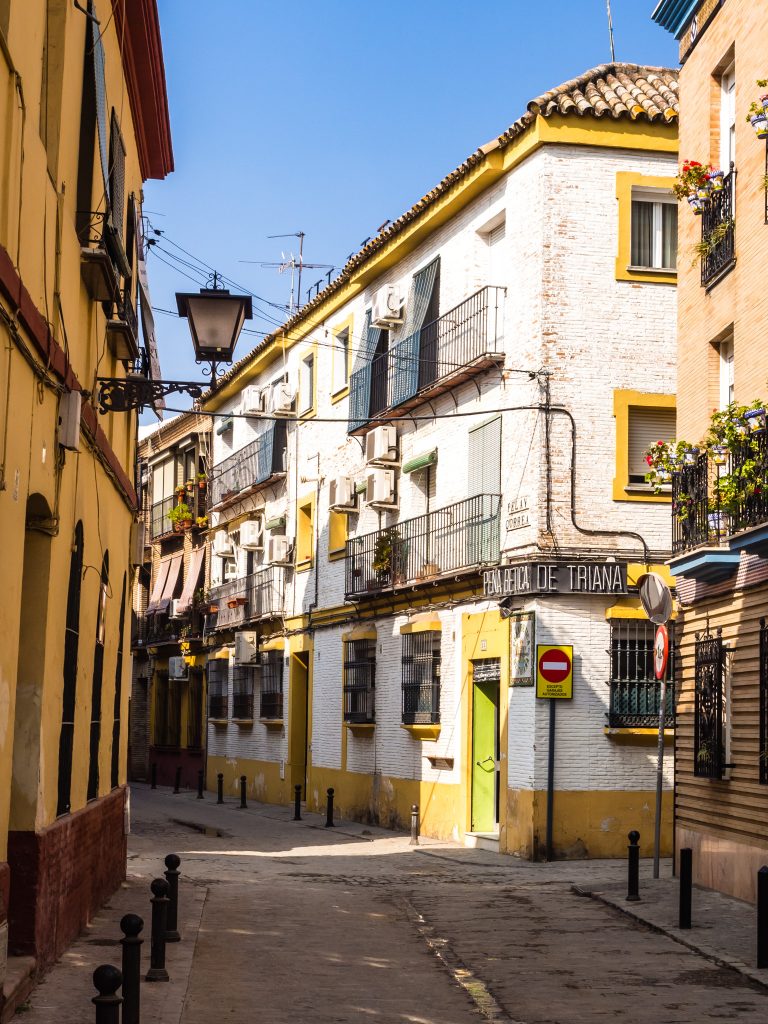
Calle Pelay Correa in Triana 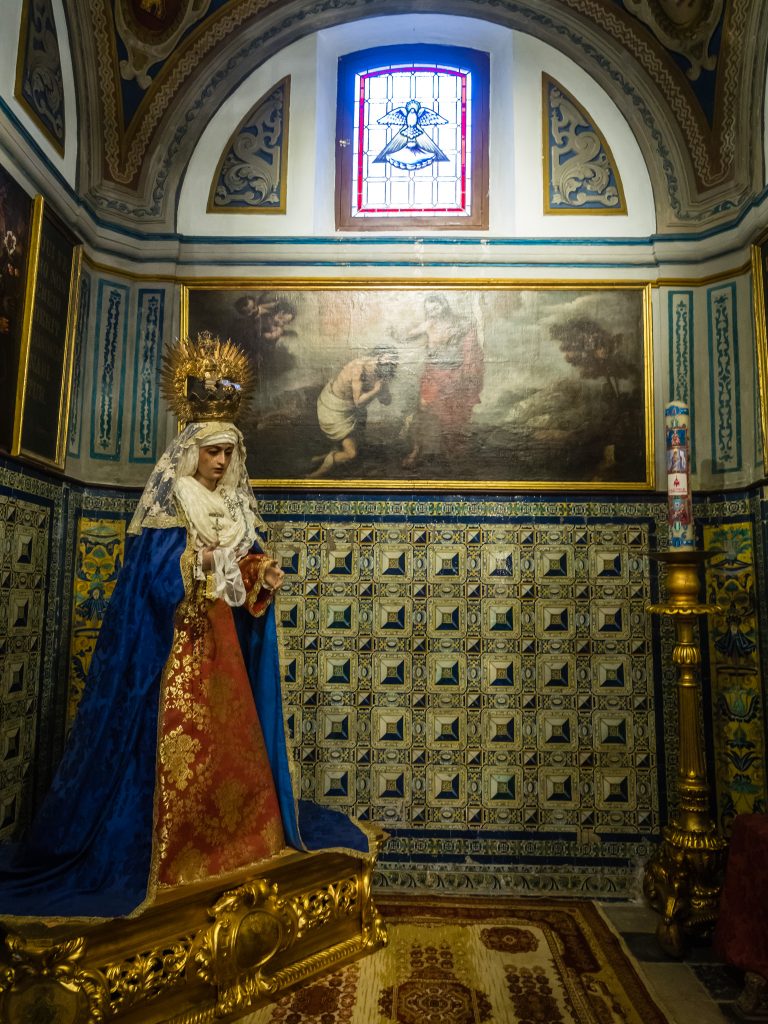
The Baptism Chapel in Triana’s Iglesia de Santa Ana 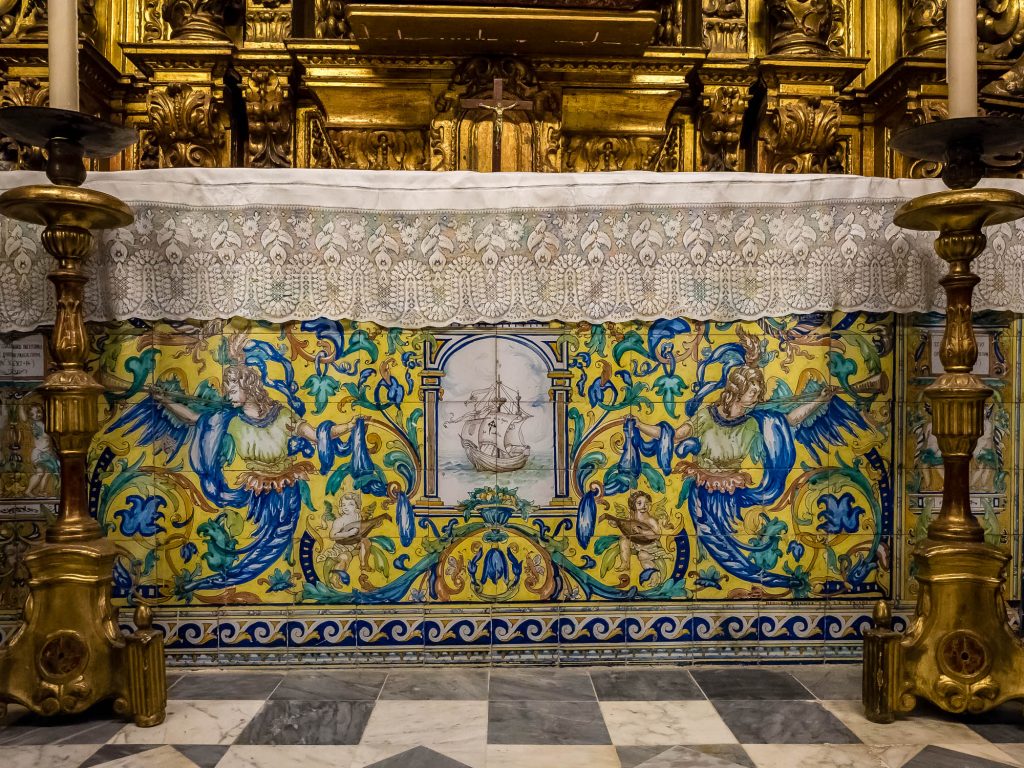
Altar in Chapel of Our Lady of Victory in Triana’s Iglesia de Santa Ana 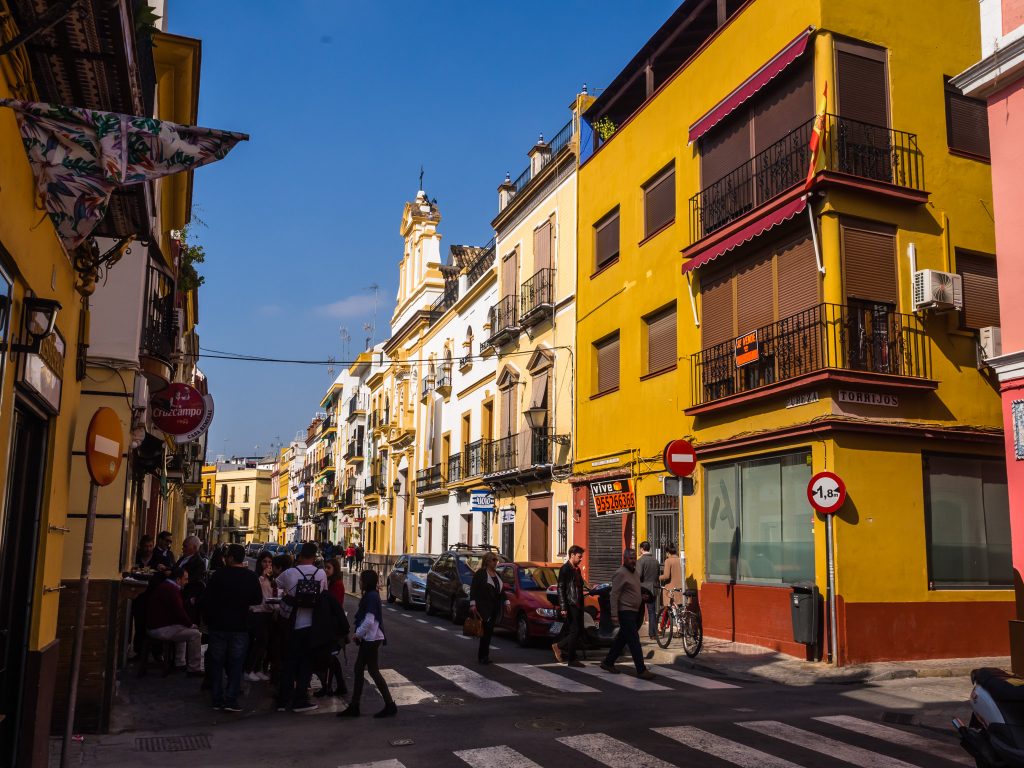
Calle Pureza in Triana
Traces of the original Roman settlement are evident as well, but mostly in excavations. Our first tourist visit was to an underground excavation of Roman ruins, The ruins, by the way, were discovered when Seville built the world’s largest wooden structure, the Metropol Parasol. And seeing that postmodern fantasia within the first few hours of being Seville was itself an experience.
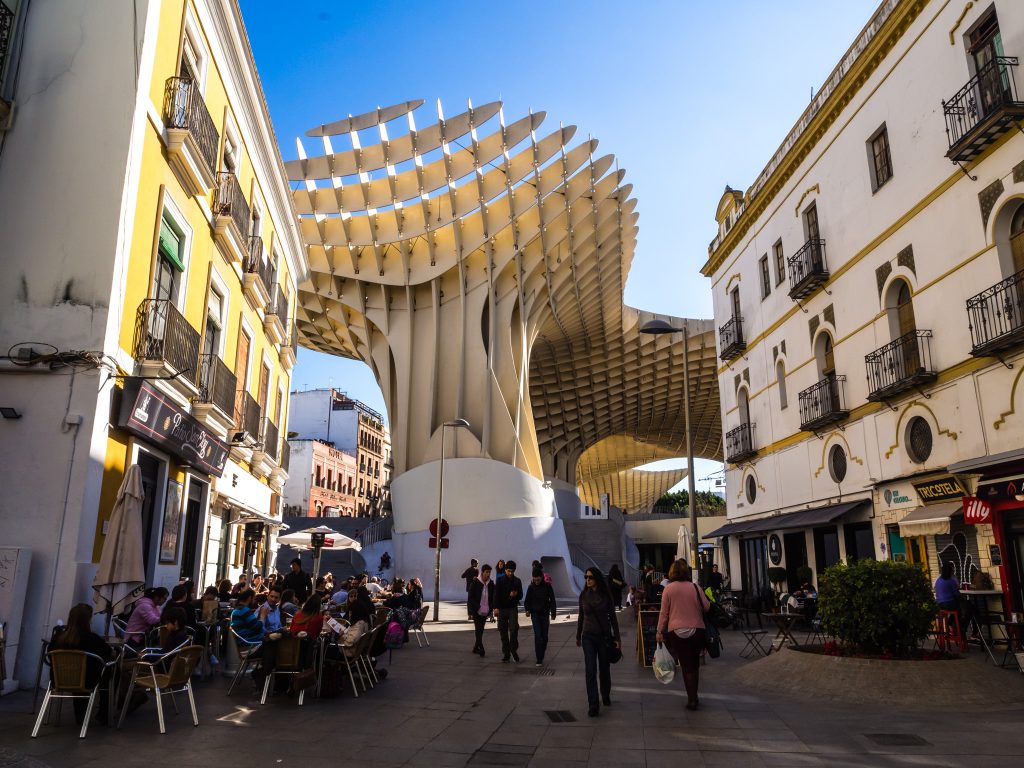
A View of Metropol Parasol from Calle Regina 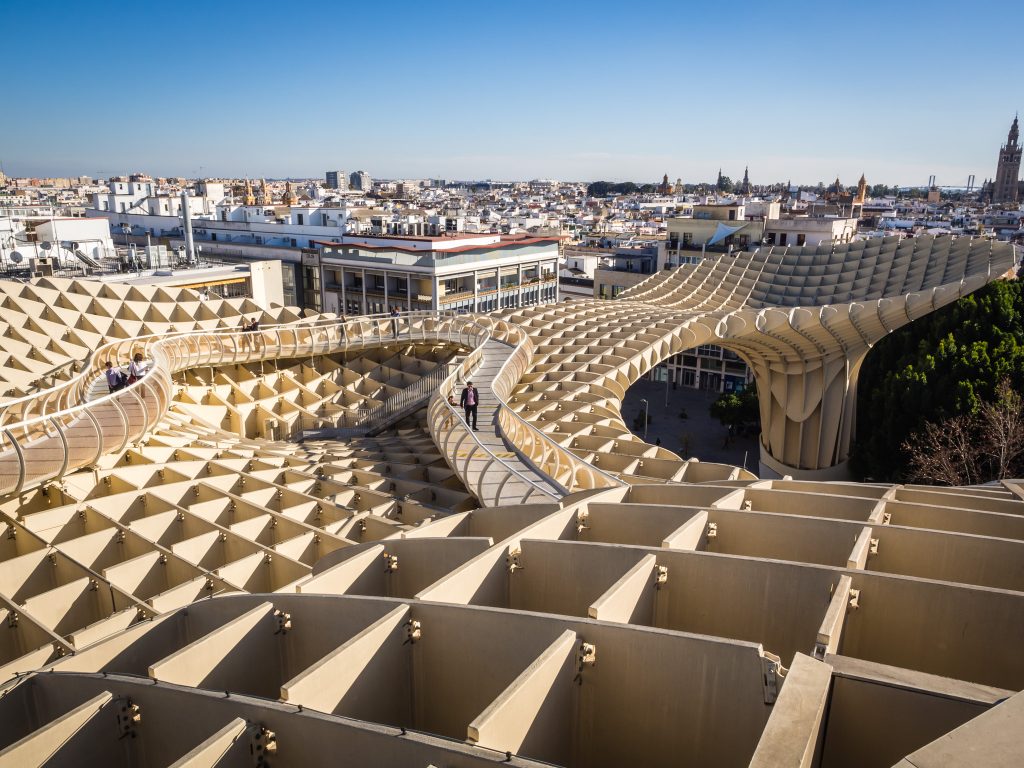
A View of Seville and the Top of Sevile’s Metropol Parasol 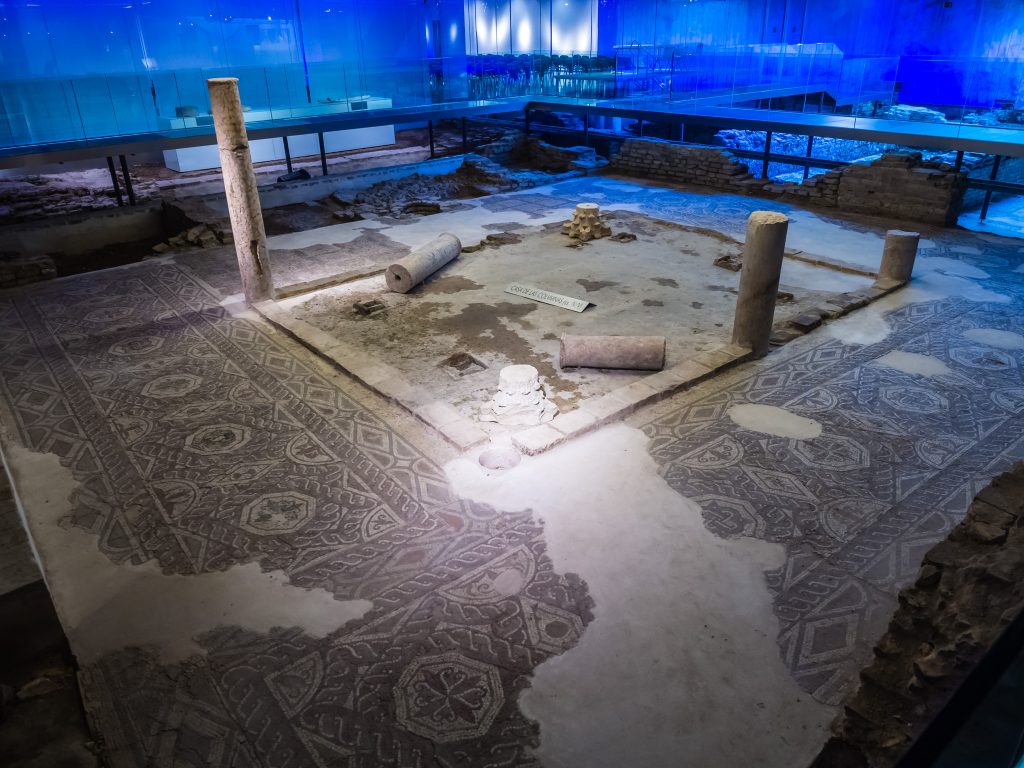
House of the Columns in the Antiquarium Under Metropol Parasol 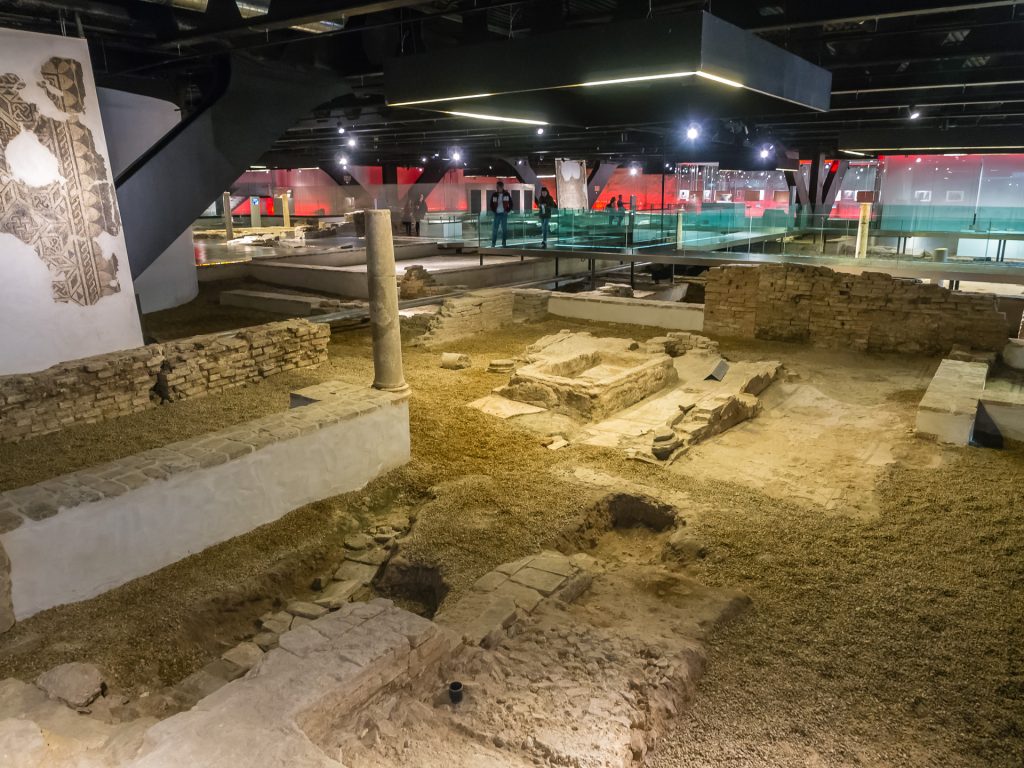
Casa de la Ninfa in the Antiquarium Under Metropol Parasol
Granada, with its Alhambra and cavernous cathedral hinted at the history and architecture of Andalusia, but it wasn’t until we arrived in Seville that something clicked about how deeply its history was embedded in the architecture and language of Seville. Muslims were in Spain for over 700 years, ruling most of the peninsula for more than have that time. And even after reconquest, after Ferdinand and Isabel expelled the Muslims in 1492, those who remained – mudéjar – and “converted” to Christianity continued to influence Christian Spain. It’s not the history per se, but rather the way the history shows up in present day Seville that makes it so interesting.
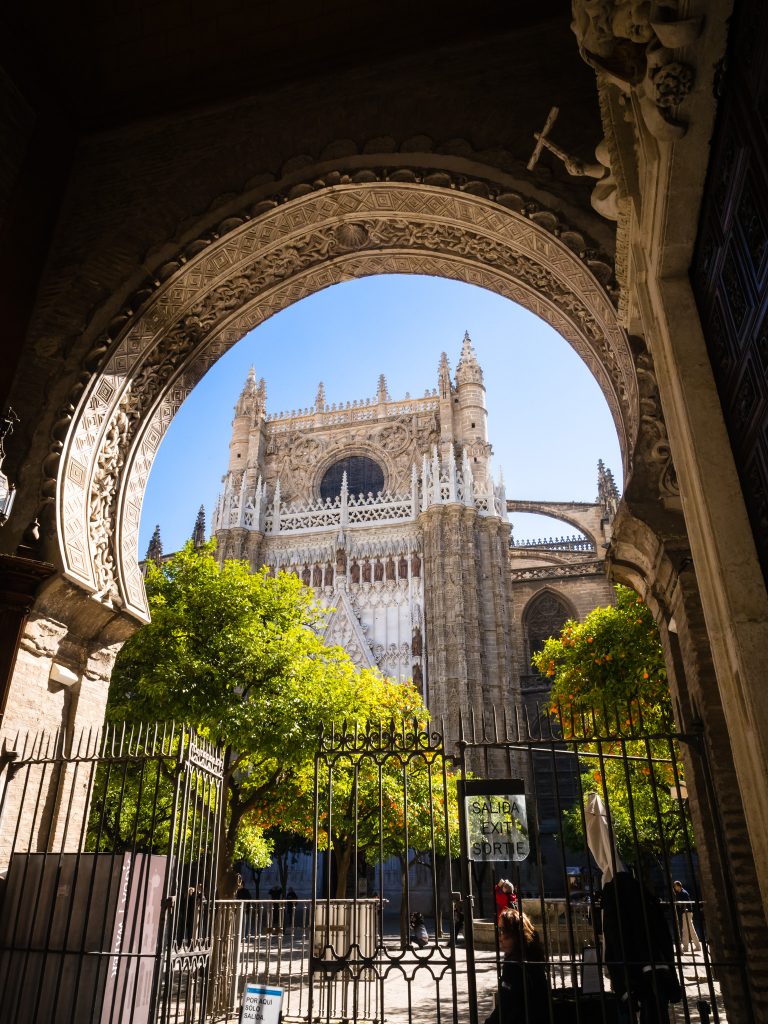
North Facade of the Cathedral Seen through the Door of Forgiveness 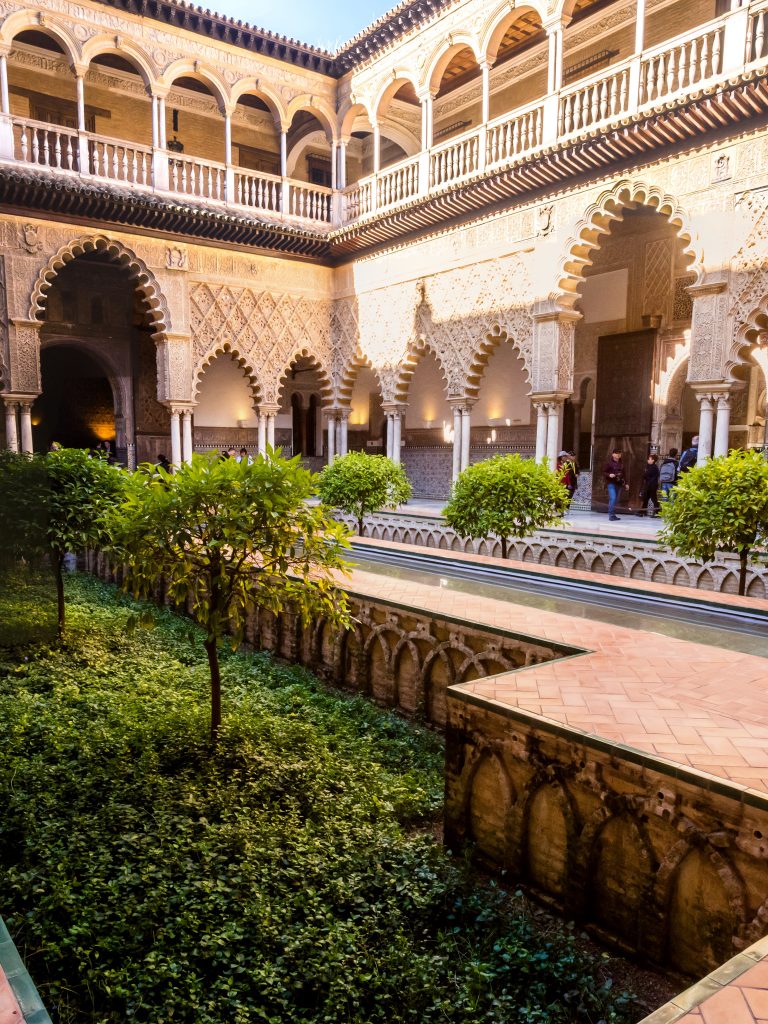
Courtyard of the Maidens in the Alcazar of Seville
You can witness this cultural salad in the mudéjar architecture, especially in the palace of Pedro I in the Royal Alcazar. Throughout the palace, but also prominently in the entrance, greeting visitors is Arabic script. You can see it in the carved wooden ceilings (alfarjes) in the churches. The Cathedral of Seville was built on top of a mosque, but many elements of the mosque, most notably its minaret, have been incorporated into it.
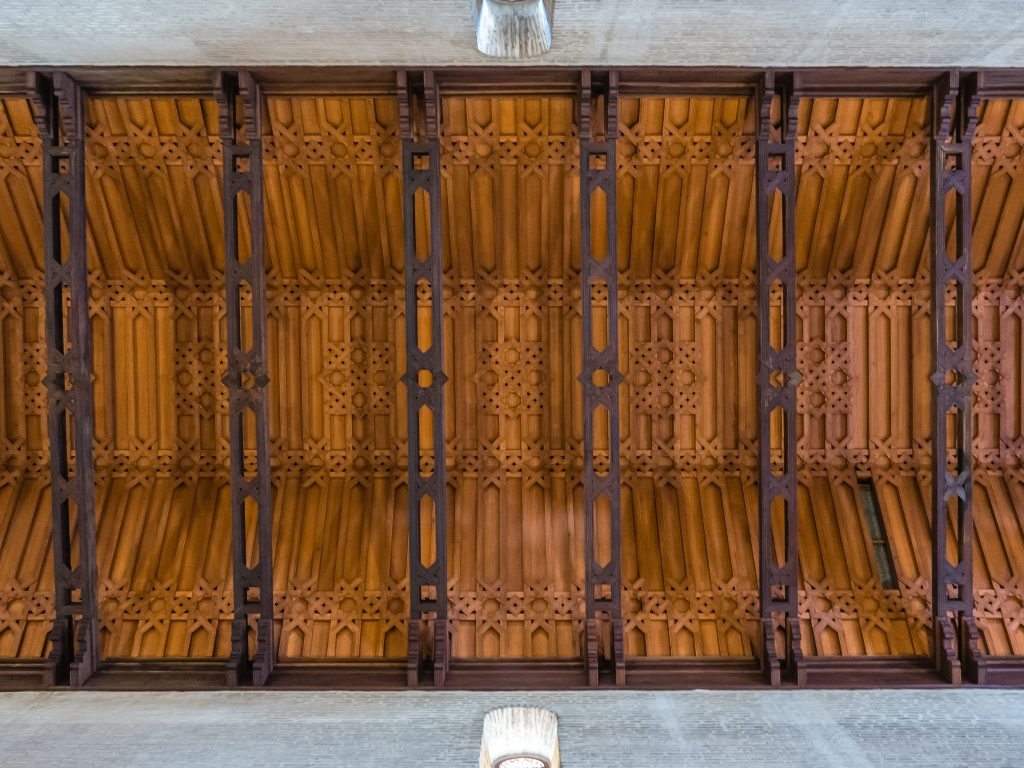
Alfarje Cieling in Iglesia de Santa Marina 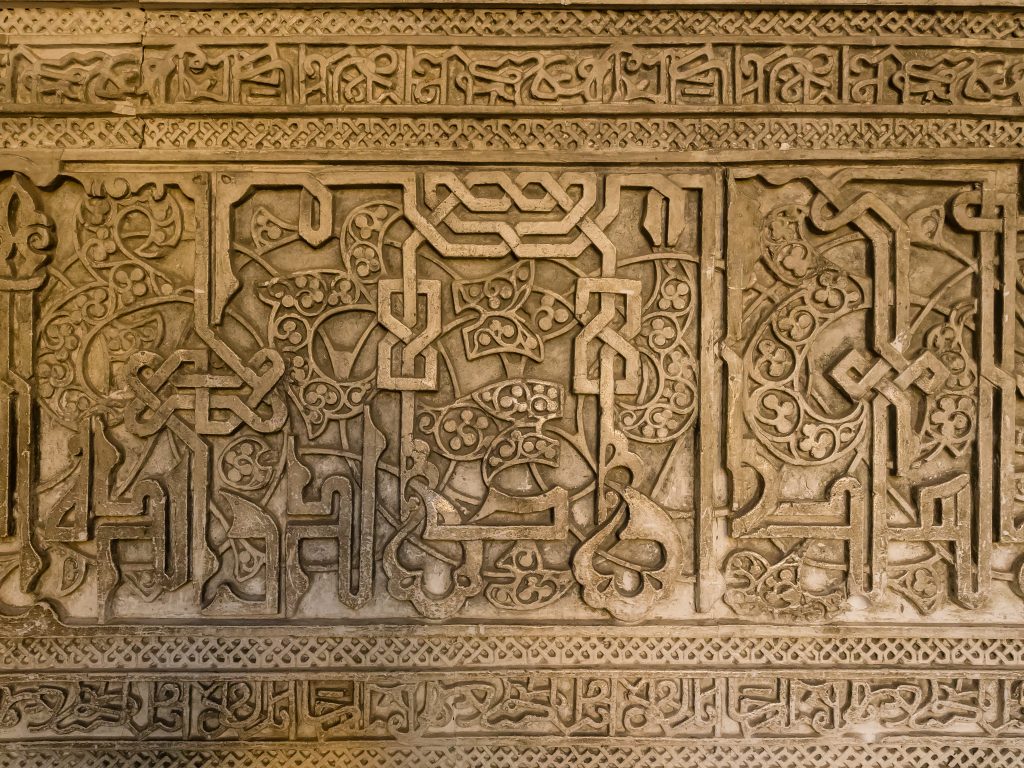
Islamic Script in the Vestibule of the Alcazar of Seville 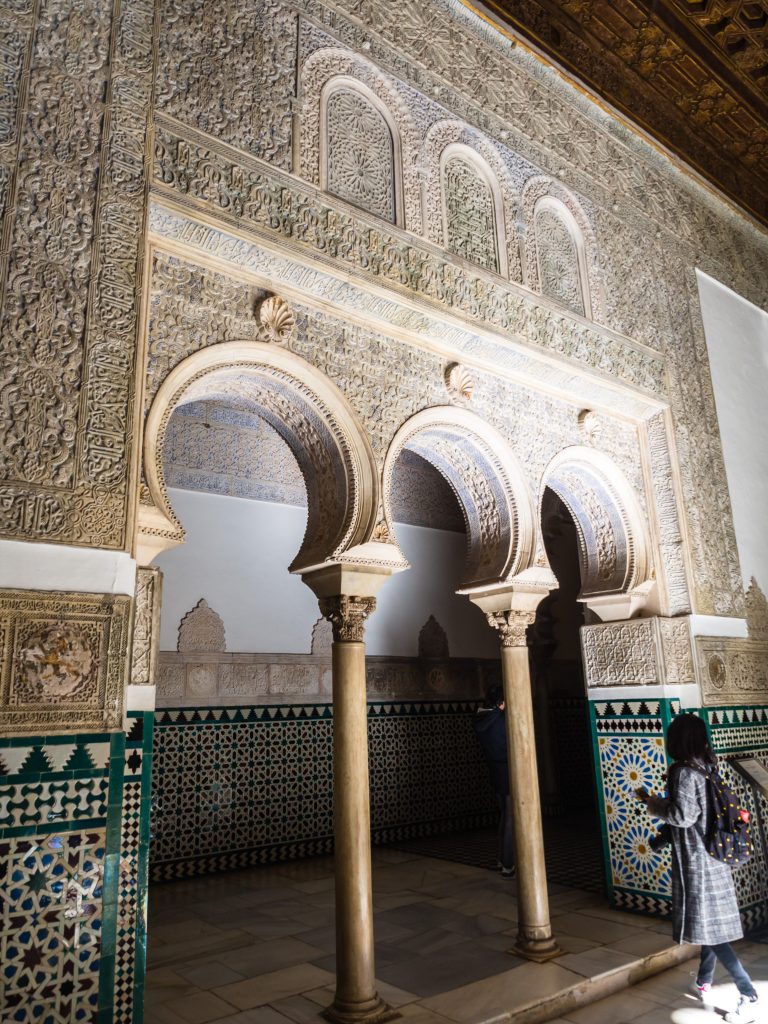
The Royal Bedroom (Alcoba Real) in the Alcazar of Seville 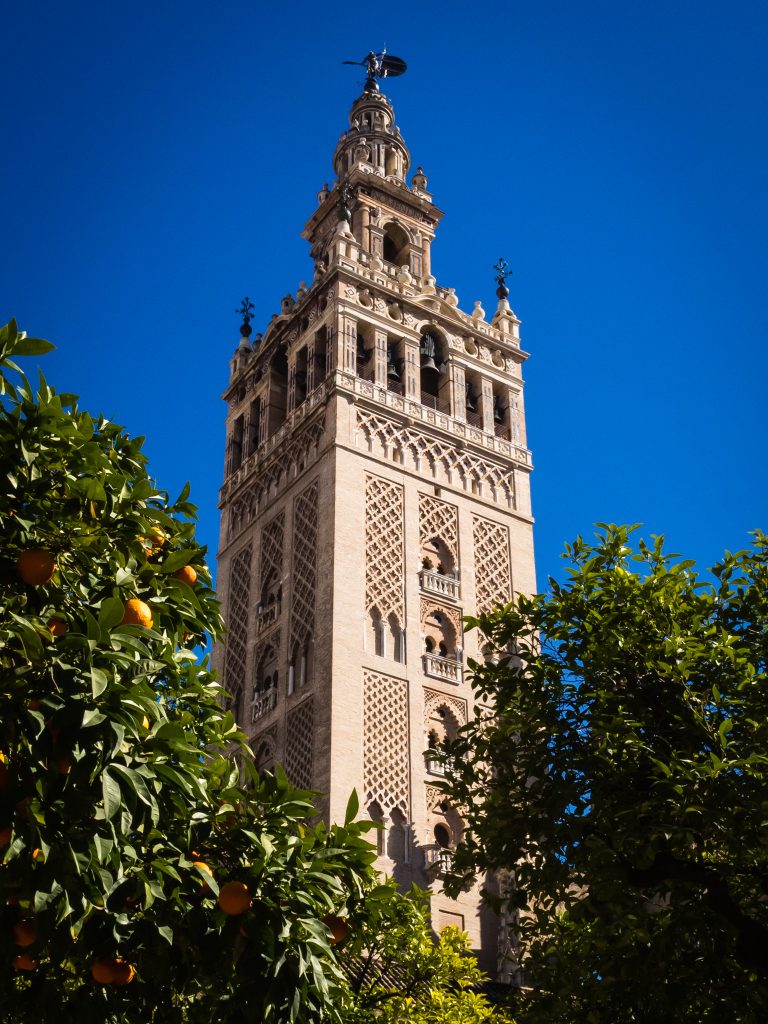
Giralda Seen from the Court of the Oranges
The first sign that we didn’t know what we were getting into appeared on a local transit bus – “Sevilla.” Segovia, Salamanca, Madrid are named the same in Spanish and English. That we didn’t know “Seville” is “Sevilla” in Spain is emblematic of the gap in our knowledge about Seville and, indeed, about Andalusia generally. Closing that gap is what made staying in Seville so enjoyable.