The West Facade of St. Stephen's Basilica (Szent István-bazilika)
The Basilica of St. Stephen (Szent István-bazilika) is a co-cathedral of the Archdiocese of Esztergom-Budapest. The basilica was consecrated in 1905 after some 50 years of construction. Plans for the temple were drawn up in 1845, and after some years of construction, the uncompleted dome and its support collapsed. The collapse and the death of the original architect resulted in a halt in building until 1875. The dome was completed in 1889, and the church was finally consecrated in 1905.

The West Facade of St. Stephen's Basilica
The Basilica of St. Stephen (Szent István-bazilika) is a co-cathedral of the Archdiocese of Esztergom-Budapest. The basilica was consecrated in 1905 after some 50 years of construction.

Cupola of St. Stephen's Basilica
Plans for the temple were drawn up in 1845, and after some years of construction, the uncompleted dome and its support collapsed. The collapse and the death of the original architect resulted in a halt in building until 1875. The dome was completed in 1889, and the church was finally consecrated in 1905.

Cupola of St. Stephen's Basilica
The basilica was consecrated in 1905 after some 50 years of construction. Plans for the temple were drawn up in 1845, and after some years of construction, the uncompleted dome and its support collapsed. The collapse and the death of the original architect resulted in a halt in building until 1875. The dome was completed in 1889, and the church was finally consecrated in 1905.

Nave and Apse of St. Stephen's Basilica
The Basilica of St. Stephen (Szent István-bazilika) is a co-cathedral of the Archdiocese of Esztergom-Budapest. The basilica was consecrated in 1905 after some 50 years of construction.

Nave and South Transept of St. Stephen's Basilica
42055901612_69642af145_b

Nave of St. Stephen's Basilica
27230807587_db2ed9eddd_b

The Chancel with Statue of King St. Stephen in His Basilica
The statue is by Strobl Alajos. The basilica was consecrated in 1905 after some 50 years of construction.

Pulpit of St. Stephen's Basilica
27230780767_746eb5c3d0_b

Organ of St. Stephen's Basilica
27230787457_f7cf2dd56a_b

The Holy Right (the Mummified Right Hand of King St. Stephen) in its Reliquary in St. Stephen's Basilica
The mummified right fist, known as the Holy Right, rests in a reliquary in a chapel in the south transept. The Holy Right was detached from St. Stephen’s remains shorty after his death when it was discovered that unlike the rest his body, the right arm had not succumbed to decay. After a series of moves over the centuries resulting from theft, the hiding from foreign invaders, designation of who should guard the hand, World War II and Soviet repression, the Holy Right eventually ended up in the basilica.

Detail of the Chapel of the Holy Cross in St. Stephen's Basilica
42055894832_b7e6ddce99_b

Detail of the Chapel of the Holy Cross in St. Stephen's Basilica
42055898362_4b30dcc3e1_b

Nave of St. Stephen's Basilica
The Basilica of St. Stephen (Szent István-bazilika) is a co-cathedral of the Archdiocese of Esztergom-Budapest - the Primatial Basilica of the Blessed Virgin Mary Assumed Into Heaven and St Adalbert in Esztergom Hungary being the other co-cathedral. The basilica was consecrated in 1905 after some 50 years of construction.

Confessional in St. Stephen's Basilica
27230818347_c24f1b153e_b

Relief of St. Stephen in his Basilica
28227904778_91ac69d780_b

Cathedra of St. Stephen's Basilica
The Basilica of St. Stephen (Szent István-bazilika) is a co-cathedral of the Archdiocese of Esztergom-Budapest - the Primatial Basilica of the Blessed Virgin Mary Assumed Into Heaven and St Adalbert in Esztergom Hungary being the other co-cathedral.

Stained Glass Depicting St. Catherine in the Chapel of St. Cecilia in St. Stephen's Basilica
40293725560_218231fd8e_b

Stained Glass Depicting St. Leopold in the Chapel of St. Adalbert in St. Stephen's Basilica
Saint Leopold III was the Margrave of Austria from 1095–1136. Known as Leopold the Good, he is the patron saint Austria.

Stained Glass depicting St. Andrew in the Chapel of St. Joseph in St. Stephen's Basilica
40293736630_2953c74e89_b

Stained Glass Depicting St. Henricus (also St. Emeric) of Hungary in the Chapel of Saint Emeric (Szent Imre Herceg)
Saint Emeric (Imre Herceg), son of King St. Stephen. Though, Emeric did not succeed his father, as he was killed by a boar on a hunt

Chapel of St. Adalbert in St. Stephen's Cathedral
Saint Adalbert was the Bishop of Prague who is believed to have baptized St. Stephen and his father. The stained glass in that chapel depicts St. Leopold, patron saint of Austria. It also contains a relic of Charles IV (1887-1922), Apostolic King of Hungary.

Reliquary Bust that of Blessed Charles IV in the Chapel of St. Adalbert in St. Stephen's Cathedral
The Chapel of Saint Adalbert contains the reliquary bust that contains a rib of Blessed Charles IV (1887-1922), Apostolic King of Hungary (Czech King and Holy Roman Emperor) and last ruler of the Austro-Hungarian Monarchy.

Oculous in a Dome over the Left Side Aisle of St. Stephen's Basilica
42100890091_ecfc00fdbe_b

Gilt Capitals and Colored Marble Adorn St. Stephens Basilica
The interior of St. Stephen's Basilica is neorenaissance with an abundance of multi-colored marbles and gilt capitals on top of engaged pillars. While not overdone (relatively) in decoration, it would not be described as “austere.”

Candle Holder in St. Stephen's Cathedral
The interior of St. Stephen's Basilica is neorenaissance with an abundance of multi-colored marbles and gilt capitals on top of engaged pillars. While not overdone (relatively) in decoration, it would not be described as “austere.”

Széchenyi Chain Bridge, Looking West
41657306924_f19feb502b_b

Viking Tor and Viking Embla Docked in Budapest near the Széchenyi Chain Bridge
28507747778_38e4964fd1_b

Buda Castle from Széchenyi Chain Bridge
28507764418_9cd5c90430_b

The Széchenyi Chain Bridge, Looking West to East across the Danube
The first permanent bridge connecting Pest and Buda (east and west of the Danube, respectively), the Széchenyi Chain Bridge (Széchenyi lánchíd) was considered an engineering marvel when it opened in 1849.

The East Tower and a Lamp on the Széchenyi Chain Bridge
The first permanent bridge connecting Pest and Buda (east and west of the Danube, respectively), the Széchenyi Chain Bridge (Széchenyi lánchíd) was considered an engineering marvel when it opened in 1849.

The West Tower on the Széchenyi Chain Bridge
The first permanent bridge connecting Pest and Buda (east and west of the Danube, respectively), the Széchenyi Chain Bridge (Széchenyi lánchíd) was considered an engineering marvel when it opened in 1849.

A Lion at the West End of the Széchenyi Chain Bridge
42429587732_c42dd52243_b

The Széchenyi Chain Bridge (Széchenyi lánchíd) from Castle Hill
The first permanent bridge connecting Pest and Buda (east and west of the Danube, respectively), the Széchenyi Chain Bridge (Széchenyi lánchíd) was considered an engineering marvel when it opened in 1849.

Fisherman’s Bastion (Halászbástya)
Completed in 1902, Fisherman’s Bastion (Halászbástya) is a Neo-Romanesque terrace on Castle Hill on the Buda bank of the Danube. It provides a scenic overlook of the Danube, Budapest, and especially the iconic Hungarian Parliament Building.

Fisherman’s Bastion (Halászbástya)
Completed in 1902, Fisherman’s Bastion (Halászbástya) is a Neo-Romanesque terrace on Castle Hill on the Buda bank of the Danube. It provides a scenic overlook of the Danube, Budapest, and especially the iconic Hungarian Parliament Building.

Fisherman's Bastion Illuminated
Based on the plans of architect Frigyes Schulek and completed in 1902, Fisherman’s Bastion (Halászbástya) is a Neo-Romanesque terrace on Castle Hill on the Buda bank of the Danube. It provides a scenic overlook of the Danube, Budapest, and especially the iconic Hungarian Parliament Building.

Fisherman’s Bastion (Halászbástya)
Completed in 1902, Fisherman’s Bastion (Halászbástya) is a Neo-Romanesque terrace on Castle Hill on the Buda bank of the Danube. It provides a scenic overlook of the Danube, Budapest, and especially the iconic Hungarian Parliament Building.

One of the Seven Towers of Fisherman’s Bastion (Halászbástya)
Completed in 1902, Fisherman’s Bastion (Halászbástya) is a Neo-Romanesque terrace on Castle Hill on the Buda bank of the Danube. It provides a scenic overlook of the Danube, Budapest, and especially the iconic Hungarian Parliament Building.

Equestrian Statue of St. Stephen on Fisherman’s Bastion (Halászbástya)
28507811098_89a7e1c870_b

The Incongruent Hilton Hotel on Fisherman's Bastion
42381152771_500d221915_b

Sightseers Observe the Hungarian Parliament Building from Fisherman’s Bastion (Halászbástya)
Completed in 1902, Fisherman’s Bastion (Halászbástya) is a Neo-Romanesque terrace on Castle Hill on the Buda bank of the Danube. It provides a scenic overlook of the Danube, Budapest, and especially the iconic Hungarian Parliament Building.

Buda (near side of the Danube) and Pest (far side) from Fisherman’s Bastion (Halászbástya)
41478450825_d4f983eda1_b

The Hungarian Parliament Building from Fisherman’s Bastion (Halászbástya)
42331751152_d702a1f58d_b

Equestrian Statue of St. Stephen on Fisherman’s Bastion (Halászbástya)
Completed in 1902, Fisherman’s Bastion (Halászbástya) is a Neo-Romanesque terrace on Castle Hill on the Buda bank of the Danube. It provides a scenic overlook of the Danube, Budapest, and especially the iconic Hungarian Parliament Building.

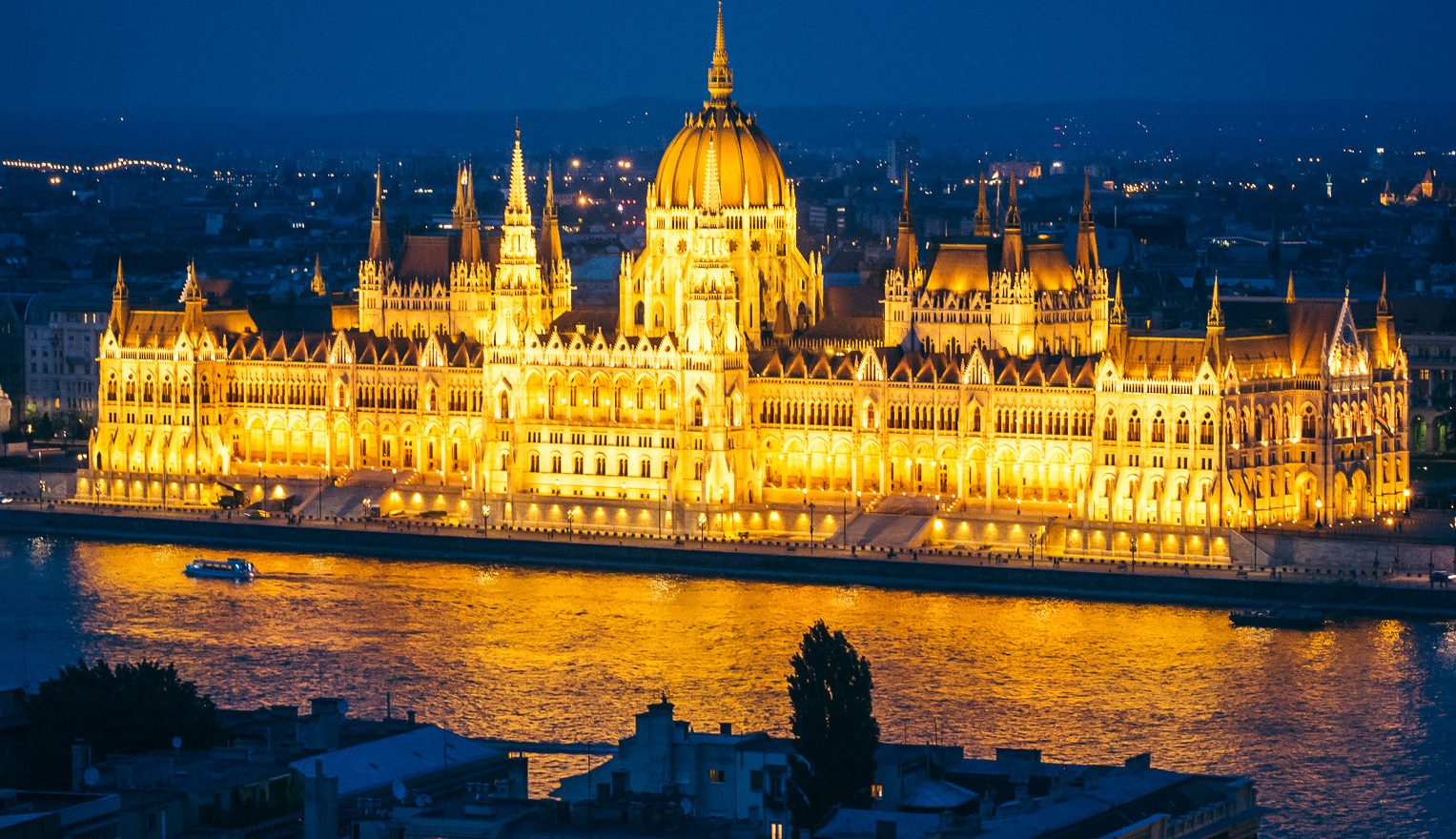
Hungarian Parliament Building (Országház)from Fisherman's Bastion
The Hungarian Parliament Building (Országház) is the largest building in Hungary and the tallest in Budapest. Built from 1885 to 1904, it is Gothic Revival and has a Renaissance Revival dome. In addition to being the seat of government, it houses Hungary’s crown jewels.

Hungarian Parliament Building (Országház)from Fisherman's Bastion
The Hungarian Parliament Building (Országház) is the largest building in Hungary and the tallest in Budapest. Built from 1885 to 1904, it is Gothic Revival and has a Renaissance Revival dome. In addition to being the seat of government, it houses Hungary’s crown jewels.

Hungarian Parliament Building (Országház)from Fisherman's Bastion
The Hungarian Parliament Building (Országház) is the largest building in Hungary and the tallest in Budapest. Built from 1885 to 1904, it is Gothic Revival and has a Renaissance Revival dome. In addition to being the seat of government, it houses Hungary’s crown jewels.

The Dome and Bell Towers of St. Stephen's Basilica Rise above Budapest
Seen from Fisherman's Bastion

Budapest's Illuminated Széchenyi Chain Bridge Viewed from Fisherman's Bastion
The first permanent bridge connecting Pest and Buda (east and west of the Danube, respectively), the Széchenyi Chain Bridge (Széchenyi lánchíd) was considered an engineering marvel when it opened in 1849.

Three of the Seven Towers of Fisherman's Bastion
Based on the plans of architect Frigyes Schulek and completed in 1902, Fisherman’s Bastion (Halászbástya) is a Neo-Romanesque terrace on Castle Hill on the Buda bank of the Danube. It provides a scenic overlook of the Danube, Budapest, and especially the iconic Hungarian Parliament Building.

The North Facade of Matthias Church in Fisherman's Bastion
Matthias Church (Mátyás-templom), officially Church of Our Lady of Buda, was built in the second half of the 14th century and extensively restored in the late 19th by architect Frigyes Schulek. In the 19th century, the temple acquired its current name recognizing the 15th century king of Hungary, Matthias.

Fisherman's Bastion Illuminated
Based on the plans of architect Frigyes Schulek and completed in 1902, Fisherman’s Bastion (Halászbástya) is a Neo-Romanesque terrace on Castle Hill on the Buda bank of the Danube. It provides a scenic overlook of the Danube, Budapest, and especially the iconic Hungarian Parliament Building.

Sightseers See the Sights of Budapest from Fisherman's Bastion
Based on the plans of architect Frigyes Schulek and completed in 1902, Fisherman’s Bastion (Halászbástya) is a Neo-Romanesque terrace on Castle Hill on the Buda bank of the Danube. It provides a scenic overlook of the Danube, Budapest, and especially the iconic Hungarian Parliament Building.

North Facade of the Dohány Street Synagogue in Budapest
The Dohány Street Synagogue (Dohány utcai zsinagóga), also known as the Great Synagogue or Tabakgasse Synagogue is the largest synagogue in Europe and the second largest in the world with seating for 3,000. The synagogue complex is composed of the Great Synagogue, the Heroes’ Temple, the Jewish Cemetery, the Jewish Museum, and Raoul Wallenberg Emlékpark (memory park), which includes the Memorial of the Hungarian Jewish Martyrs.
The synagogue was built between 1854 and 1859 and consecrated in 1859.

The South Tower and West Facade of the Dohány Street Synagogue
The Dohány Street Synagogue (Dohány utcai zsinagóga), also known as the Great Synagogue or Tabakgasse Synagogue is the largest synagogue in Europe and the second largest in the world with seating for 3,000. The synagogue complex is composed of the Great Synagogue, the Heroes’ Temple, the Jewish Cemetery, the Jewish Museum, and Raoul Wallenberg Emlékpark (memory park), which includes the Memorial of the Hungarian Jewish Martyrs.

Portal on the West Facade of the Dohány Street Synagogue
The Dohány Street Synagogue was built between 1854 and 1859. Designed by Viennese architect, Ludwig Förster, the temple is mainly Moorish Revival, but incorporates Byzantine, Romantic, and Gothic elements.

Detail on the Facade of the Dohány Street Synagogue
The synagogue was built between 1854 and 1859 and consecrated in 1859. Designed by Viennese architect, Ludwig Förster, the temple is mainly Moorish Revival, but incorporates Byzantine, Romantic, and Gothic elements.

Stained Glass Skylight and Ceiling above the Central Nave of the Dohány Street Synagogue
Designed by Viennese architect, Ludwig Förster, the temple is mainly Moorish Revival, but incorporates Byzantine, Romantic, and Gothic elements. The floor plan is similar basilicas with three naves (a main, central nave flanked by two side aisle naves) terminating in apses. It also has an organ, an unusual feature in a synagogue, which according to our tour guide can only be played by gentiles.

Ceiling above the Balcony above the Left (North) Side Aisle of Dohány Street Synagogue
Designed by Viennese architect, Ludwig Förster, the temple is mainly Moorish Revival, but incorporates Byzantine, Romantic, and Gothic elements.

Central Nave of the Dohány Street Synagogue
The Dohány Street Synagogue (Dohány utcai zsinagóga), also known as the Great Synagogue or Tabakgasse Synagogue is the largest synagogue in Europe and the second largest in the world with seating for 3,000. The floor plan is similar basilicas with three naves (a main, central nave flanked by two side aisle naves) terminating in apses. It also has an organ, an unusual feature in a synagogue, which according to our tour guide can only be played by gentiles.

Nave and Rear of the Dohány Street Synagogue
Designed by Viennese architect, Ludwig Förster, the temple is mainly Moorish Revival, but incorporates Byzantine, Romantic, and Gothic elements. The floor plan is similar basilicas with three naves (a main, central nave flanked by two side aisle naves) terminating in apses. It also has an organ, an unusual feature in a synagogue, which according to our tour guide can only be played by gentiles.

The Ark and Organ in the Dohány Street Synagogue in Budapest
Designed by Viennese architect, Ludwig Förster, the temple is mainly Moorish Revival, but incorporates Byzantine, Romantic, and Gothic elements. The floor plan is similar basilicas with three naves (a main, central nave flanked by two side aisle naves) terminating in apses. It also has an organ, an unusual feature in a synagogue, which according to our tour guide can only be played by gentiles.

The Ark in the Dohány Street Synagogue in Budapest
Designed by Viennese architect, Ludwig Förster, the temple is mainly Moorish Revival, but incorporates Byzantine, Romantic, and Gothic elements. The floor plan is similar basilicas with three naves (a main, central nave flanked by two side aisle naves) terminating in apses. It also has an organ, an unusual feature in a synagogue, which according to our tour guide can only be played by gentiles.

Organ above the Ark of the of the Dohány Street Synagogue in Budapest
The organ is an unusual feature in a synagogue, which according to our tour guide can only be played by gentiles.

Cupola above the Ark in the Dohány Street Synagogue in Budapest
Designed by Viennese architect, Ludwig Förster, the temple is mainly Moorish Revival, but incorporates Byzantine, Romantic, and Gothic elements. The floor plan is similar basilicas with three naves (a main, central nave flanked by two side aisle naves) terminating in apses. It also has an organ, an unusual feature in a synagogue, which according to our tour guide can only be played by gentiles.

Nave and Ark of the Dohány Street Synagogue
Designed by Viennese architect, Ludwig Förster, the temple is mainly Moorish Revival, but incorporates Byzantine, Romantic, and Gothic elements. The floor plan is similar basilicas with three naves (a main, central nave flanked by two side aisle naves) terminating in apses. It also has an organ, an unusual feature in a synagogue, which according to our tour guide can only be played by gentiles.

Right (South) Side Aisle of the Dohány Street Synagogue in Budapest
Designed by Viennese architect, Ludwig Förster, the temple is mainly Moorish Revival, but incorporates Byzantine, Romantic, and Gothic elements. The floor plan is similar basilicas with three naves (a main, central nave flanked by two side aisle naves) terminating in apses. It also has an organ, an unusual feature in a synagogue, which according to our tour guide can only be played by gentiles.

Chandeliers Suspended from the Ceiling of the Central Nave of the Dohány Street Synagogue
Designed by Viennese architect, Ludwig Förster, the temple is mainly Moorish Revival, but incorporates Byzantine, Romantic, and Gothic elements. The floor plan is similar basilicas with three naves (a main, central nave flanked by two side aisle naves) terminating in apses.

Moorish Arch Between Columns in a Balcony in the Dohány Street Synagogue in Budapest
Designed by Viennese architect, Ludwig Förster, the temple is mainly Moorish Revival, but incorporates Byzantine, Romantic, and Gothic elements.

Pulpit in the Dohány Street Synagogue in Budapest
Designed by Viennese architect, Ludwig Förster, the temple is mainly Moorish Revival, but incorporates Byzantine, Romantic, and Gothic elements. The floor plan is similar basilicas with three naves (a main, central nave flanked by two side aisle naves) terminating in apses. It also has an organ, an unusual feature in a synagogue, which according to our tour guide can only be played by gentiles.

Right (South) Side Aisle and Central Nave of the Dohány Street Synagogue in Budapest
Designed by Viennese architect, Ludwig Förster, the temple is mainly Moorish Revival, but incorporates Byzantine, Romantic, and Gothic elements. The floor plan is similar basilicas with three naves (a main, central nave flanked by two side aisle naves) terminating in apses. It also has an organ, an unusual feature in a synagogue, which according to our tour guide can only be played by gentiles.

Chandelier Suspended from the Ceiling above the Right (South) Side Aisle of the Dohány Street Synagogue
Designed by Viennese architect, Ludwig Förster, the temple is mainly Moorish Revival, but incorporates Byzantine, Romantic, and Gothic elements.

Detail of a Column Supporting a Balcony in the Dohány Street Synagogue
Designed by Viennese architect, Ludwig Förster, the temple is mainly Moorish Revival, but incorporates Byzantine, Romantic,

Mosaic on the Floor in the Vestibule in Dohány Street Synagogue in Budapest
Designed by Viennese architect, Ludwig Förster, the temple is mainly Moorish Revival, but incorporates Byzantine, Romantic, and Gothic elements.

Vault and Chandelier in the Vestibule in the Dohány Street Synagogue
Designed by Viennese architect, Ludwig Förster, the temple is mainly Moorish Revival, but incorporates Byzantine, Romantic, and Gothic elements.

Detail of the Arches in Arcade on the West Side of the Jewish Cemetery at the Dohány Street Synagogue
27565934247_6e12d08b32_b

Memorial of the Hungarian Jewish Martyrs at the Dohány Street Synagogue in Budapest
Made by Imre Varga, the Memorial of the Hungarian Jewish Martyrs recognizes the more than 400,000 Hungarian Jews killed by the Nazis. The memorial is weeping willow tree on whose leaves are engravings of the names of the victims.

Memorial of the Hungarian Jewish Martyrs
Made by Imre Varga, the Memorial of the Hungarian Jewish Martyrs recognizes the more than 400,000 Hungarian Jews killed by the Nazis. The memorial is weeping willow tree on whose leaves are engravings of the names of the victims.

Jewish Cemetery and Heroes' Temple at the Dohány Street Synagogue in Budapest
In 1944, 70,000 Jews were forced into the Budapest Jewish Ghetto. Over the next few months, before the liberation of the ghetto, some 8,000 to 10,000 people perished from the cold and starvation. Lacking adequate cemetery space inside the ghetto, 2,281 of those who died were buried in 24 mass graves next to the synagogue.

Matthias Church (Mátyás-templom)
Matthias Church (Mátyás-templom), officially Church of Our Lady of Buda, was built in the second half of the 14th century and extensively restored in the late 19th. In the 19th century, the temple acquired its current name recognizing the 15th century king of Hungary, Matthias.

West Facade and Southwest Bell Tower of Matthias Church (Mátyás-templom)
Matthias Church (Mátyás-templom), officially Church of Our Lady of Buda, was built in the second half of the 14th century. Emperor of Austria and King of Hungary Franz Franz Josef ordered an extensive restoration in the late 19th century, which was carried out by architect Frigyes Schulek. The temple acquired its current name in the 19th century, recognizing the 15th century king of Hungary, Matthias, who built the southwest bell tower.

The Eastern Facade and South Bell Tower of Matthias Church in Fisherman's Bastion
Matthias Church (Mátyás-templom), officially Church of Our Lady of Buda, was built in the second half of the 14th century and extensively restored in the late 19th by architect Frigyes Schulek. In the 19th century, the temple acquired its current name recognizing the 15th century king of Hungary, Matthias.

Tiled Roof over Matthias Church (Mátyás-templom)
Matthias Church (Mátyás-templom), officially Church of Our Lady of Buda, was built in the second half of the 14th century. Emperor of Austria and King of Hungary Franz Franz Josef ordered an extensive restoration in the late 19th century, which was carried out by architect Frigyes Schulek. The temple acquired its current name in the 19th century, recognizing the 15th century king of Hungary, Matthias, who built the southwest bell tower.

Apse and Chancel of Matthias Church (Mátyás-templom) in Budapest
41568578995_efa2a61d42_b

Altarpiece of the Main Altar and Chancel of Matthias Church (Mátyás-templom) in Budapest
42420391232_38311576cf_b

Nave of Matthias Church (Mátyás-templom) in Budapest
Matthias Church (Mátyás-templom), officially Church of Our Lady of Buda, was built in the second half of the 14th century. Emperor of Austria and King of Hungary Franz Franz Josef ordered an extensive restoration in the late 19th century, which was carried out by architect Frigyes Schulek. The temple acquired its current name in the 19th century, recognizing the 15th century king of Hungary, Matthias, who built the southwest bell tower.

Nave and Left (North) Side Aisle Facing West in Matthias Church (Mátyás-templom)
42471256931_0aba79b72b_b

Chapel that Terminates the Right (South) Side Aisle of Matthias Church (Mátyás-templom)
42420408062_6470afdbc7_b

Vault over the Chapel that Terminates the Right (South) Side Aisle of Matthias Church (Mátyás-templom)
27600425707_f2dfd89eb7_b

Ceiling above the Bride Door Entrance to Matthias Church (Mátyás-templom)
42420397582_8653c395c0_b

Ornately Decorcated Vault (First, Moving East to West) over the Right (South) Side Aisle in Matthias Church (Mátyás-templom)
41748532944_1c9f853495_b

Ornately Decorcated Vault (Second, Moving East to West) over the Right (South) Side Aisle in Matthias Church (Mátyás-templom)
28607004998_7f578332a2_b

Ornately Designs Decorate Matthias Church (Mátyás-templom)
27600441867_fe95b6d715_b

Orantely Decorated Wall in Matthias Church (Mátyás-templom)
27608521607_a0a8c1a1c9_b

Frescos by Bertalan Székely Depict Two Soldiers of the Black Guards Flanking the Coat of Arms of King Matthias on the West Wall of the Right (South) Side Aisle
The coat of arms were originally on the South Bell Tower constructed during the rein of King Matthias. The coat of arms remained on the tower from the 15th to the 19th century.

Stained Glass Depicting the Life of St. Elisabeth of Hungary in Matthias Church (Mátyás-templom)
Saint Elizabeth of Hungary (Árpád-házi Szent Erzsébet), also known as Saint Elizabeth of Thuringia, was the daughter of King Andrew II of Hungary and Gertrude of Merania. Born in 1207, she was married at 14, widowed at 20, and died at 24. Her brief life was marked by charity and caring for the sick and poor, building a hospital in Marburg, Germany. She was canonized in 1235.

Stained Glass Depicting the Life of the Virgin Mary in Matthias Church (Mátyás-templom)
42420462272_af59732db9_b

Stained Glass in St. Emeric Chapel in Matthias Church (Mátyás-templom)
28598747488_14c65bb462_b

Stained Glass in the Apse of Matthias Church (Mátyás-templom)
42471251351_d2c59c8ea5_b

Stained Glass Depicting the Lamb of God in the Baptismal Chapel in Matthias Church (Mátyás-templom)
28598742828_17228977fb_b

The Béla Chapel in Matthias Church (Mátyás-templom) with Tombs of King Béla III and Wife Ann Chantillon
Born in 1148, King Béla III was the King of Hungary and Croatia from 1172 until his death in 1196. He ascended to the throne upon the death of his brother Stephen III. He is noted for establishing the Royal Chancery, which contributed to the "expansion of written records" in Hungary and ruled during the height of the Árpádian dynasty.

Relief above the Tomb of King Béla III and Wife Ann Chantillon in the Béla Chapel in Matthias Church (Mátyás-templom)
In some depictions of the four evangelists (i.e, the four gospel authors), each is shown with a representational figure, or sometimes the figure is simply shown without the evangelist. Matthew is shown with or represented by an angel or man, Mark a lion, Luke an ox, and John an eagle. The tetramorphs were first associated with the evangelists in the 2nd century, their origin being found in the Old Testament book of Ezekiel.

St. Ladislaus Chapel in Matthias Church (Mátyás-templom)
The frescos by Károly Lotz depict scenes from the legend of the “knight king” Ladislaus. In the niche above the altar is a copy of the king’s head reliquary.

Fresco by Károly Lotz of Scenses from the Death of St. Ladislaus in St. Ladislaus Chapel in Matthias Church (Mátyás-templom)
Ladislaus I, also Saint Ladislaus (Szent László) was King of Hungary from 1077 and King of Croatia from 1091 until his death in 1095. Ladislaus canonized the first Hungarian saints, including King Stephen I and Stephen’s son, Emeric in 1085. Ladislaus himself was canonized in 1192 and is today a patron saint of Hungary.

Fresco by Károly Lotz Depicting Events of the Legend of St. Ladislaus on the Left Wall of the Eponymous Chapel in Matthias Church (Mátyás-templom)
Ladislaus I, also Saint Ladislaus (Szent László) was King of Hungary from 1077 and King of Croatia from 1091 until his death in 1095. Ladislaus canonized the first Hungarian saints, including King Stephen I and Stephen’s son, Emeric in 1085. Ladislaus himself was canonized in 1192 and is today a patron saint of Hungary.

Fresco of the Holy Right, the Mummified Right Hand of King St. Stephen, in Matthias Church (Mátyás-templom)
42420510902_cf8ba88f70_b

Dragons Adorn a Capital in the Narthex in Matthias Church (Mátyás-templom)
42420517502_33faae0390_b

Stairs to the Pulpit in Matthias Church (Mátyás-templom)
Designed by architect Frigyes Schulek, who undertook the 19th century restoration of the temple, with the aid of art historian Béla Czobor, the pulpit was constructed over three years, 1890 - 1893. The pulpit combines Neo-Romanesque (surfaces and statues) and Gothic Revival (the carved oak abat voix [sounding board] above) styles. The parapet is ringed by the four evangelists and the four Latin doctors of the church.

Pulpit in Matthias Church (Mátyás-templom)
Designed by architect Frigyes Schulek, who undertook the 19th century restoration of the temple, with the aid of art historian Béla Czobor, the pulpit was constructed over three years, 1890 - 1893. The pulpit combines Neo-Romanesque (surfaces and statues) and Gothic Revival (the carved oak sounding board above) styles. The parapet is ringed by the four evangelists and the four Latin doctors of the church.

Parapet of the Pulpit in Matthias Church (Mátyás-templom)
Designed by architect Frigyes Schulek, who undertook the 19th century restoration of the temple, with the aid of art historian Béla Czobor, the pulpit was constructed over three years, 1890 - 1893. The parapet is ringed by the four evangelists and the four Latin doctors of the church.

Scale Model of Matthias Church (Mátyás-templom) and Fisherman's Bastion
27600586927_9e52786cde_b

Scale Model of Matthias Church (Mátyás-templom) and Fisherman's Bastion
41748593124_bb11090b5f_b

Scale Model of Matthias Church (Mátyás-templom) and Fisherman's Bastion
42420584672_74aa1a0e41_b

Confessional in Matthias Church (Mátyás-templom)
28598724558_33c544e8ca_b

Abandoned/Not Abandoned Building on Kodály körönd in Budapest
One facade is clean and renovated, the other is not

Heroes' Square (Hősök tere) in Budapest
42480285801_8672c99fd7_b

P5071625
OLYMPUS DIGITAL CAMERA

P5071627
OLYMPUS DIGITAL CAMERA

King St. Stephen on Heroes' Square
Stephen I of Hungary was the first King of Hungary, ruling from about 1000 until his death in 1038. He unified the Carpathian Basin, an area in today’s southeast central Europe. He encouraged the spread of Christianity in the area, and years after his death legends spoke of healings and other miracles following the opening of his tomb.

Vajdahunyad Castle
Built in 1908, Vajdahunyad Castle (Vajdahunyad vára) is a complex of castle-like buildings in the City Park of Budapest. It features copies of several landmark buildings from different parts of Hungary from various time periods and architectural styles, including Romanesque, Gothic, Renaissance, and Baroque.

The Baroque Wing of Vajdahunyad Castle
Built in 1908, Vajdahunyad Castle (Vajdahunyad vára) is a complex of castle-like buildings in the City Park of Budapest. It features copies of several landmark buildings from different parts of Hungary from various time periods and architectural styles, including Romanesque, Gothic, Renaissance, and Baroque.

Vajdahunyad Castle
Built in 1908, Vajdahunyad Castle (Vajdahunyad vára) is a complex of castle-like buildings in the City Park of Budapest. It features copies of several landmark buildings from different parts of Hungary from various time periods and architectural styles, including Romanesque, Gothic, Renaissance, and Baroque.

The George Washington Statue in CIty Park of Budapest
"To the Memory of Washington. The Hungarians of America. 1906."

Buildings in the VI Distrcit of Budapest
41577931295_0f0a1f7fa1_b

Buildings in the VI Distrcit of Budapest
41757967124_f0ff97efa4_b

Gellért Hill from Elizabeth Bridge
Named after who was thrown to his death from the hill, Gellért Hill (Gellért-hegy) rises 235 m (771 ft) above the Danube. At the top of the hill is the Liberty Statue (Szabadság Szobor), a large monument erected by the Soviet Red Army to commemorate their victory in World War II. Also located on the hill is a citadel that was built by by the ruling Habsburg Austrians after the 1848–49 Hungarian uprising.

Elisabeth Bridge (Erzsébet híd)
Elisabeth Bridge (Erzsébet híd) is a suspension bridge that spans the narrowest part of the Danube (290m) in the Budapest area. Constructed between 1961 and 1964 and named after Elisabeth of Bavaria, queen and empress of Austria-Hungary, who was assassinated in 1898, the current Elisabeth Bridge is a replacement for a more ornate version that was destroyed during World War II.

Elisabeth Bridge (Erzsébet híd)
Elisabeth Bridge (Erzsébet híd) is a suspension bridge that spans the narrowest part of the Danube (290m) in the Budapest area. Constructed between 1961 and 1964 and named after Elisabeth of Bavaria, queen and empress of Austria-Hungary, who was assassinated in 1898, the current Elisabeth Bridge is a replacement for a more ornate version that was destroyed during World War II.

Stairs at the Base of Gellért Hill
42429610812_1484878482_b

Liberty Statue (Szabadság-szobor) Flanked by Two Smaller Statues on Gellért Hill (Gellért-hegy)
Liberty Statue or Freedom Statue (Szabadság-szobor) was erected on top of Gellért Hill (Gellért-hegy) in 1947 by the Soviet Red Army. The monument was designed by Zsigmond Kisfaludi Stróbl, and it’s main statue is 14 m (46 ft) tall and sits on top of a 26 m (85 ft) tall pedestal. The original inscription red "To the memory of the liberating Soviet heroes [erected by] the grateful Hungarian people 1945," but was changed to “To the memory of those all who sacrificed their lives for the independence, freedom, and prosperity of Hungary” in 1989 after the fall of Communism.

Liberty Statue (Szabadság-szobor)
Liberty Statue or Freedom Statue (Szabadság-szobor) was erected on top of Gellért Hill (Gellért-hegy) in 1947 by the Soviet Red Army. The monument was designed by Zsigmond Kisfaludi Stróbl, and it’s main statue is 14 m (46 ft) tall and sits on top of a 26 m (85 ft) tall pedestal. The original inscription red "To the memory of the liberating Soviet heroes [erected by] the grateful Hungarian people 1945," but was changed to “To the memory of those all who sacrificed their lives for the independence, freedom, and prosperity of Hungary” in 1989 after the fall of Communism.

Liberty Statue (Szabadság-szobor) on Gellért Hill (Gellért-hegy)
Liberty Statue or Freedom Statue (Szabadság-szobor) was erected on top of Gellért Hill (Gellért-hegy) in 1947 by the Soviet Red Army. The monument was designed by Zsigmond Kisfaludi Stróbl, and it’s main statue is 14 m (46 ft) tall and sits on top of a 26 m (85 ft) tall pedestal. The original inscription red "To the memory of the liberating Soviet heroes [erected by] the grateful Hungarian people 1945," but was changed to “To the memory of those all who sacrificed their lives for the independence, freedom, and prosperity of Hungary” in 1989 after the fall of Communism.

Meghan Climbs the Stairs on the Trail from Gellért Hill (Gellért-hegy)
40672296950_8efffd9468_b

Liberty Bridge (Szabadság híd)
The Liberty Bridge (Szabadság híd) is the shortest bridge in Budapest (333.6 m, or 2/10 of a mile). Constructed from 1894 to 1896, it is a Gerber truss bridge with Art Nouveau decoration.
The bridge was built as part of the Millennial Exhibition, which marked 1,000 years of Hungarian rule of the Carpathian Basin.

The Liberty Bridge (Szabadság híd) in Budapest
The Liberty Bridge (Szabadság híd) is the shortest bridge in Budapest (333.6 m, or 2/10 of a mile). Constructed from 1894 to 1896, it is a Gerber truss bridge with Art Nouveau decoration.
The bridge was built as part of the Millennial Exhibition, which marked 1,000 years of Hungarian rule of the Carpathian Basin.

Detail on the Western Tower of Liberty Bridge (Szabadság híd) in Budapest
The Liberty Bridge (Szabadság híd) is the shortest bridge in Budapest (333.6 m, or 2/10 of a mile). Constructed from 1894 to 1896, it is a Gerber truss bridge with Art Nouveau decoration.
The bridge was built as part of the Millennial Exhibition, which marked 1,000 years of Hungarian rule of the Carpathian Basin.

A River Cruise Ship Passes Under Liberty Bridge (Szabadság híd) in Budapest
41758066334_16babb8731_b

Budapest Tram
41758071554_d7cc448e64_b

Great Market Hall (Nagyvásárcsarnok)
Great Market Hall or Central Market Hall (Nagyvásárcsarnok) was built in 1897 and covers 10,000 square meters (about 108,000 sq ft), and is the largest market in Budapest. It sustained major damage in world wars, but was rehabilitated in the 1990s.

Great Market Hall (Nagyvásárcsarnok)
Great Market Hall or Central Market Hall (Nagyvásárcsarnok) was built in 1897 and covers 10,000 square meters (about 108,000 sq ft), and is the largest market in Budapest. It sustained major damage in world wars, but was rehabilitated in the 1990s.

Budapest Central Market Hall (Nagyvásárcsarnok)
41657298474_14a00e2394_b

Matthias Fountain (Mátyás kútja)
The Matthias Fountain was designed by Alajos Stróbl and built in the early 20th century (1899-1904); it was restored in 2010. The neo-baroque fountain and sculptures depict a hunting party led by 15th century king of Hungary Matthias Corvinus, in which the king holds a crossbow with dead stag at his feet.

Buda Castle
40672381540_b20f7772d1_b

The Dome and Eastern Facade of Buda Castle
27609787867_2cb5800035_b

Inscription at the Base of the Memorial of the Hungarian Jewish Martyrs
Translated from Hungarian: "This memorial was set by the Emmanuel Foundation
the unforgettable sum of 600,000 Hungarian Jewish martyrs,
who became innocent victims of unrighteousness in history"

Inscription in Hungarian on the Pedestal of Liberty Statue on Gellért Hill (Gellért-hegy)
Mindazok Emlékére
Akik
Életüket Áldozták
Magyarország
Függetlenségéért
Szabadságáért
És Boldogulásáért
(Remember All
Who
They have been blessed for their lives
Hungary
Independence of
freedom of
And for His Blessing)