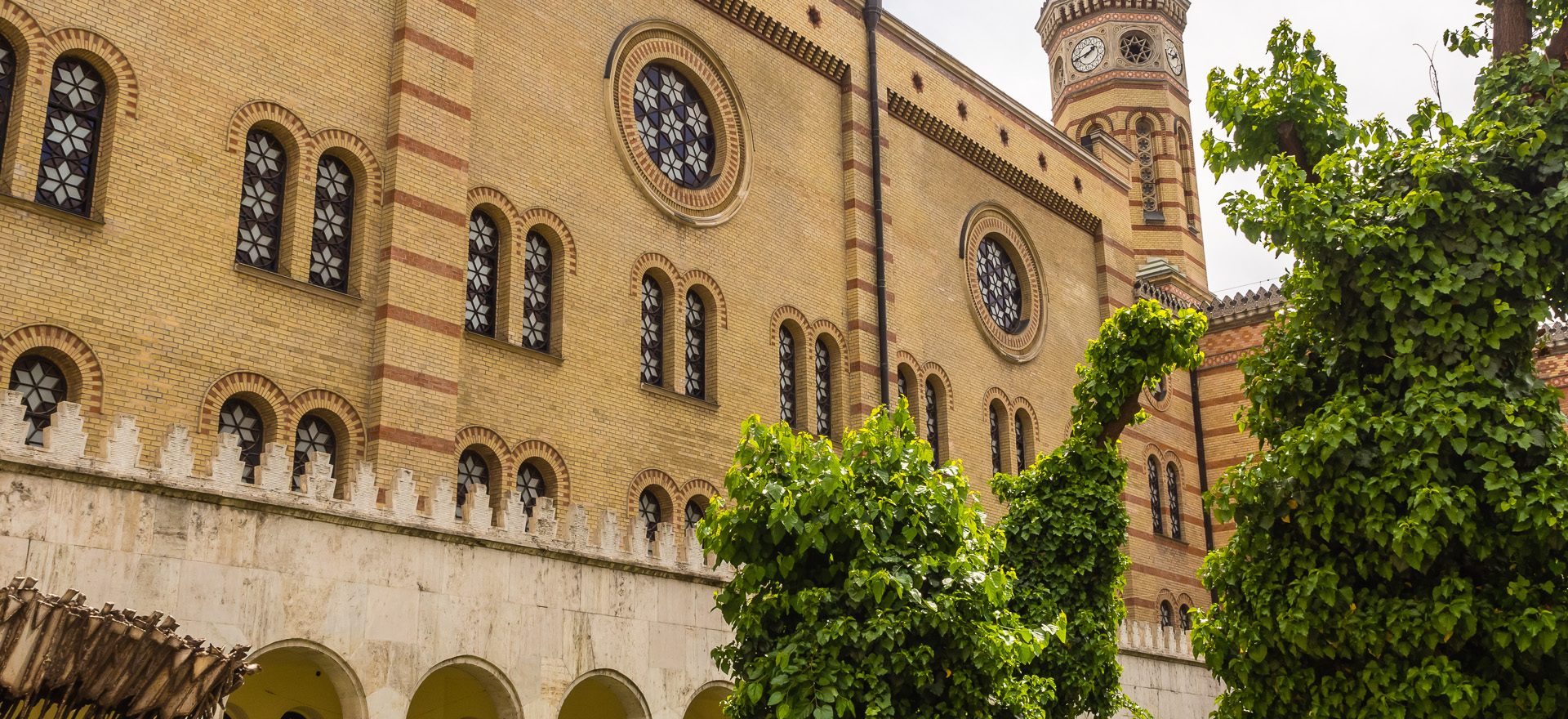
The South Tower and West Facade of the Dohány Street Synagogue
The Dohány Street Synagogue (Dohány utcai zsinagóga), also known as the Great Synagogue or Tabakgasse Synagogue is the largest synagogue in Europe and the second largest in the world with seating for 3,000. The synagogue complex is composed of the Great Synagogue, the Heroes’ Temple, the Jewish Cemetery, the Jewish Museum, and Raoul Wallenberg Emlékpark (memory park), which includes the Memorial of the Hungarian Jewish Martyrs.

Portal on the West Facade of the Dohány Street Synagogue
The Dohány Street Synagogue was built between 1854 and 1859. Designed by Viennese architect, Ludwig Förster, the temple is mainly Moorish Revival, but incorporates Byzantine, Romantic, and Gothic elements.

North Facade of the Dohány Street Synagogue in Budapest
The Dohány Street Synagogue (Dohány utcai zsinagóga), also known as the Great Synagogue or Tabakgasse Synagogue is the largest synagogue in Europe and the second largest in the world with seating for 3,000. The synagogue complex is composed of the Great Synagogue, the Heroes’ Temple, the Jewish Cemetery, the Jewish Museum, and Raoul Wallenberg Emlékpark (memory park), which includes the Memorial of the Hungarian Jewish Martyrs.
The synagogue was built between 1854 and 1859 and consecrated in 1859.

Detail on the Facade of the Dohány Street Synagogue
The synagogue was built between 1854 and 1859 and consecrated in 1859. Designed by Viennese architect, Ludwig Förster, the temple is mainly Moorish Revival, but incorporates Byzantine, Romantic, and Gothic elements.

Central Nave of the Dohány Street Synagogue
The Dohány Street Synagogue (Dohány utcai zsinagóga), also known as the Great Synagogue or Tabakgasse Synagogue is the largest synagogue in Europe and the second largest in the world with seating for 3,000. The floor plan is similar basilicas with three naves (a main, central nave flanked by two side aisle naves) terminating in apses. It also has an organ, an unusual feature in a synagogue, which according to our tour guide can only be played by gentiles.

The Ark in the Dohány Street Synagogue in Budapest
Designed by Viennese architect, Ludwig Förster, the temple is mainly Moorish Revival, but incorporates Byzantine, Romantic, and Gothic elements. The floor plan is similar basilicas with three naves (a main, central nave flanked by two side aisle naves) terminating in apses. It also has an organ, an unusual feature in a synagogue, which according to our tour guide can only be played by gentiles.

The Ark and Organ in the Dohány Street Synagogue in Budapest
Designed by Viennese architect, Ludwig Förster, the temple is mainly Moorish Revival, but incorporates Byzantine, Romantic, and Gothic elements. The floor plan is similar basilicas with three naves (a main, central nave flanked by two side aisle naves) terminating in apses. It also has an organ, an unusual feature in a synagogue, which according to our tour guide can only be played by gentiles.

Organ above the Ark of the of the Dohány Street Synagogue in Budapest
The organ is an unusual feature in a synagogue, which according to our tour guide can only be played by gentiles.

Cupola above the Ark in the Dohány Street Synagogue in Budapest
Designed by Viennese architect, Ludwig Förster, the temple is mainly Moorish Revival, but incorporates Byzantine, Romantic, and Gothic elements. The floor plan is similar basilicas with three naves (a main, central nave flanked by two side aisle naves) terminating in apses. It also has an organ, an unusual feature in a synagogue, which according to our tour guide can only be played by gentiles.

Nave and Ark of the Dohány Street Synagogue
Designed by Viennese architect, Ludwig Förster, the temple is mainly Moorish Revival, but incorporates Byzantine, Romantic, and Gothic elements. The floor plan is similar basilicas with three naves (a main, central nave flanked by two side aisle naves) terminating in apses. It also has an organ, an unusual feature in a synagogue, which according to our tour guide can only be played by gentiles.

Right (South) Side Aisle and Central Nave of the Dohány Street Synagogue in Budapest
Designed by Viennese architect, Ludwig Förster, the temple is mainly Moorish Revival, but incorporates Byzantine, Romantic, and Gothic elements. The floor plan is similar basilicas with three naves (a main, central nave flanked by two side aisle naves) terminating in apses. It also has an organ, an unusual feature in a synagogue, which according to our tour guide can only be played by gentiles.

Right (South) Side Aisle of the Dohány Street Synagogue in Budapest
Designed by Viennese architect, Ludwig Förster, the temple is mainly Moorish Revival, but incorporates Byzantine, Romantic, and Gothic elements. The floor plan is similar basilicas with three naves (a main, central nave flanked by two side aisle naves) terminating in apses. It also has an organ, an unusual feature in a synagogue, which according to our tour guide can only be played by gentiles.

Nave and Rear of the Dohány Street Synagogue
Designed by Viennese architect, Ludwig Förster, the temple is mainly Moorish Revival, but incorporates Byzantine, Romantic, and Gothic elements. The floor plan is similar basilicas with three naves (a main, central nave flanked by two side aisle naves) terminating in apses. It also has an organ, an unusual feature in a synagogue, which according to our tour guide can only be played by gentiles.

Stained Glass Skylight and Ceiling above the Central Nave of the Dohány Street Synagogue
Designed by Viennese architect, Ludwig Förster, the temple is mainly Moorish Revival, but incorporates Byzantine, Romantic, and Gothic elements. The floor plan is similar basilicas with three naves (a main, central nave flanked by two side aisle naves) terminating in apses. It also has an organ, an unusual feature in a synagogue, which according to our tour guide can only be played by gentiles.

Chandeliers Suspended from the Ceiling of the Central Nave of the Dohány Street Synagogue
Designed by Viennese architect, Ludwig Förster, the temple is mainly Moorish Revival, but incorporates Byzantine, Romantic, and Gothic elements. The floor plan is similar basilicas with three naves (a main, central nave flanked by two side aisle naves) terminating in apses.

Moorish Arch Between Columns in a Balcony in the Dohány Street Synagogue in Budapest
Designed by Viennese architect, Ludwig Förster, the temple is mainly Moorish Revival, but incorporates Byzantine, Romantic, and Gothic elements.

Ceiling above the Balcony above the Left (North) Side Aisle of Dohány Street Synagogue
Designed by Viennese architect, Ludwig Förster, the temple is mainly Moorish Revival, but incorporates Byzantine, Romantic, and Gothic elements.

Pulpit in the Dohány Street Synagogue in Budapest
Designed by Viennese architect, Ludwig Förster, the temple is mainly Moorish Revival, but incorporates Byzantine, Romantic, and Gothic elements. The floor plan is similar basilicas with three naves (a main, central nave flanked by two side aisle naves) terminating in apses. It also has an organ, an unusual feature in a synagogue, which according to our tour guide can only be played by gentiles.

Detail of a Column Supporting a Balcony in the Dohány Street Synagogue
Designed by Viennese architect, Ludwig Förster, the temple is mainly Moorish Revival, but incorporates Byzantine, Romantic,
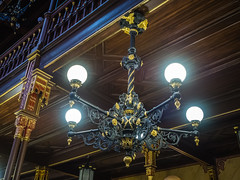
Chandelier Suspended from the Ceiling above the Right (South) Side Aisle of the Dohány Street Synagogue
Designed by Viennese architect, Ludwig Förster, the temple is mainly Moorish Revival, but incorporates Byzantine, Romantic, and Gothic elements.
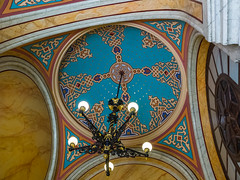
Vault and Chandelier in the Vestibule in the Dohány Street Synagogue
Designed by Viennese architect, Ludwig Förster, the temple is mainly Moorish Revival, but incorporates Byzantine, Romantic, and Gothic elements.

Mosaic on the Floor in the Vestibule in Dohány Street Synagogue in Budapest
Designed by Viennese architect, Ludwig Förster, the temple is mainly Moorish Revival, but incorporates Byzantine, Romantic, and Gothic elements.

Detail of the Arches in Arcade on the West Side of the Jewish Cemetery at the Dohány Street Synagogue
27565934247_6e12d08b32_b

Memorial of the Hungarian Jewish Martyrs at the Dohány Street Synagogue in Budapest
Made by Imre Varga, the Memorial of the Hungarian Jewish Martyrs recognizes the more than 400,000 Hungarian Jews killed by the Nazis. The memorial is weeping willow tree on whose leaves are engravings of the names of the victims.

Memorial of the Hungarian Jewish Martyrs
Made by Imre Varga, the Memorial of the Hungarian Jewish Martyrs recognizes the more than 400,000 Hungarian Jews killed by the Nazis. The memorial is weeping willow tree on whose leaves are engravings of the names of the victims.

Jewish Cemetery and Heroes' Temple at the Dohány Street Synagogue in Budapest
In 1944, 70,000 Jews were forced into the Budapest Jewish Ghetto. Over the next few months, before the liberation of the ghetto, some 8,000 to 10,000 people perished from the cold and starvation. Lacking adequate cemetery space inside the ghetto, 2,281 of those who died were buried in 24 mass graves next to the synagogue.