Now that it’s July, and we’ve suffered through +80°F weather, it’s a good time look back to wintry days in February and reflect on our time in Ávila, Spain. (It’s also a good time, because Craig finally finished processing, tagging, and captioning his photos from Ávila.)
Craig jokes that our tagline for Ávila should be: “Ávila: they can’t all be winners.” We did not love our stay there, which is a bit unfair to the city because some of it was just circumstances and timing. We were only there for about a day and a half, but we were definitely ready to go well before it was time for our train.
Our hostal was conveniently on top of the train station, which was great for our arrival and departure, but not so much for actually seeing the town. It was a depressing twenty-minute walk from there to the Old Town, where the interesting parts are. Usually, we like walking through a city as you get a nice feel for how people live, but this part of Ávila was ugly and empty. There were a lot of storefronts for rent, and even the places that were operational businesses were often closed when we walked by.
It also was an unpleasant walk because everything was dripping from the melting snow, and occasionally huge chunks of ice would fall several stories onto pedestrians below. The alternative was to walk in the street, but it was hard to jump out of the way when cars came by because of the piles of snow at the edges. None of this is permanent or Ávila’s fault, but it made our stay there less pleasant than it might have been.
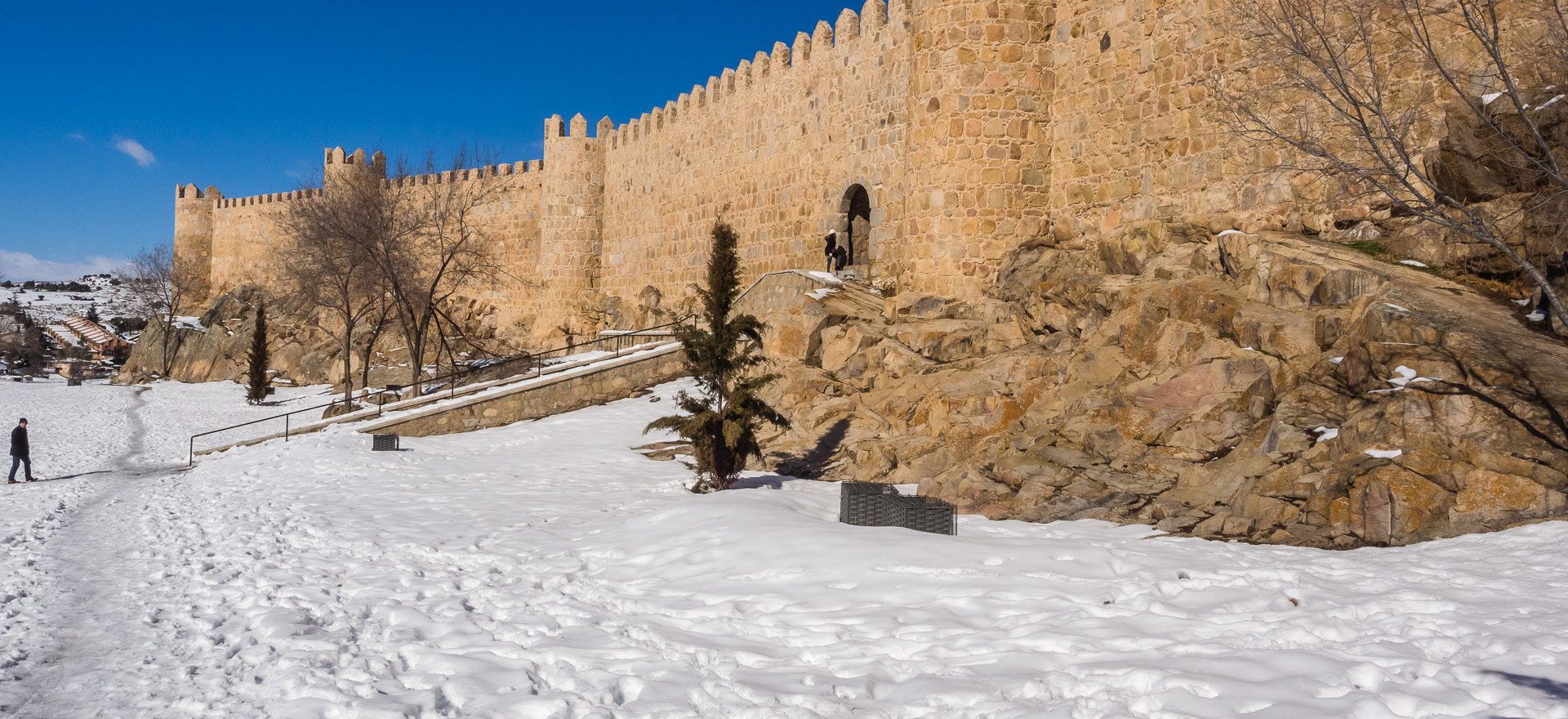
Craig had his heart set on walking the tops of the city walls, but they were closed due to the snow and ice. So, we decided to walk the entire perimeter, all 1.6 miles (2,516 meters). This sounded like a great idea when we were on a dry sidewalk, less so as we got into the less-populated area and had to take icy stairs down to the lower area. It was quite a hike but it was neat to see the walls as well as all the Ávilans out sledding on the snowy hillsides.


Even though it is a small city, Ávila has quite a few large churches. We popped in to 12th-13th c. Church of St. Peter (photos), but we had to hustle out as mass was about to start (that’s Craig’s excuse for the lackluster photography). Like most Spanish towns large and small, Ávila also has a cathedral (photos). This one, though, is special because it’s actually built into the town’s defenses; its apse is a battlement in the walls. The bell tower was, like the walls, closed due to snow and ice. The last church we visited, the Basilica of Saint Vincent (photos), or more formally, Basilica de los Santos Hermanos Mártires Vicente Sabina y Cristeta, possesses its own charms if not for its age – construction began in the 12th century – than for the cenotaph (i.e. funerary monument) imposing itself on visitors in the middle of the nave. One imagines what daydreaming worshipers think as they gaze at the very detailed depiction of the martyrdom of the basilica’s patrons.


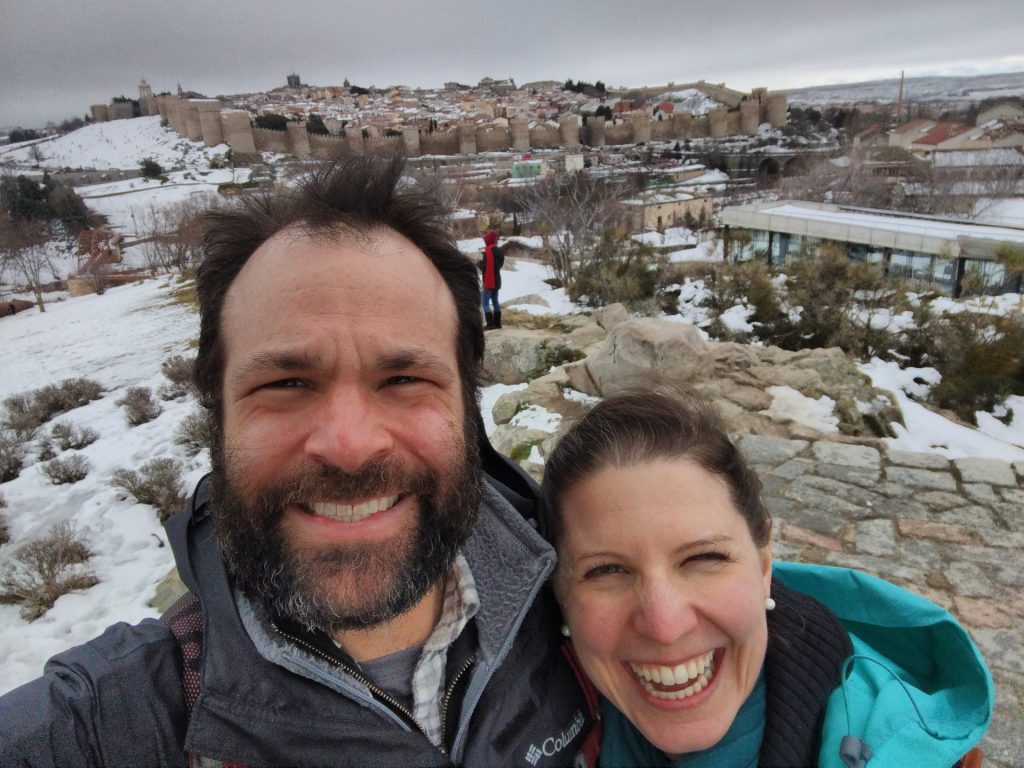
Before we left, we hiked out to the mirador at Cuatro Postes (“Four Posts”) to enjoy a panoramic view of the town. Despite stumbling through slush and ice and the gray, February sky, it was well worth the view and gave a hint as to why we can look back fondly on our time in Ávila despite suboptimal circumstances.