This is part 3 of a multi-part post about Craig’s parents’ visit to Europe.
Part 1: Netherlands: An Introduction to Amsterdam
Part 2: Netherlands: Seeing the Best Art in the Western Canon
Art is not the only thing that Europe has to offer. There’s lots of old stuff, too. When we weren’t looking at art, we were delving into local history.
While in Delft on a Saturday in September, we popped into Nieuwe Kerk and Oude Kerk, the New and Old churches, respectively. Of course, “new” is always relative in Europe. In this case, construction on Delft’s New Church began in 1393 (and completed over 250 years later). Beyond the age of the building, the more significant history of Nieuwe Kerk is that it is the resting place of William of Orange (d. 1584). William of Orange is kind of big deal in the Netherlands, because he revolted against Spanish rule over the Netherlands, provoking the Eighty Years’ War that lead to an independent Dutch state.
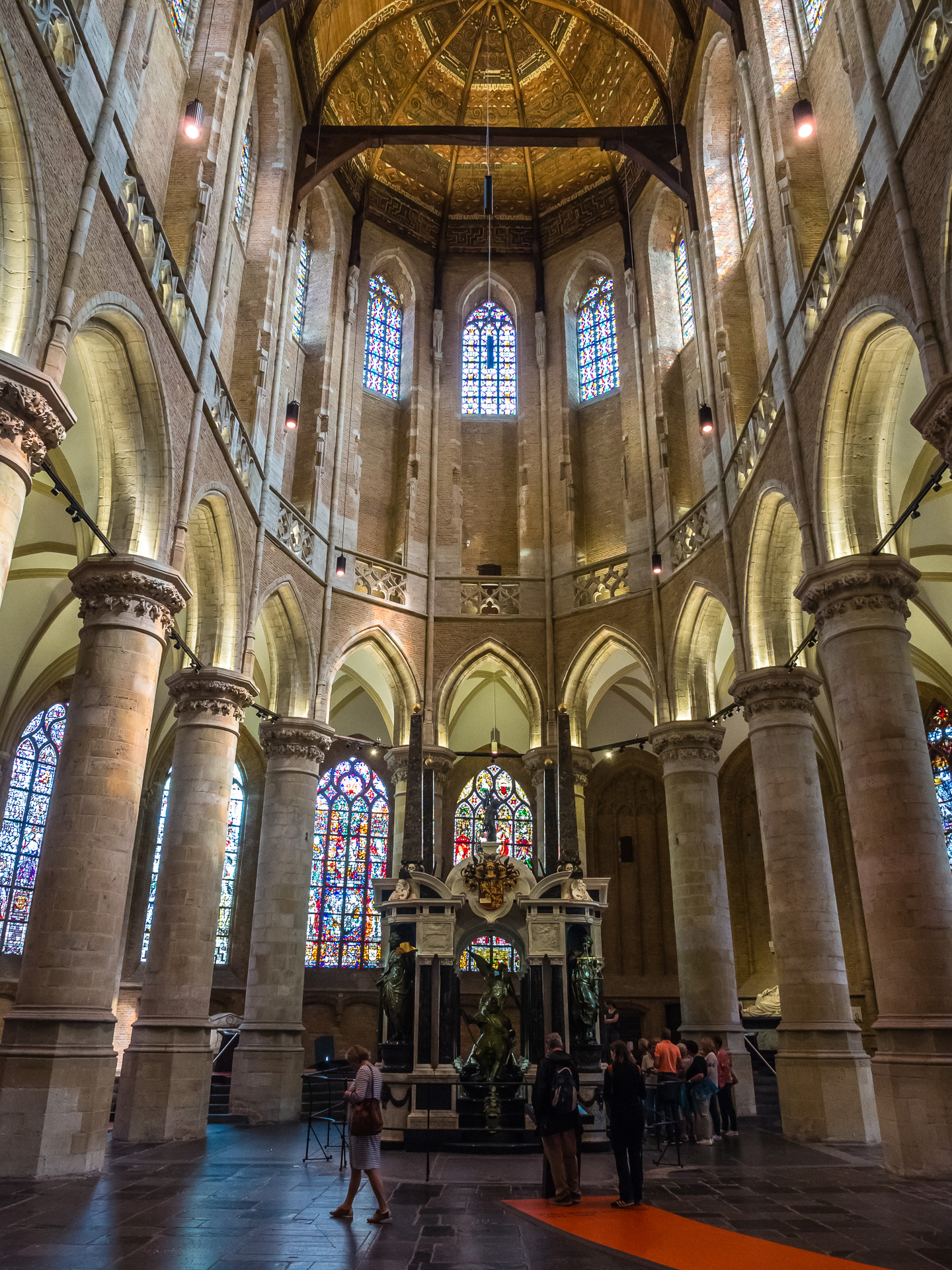
When we were done marveling at William’s tomb’s marble we paused for coffee and apple tart (pie) and then walked a few blocks to the Oude Kerk, Delft’s really old church – founded in 1246. Like Nieuwe Kerk, Oude Kerk is the resting place of a few famous people. After seeing the Vermeer museum, we got to complete the circle by standing by his tomb. Also noteworthy is the tomb of Anton van Leeuwenhoek, inventor of the microscope.
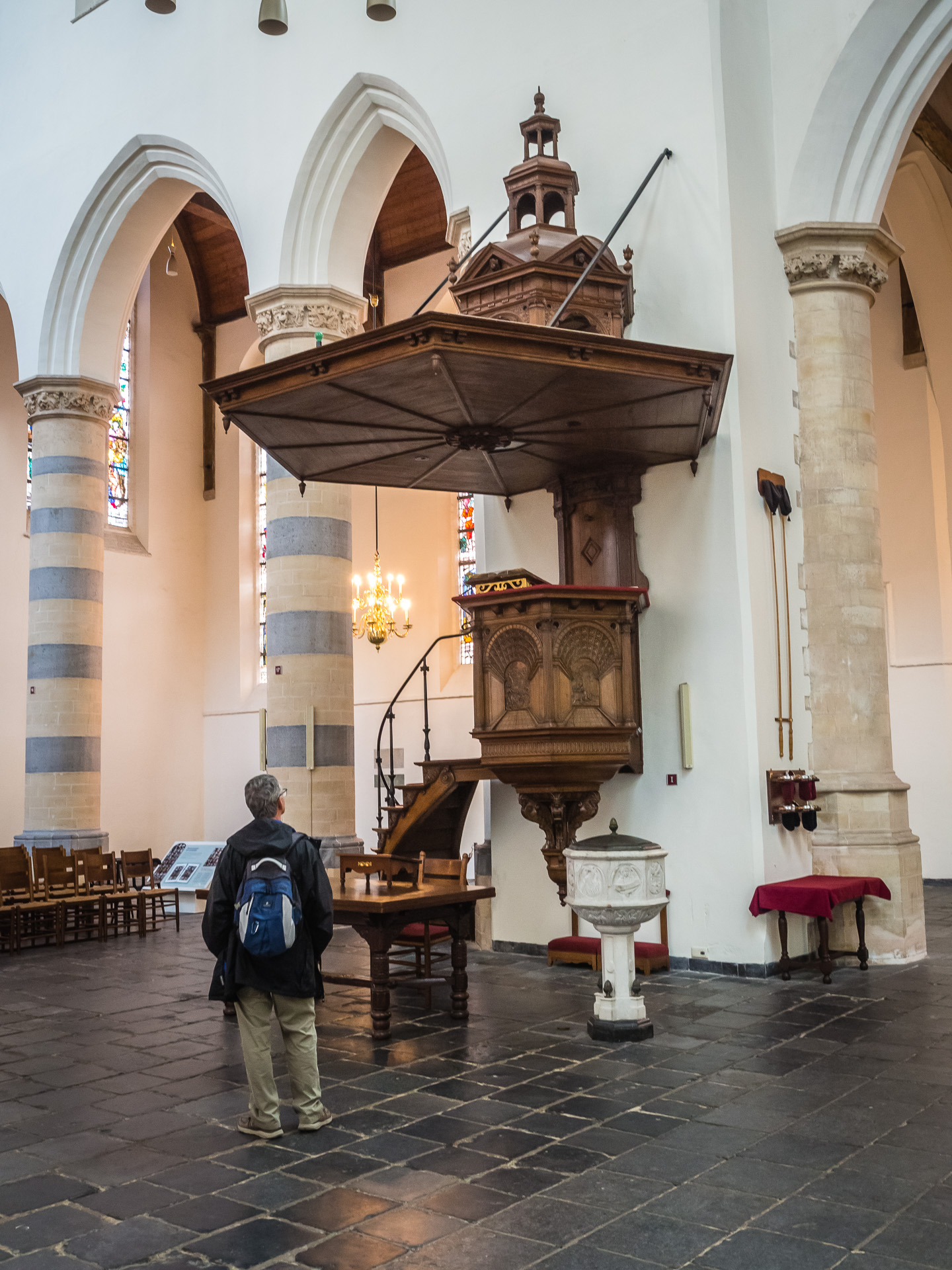
I’m always awestruck walking around buildings that were built hundreds of years before Columbus “discovered” “America” and more than half of a millenium (!) before the founding of the United States. To put that into perspective: The time between the founding of Oude Kerk and the Reformation (1571) is longer than the United States is old (271 years vs. 242 years).
The following day, Sunday, we had reservations to visit a newer historical place – the Anne Frank House. The museum is the actual secret annex in which Anne Frank’s family and four other Jews hid from the Nazis during the war. It was a little unsettling to be able to walk in the same cramped passages and small rooms in which Anne and her family hid for over two years.
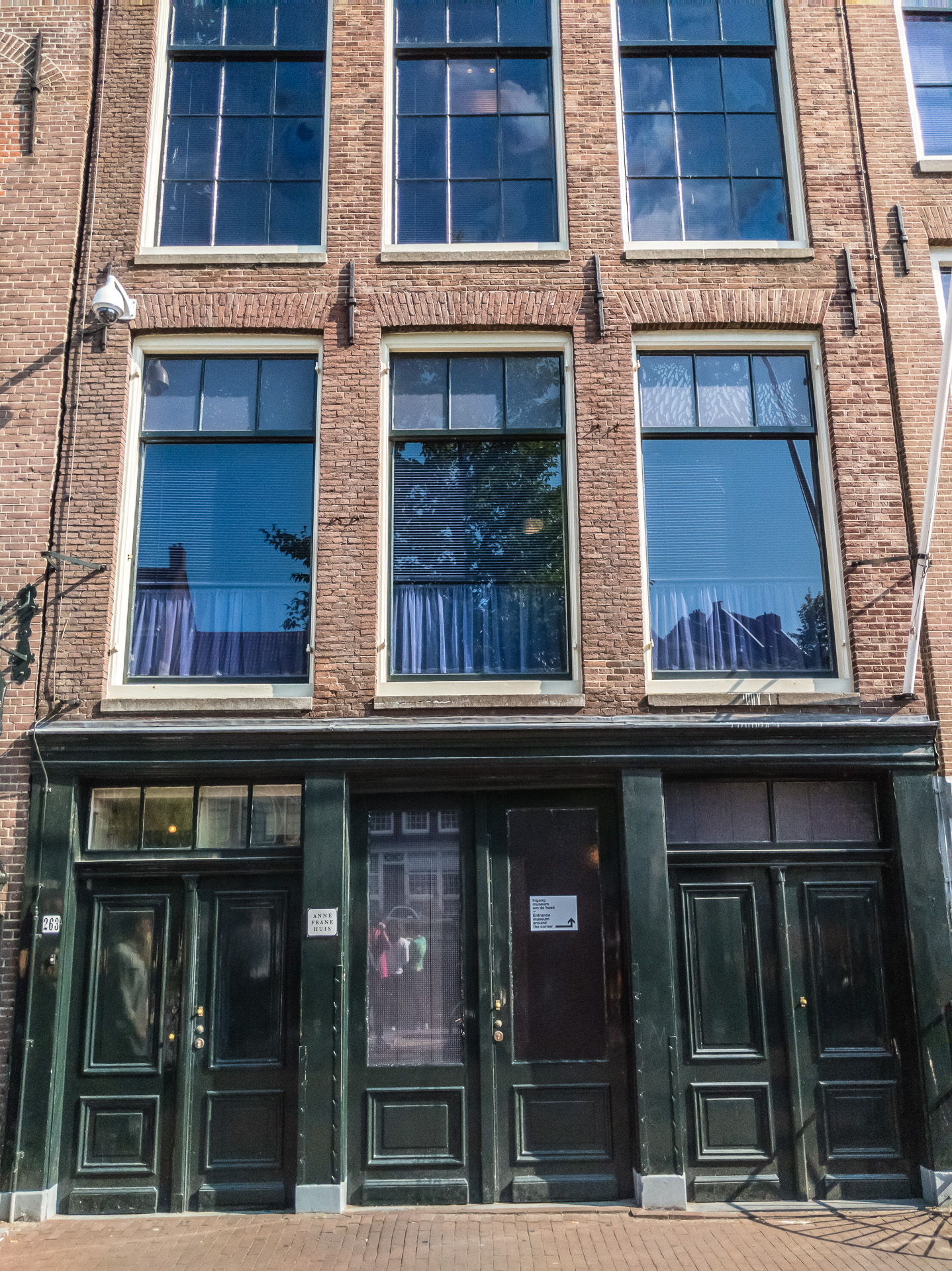
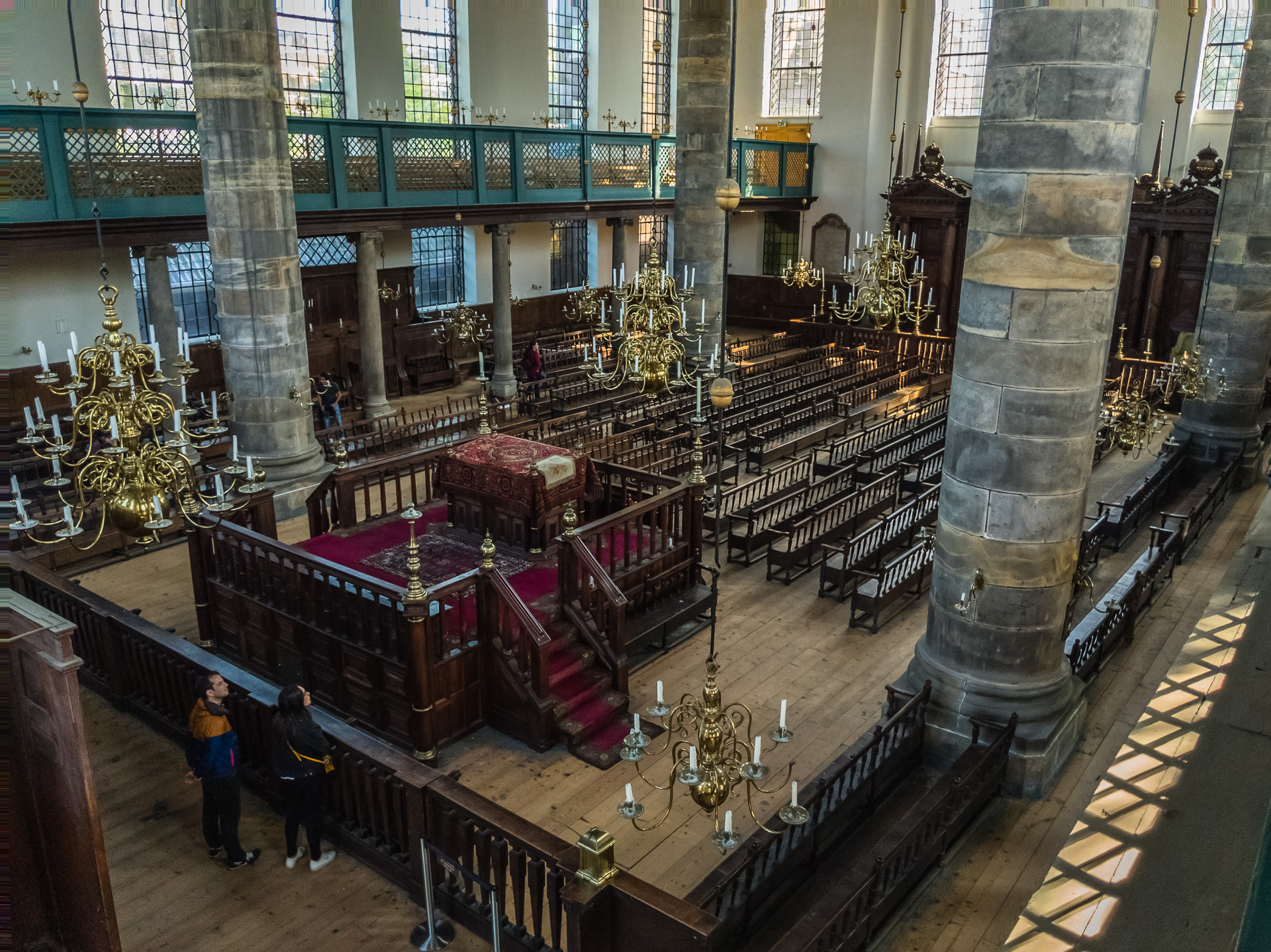
The Franks were a German family, and it was in the Portuguese Synagogue, among other sources, that we learned the Frank family was like so many other Jewish families that had been fleeing from persecution in their own countries to Amsterdam for centuries. As the Amsterdam Museum and other museums will tell you, Amsterdam prides itself on tolerance. The Portuguese Synagogue is named after the Jewish families who immigrated to the Netherlands in the 17th century when they were persecuted in Portugal and Spain. There’s so much that we don’t learn in history class. Walking through these spaces and acknowledging the events and the people that occupied them is really mind expanding.