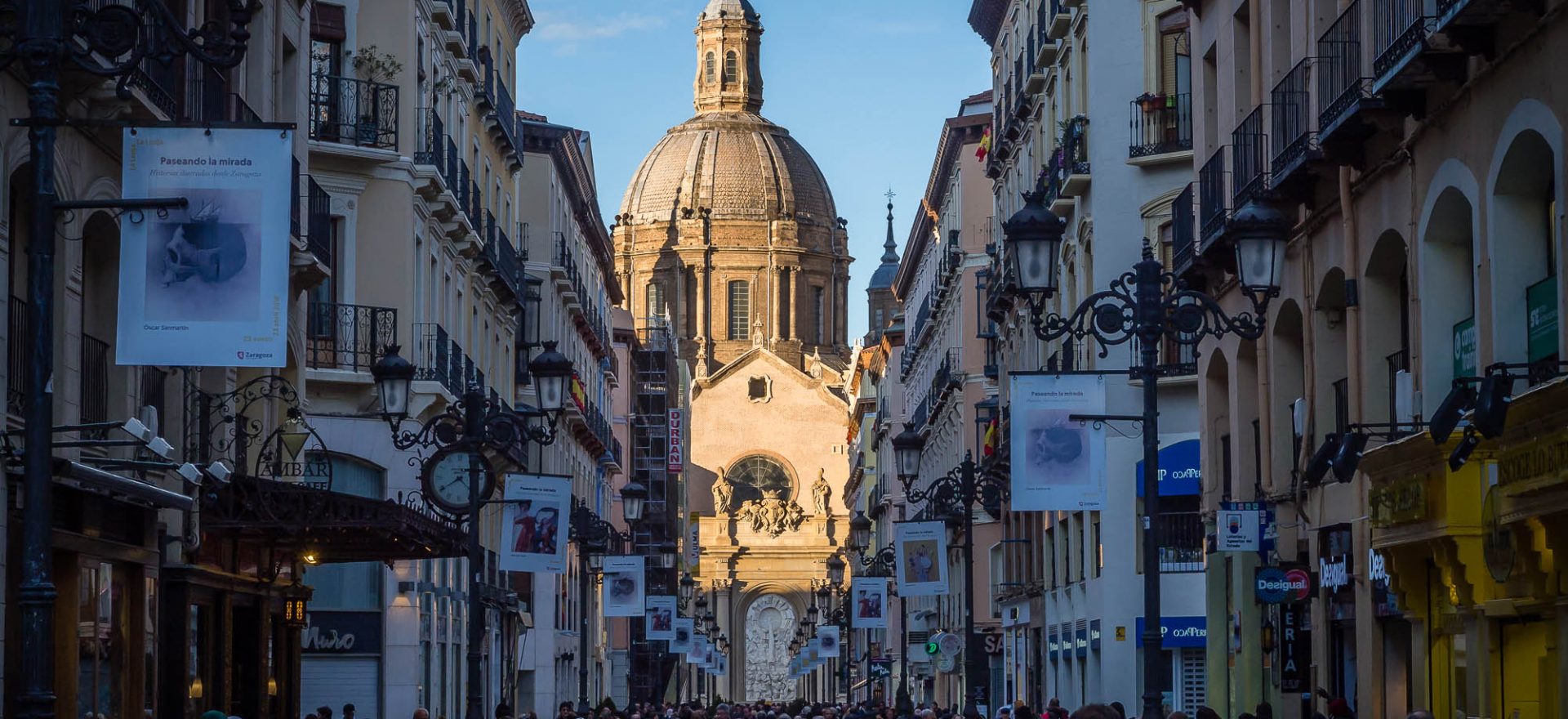
The following is a slightly edited excerpt from the trip diary that we’re keeping. We haven’t been publishing this stuff, because it‘s not terribly focused and full of what we think is uninteresting-to-everyone-else minutiae of our day-to-day experiences. But maybe it’s not uninteresting to you, so we’ll put some this stuff up and seeing what the feedback is. Let us know what you think (email or comment below)!
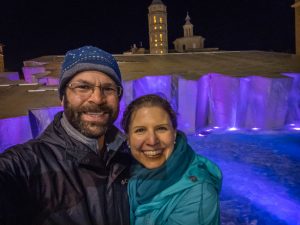
For reasons related to Airbnb discounts, Spanish bureaucracy, and a rendezvous with Meghan’s parents in April, our time in Zaragoza was short – Sunday afternoon to Tuesday morning. This made Monday (19 March) a busy one. Based on my primary aims of seeing Cathedrals (and other large places of worship, Christian or otherwise), alcazars, and Roman ruins, an agenda was set prior to our departure from Madrid. That agenda was largely driven by the fact that most Zaragoza tourist destinations are closed on Monday. I suppose that worked to our advantage by severely narrowing our options.
Cathedral-Basilica of Our Lady of the Pillar
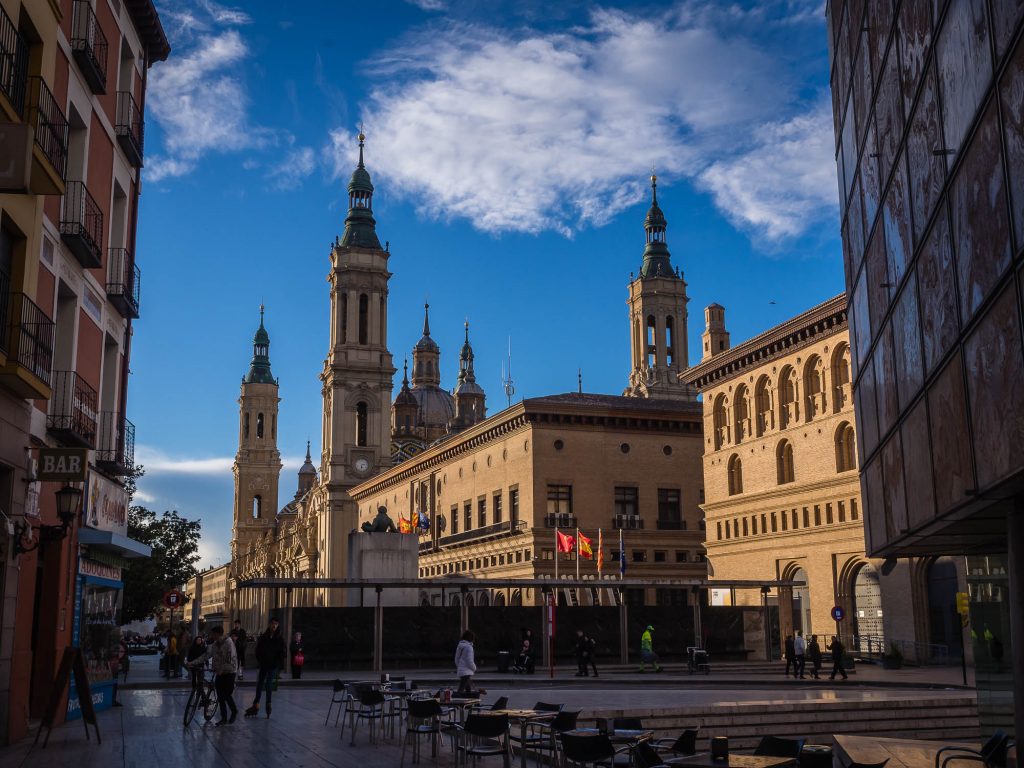
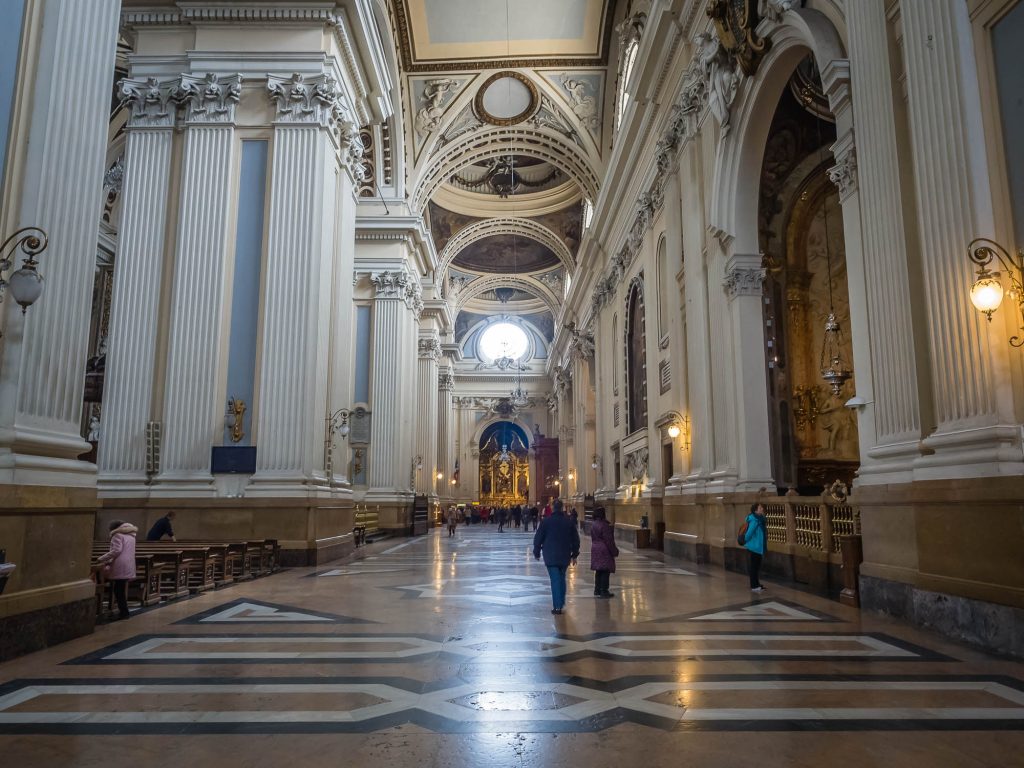
The first item on the list was technically Sunday’s visit to the La Seo Cathedral, but the first item on the first full day of touring was the Cathedral-Basilica of Our Lady of the Pillar (Catedral-Basílica de Nuestra Señora del Pilar). The “no photos” signs didn’t prevent me from taking any photos, but it did prevent my camera from being up to my face and clicking away most of the time, as is the case with most other large places of worship. The basilica is oddly shaped in that its floor plan is a rectangle instead of the more common Latin cross. The decor was mostly Renaissance with some Baroque thrown in for good measure. What was outstanding about it was the chapel behind the main chapel covered in a very ornate Renaissance dome/canopy. Mass being said when we were there, I refrained from getting any pictures.
Roman City Wall
That done, it was time to return to the apartment for lunch and sitting around during the city’s siesta until things would open again at 16:00. On the way back was the remains of the Roman city wall and a restored tower, Torreon de la Zuda, in which is one of the Zaragoza tourism offices. We climbed the stairs in the tower to the top where there is a mini-museum and mirador from which we could see various Zaragoza landmarks, bell towers, etc. Also, in the base of the tower, under a walkway and glass floor were excavated remains of the Roman wall. Why are they not advertising this gem?
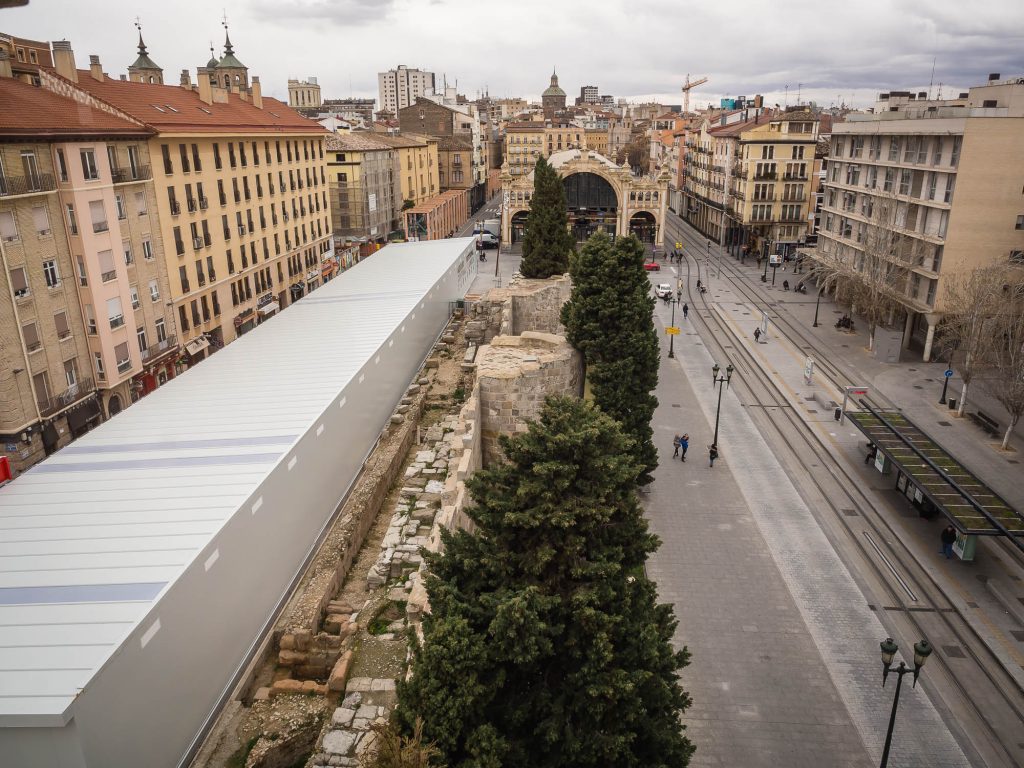
When we returned to the apartment and climbed up to the sixth floor, we were greeted by a noxious cloud of what was probably paint fumes. It was a situation made for PSAs about using aerosols only in well-ventilated areas. We opened the windows in the apartment, closed the door separating the kitchen area from the main living room, and ate briefly in the kitchen where the air was least contaminated hoping that not too many brain cells were being killed. We decided to wait out the siesta at a cafe (Cafe Botanico) with cafes and a cake/bread made with cinnamon and some spice from Africa that the proprietor described to us in Spanish – we’re still not sure.
Aljafería Palace
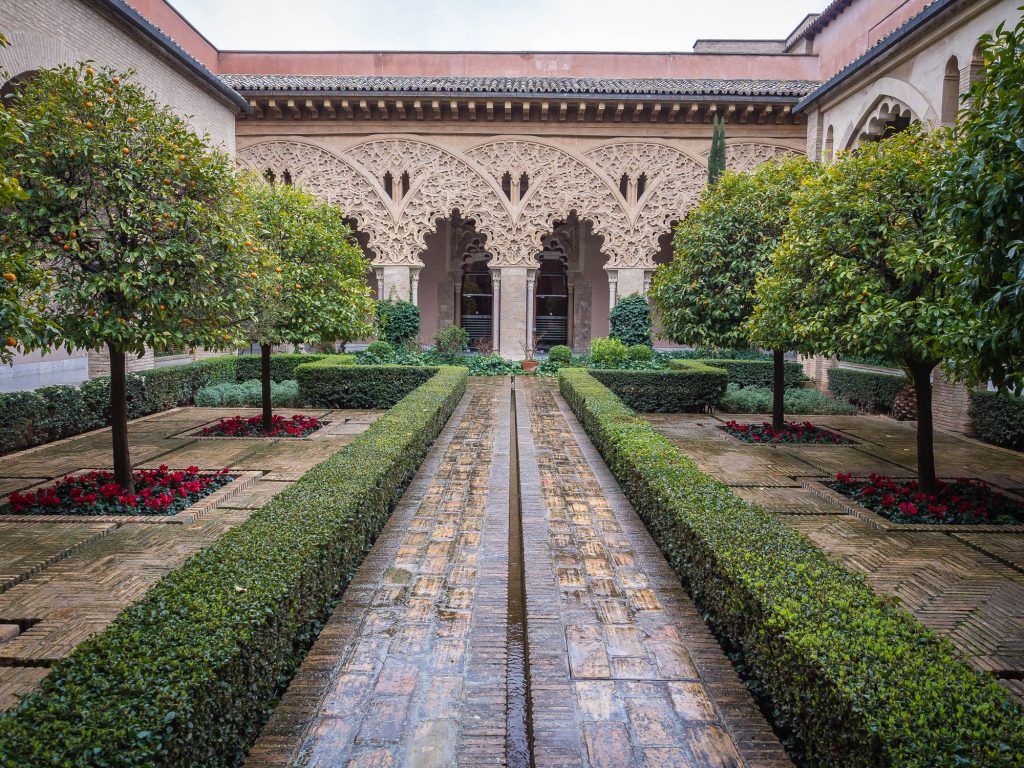
Of course because we couldn’t just hang out in the apartment, it had to rain. Nevertheless, we left the warm, dry cafe at 16:00 for the Palacio Aljafería. Initially built in the 10th century as a palace for an Islamic king, it was modified and enlarged for the Spanish monarchy, and today is the where the Argonese cortes (parliament) sits. Lots of pictures taken. Like a lot of the mudejar architecture in Spain, it was fascinating to see how the post-11th century Christians had absorbed so much of the Islamic culture that had been in Spain for about 400 years.
More Photos from Zaragoza on 19 March


Your pictures are outstanding! The angles make everything look 3D. Thanks for the background knowledge since my Spanish history isn’t so great.