We have had no problem finding delicious wines at €2-3 per bottle, although we did learn that we have been completely confused about types of Spanish wine for years. You might have known this, but Crianza and Rioja are not varieties of grapes (they are an aging indicator and region, respectively).
Whilst choosing between the €4 bottle and the €3 bottle at our local supermercado, I noticed that on the back label of a Crianza I was interrogating it mentioned the use of tempranillo grapes. What the what? After a mad dash to Google and few glasses of this Crianza-tempranillo later, we learned the following:
- When you see “Crianza,” “Reserva,” or “Gran Reserva” on a Spanish wine label, you have an indication of how long the wine has been aged.
- Crianza, rather than being a type of grape like I thought, just means oak-barrel-aged for a year and bottle-aged for a year.
- Reserva is the next step up from Crianza, and it means oak-barrel-aged for a year and bottle-aged for two years.
- Gran Reserva means two years in oak and three years in the bottle, and often the wines you see with this designation are at least 10 years old.
- If you don’t see one of these on the label, you’re drinking a young wine (vino joven).
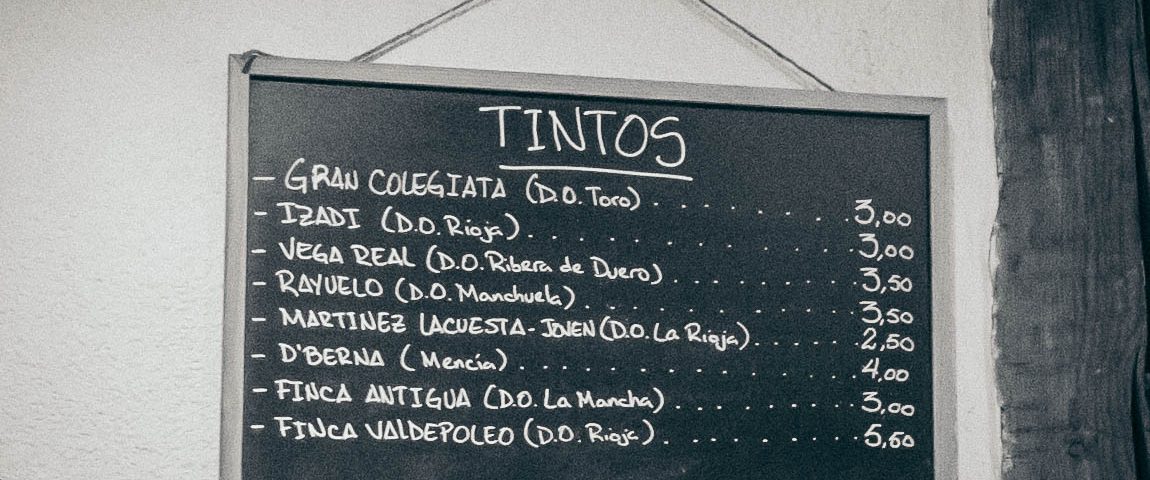
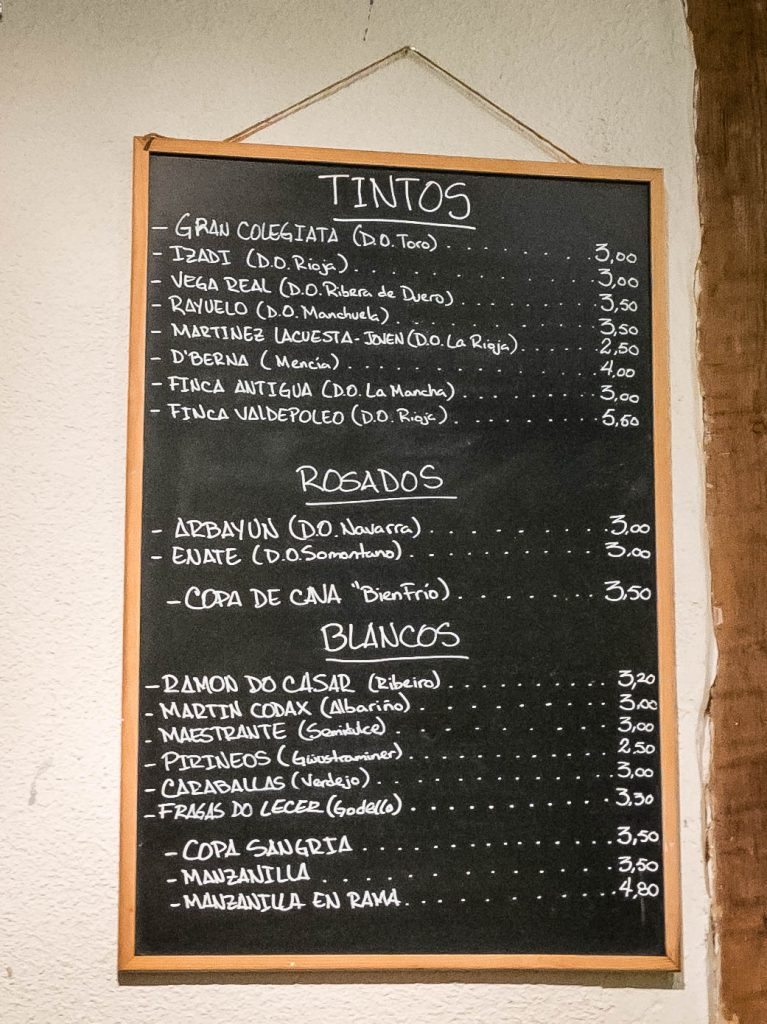
- When you see “Rioja” (or “Cava,” “Ribeiro,” “La Mancha,” “Toro,” or others), you know where the wine was produced. And this region designation is kind of a big deal, too. If you see “Denominación de Origen” (or “DO”) or “Denominación de Origen Calificada” (or “DOCa”) on the label, you know that that wine comes from a particular region in Spain, has met certain quality standards, and represents the essential characteristics of wines produced in that region. In fact, in the few places we’ve been to, you order wine by region, rather than by grape. Rather than ordering a merlot, you order a La Mancha.
Not what, but from where - If you’re drinking a red Spanish wine (vino tinto), you’re probably drinking a wine made from the Tempranillo or Granacha grape.
Let me break it down for you with some instructional aids.
Here’s our Tuesday evening a few bottles we picked up at the supermercado.
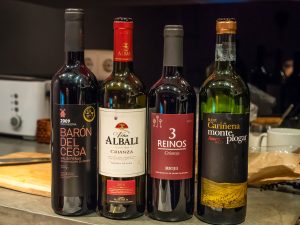
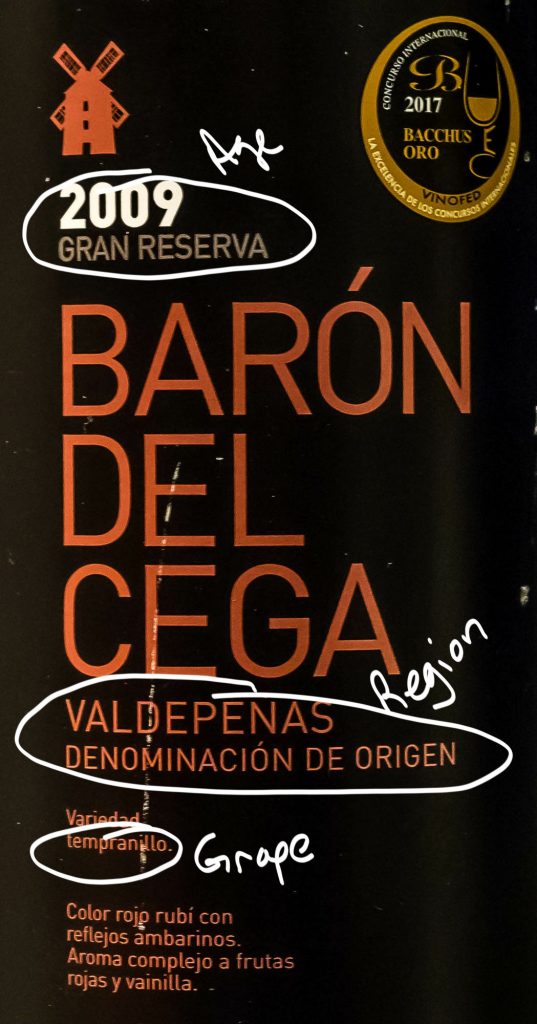
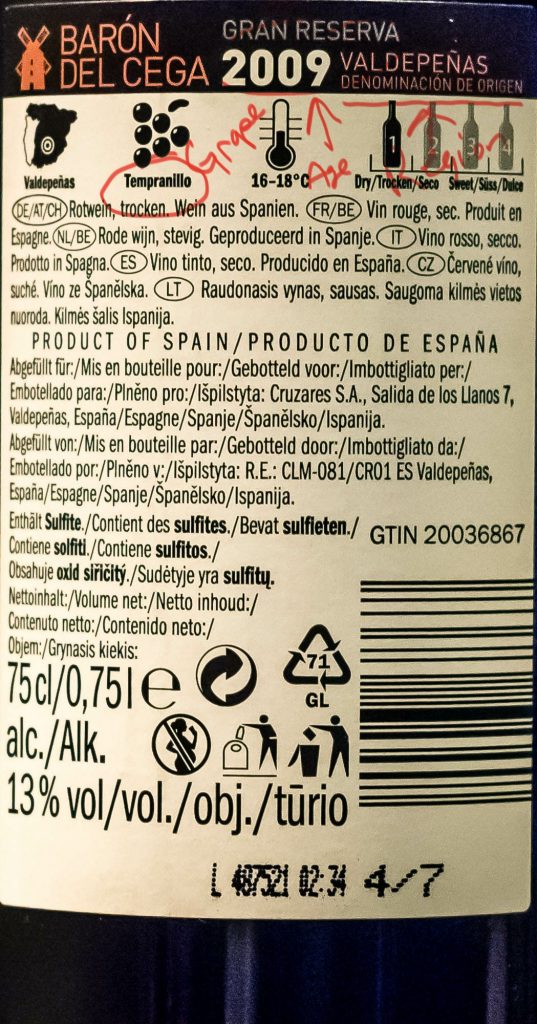
On the left is a thoughtful, if austere, drawing room of a bone warmer, Barón del Cega. This is a label that wants to you to know. Starting at the top, we see that it’s a Gran Reserva (from 2009), it comes from the Valdepeñas region, and it’s made from the tempranillo grape. Easy.
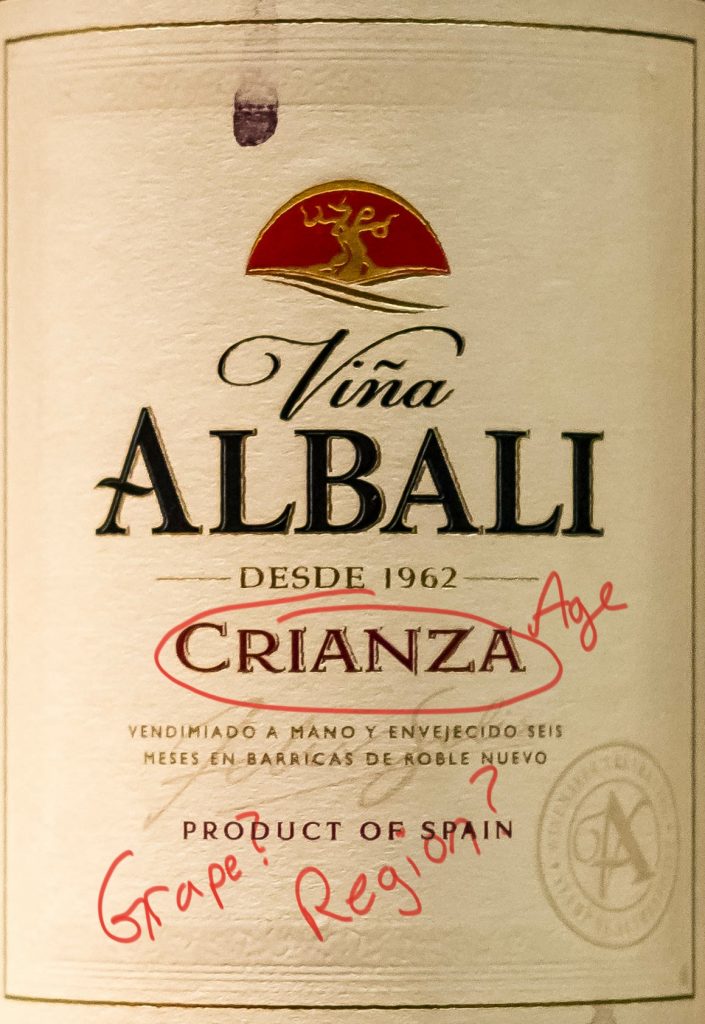
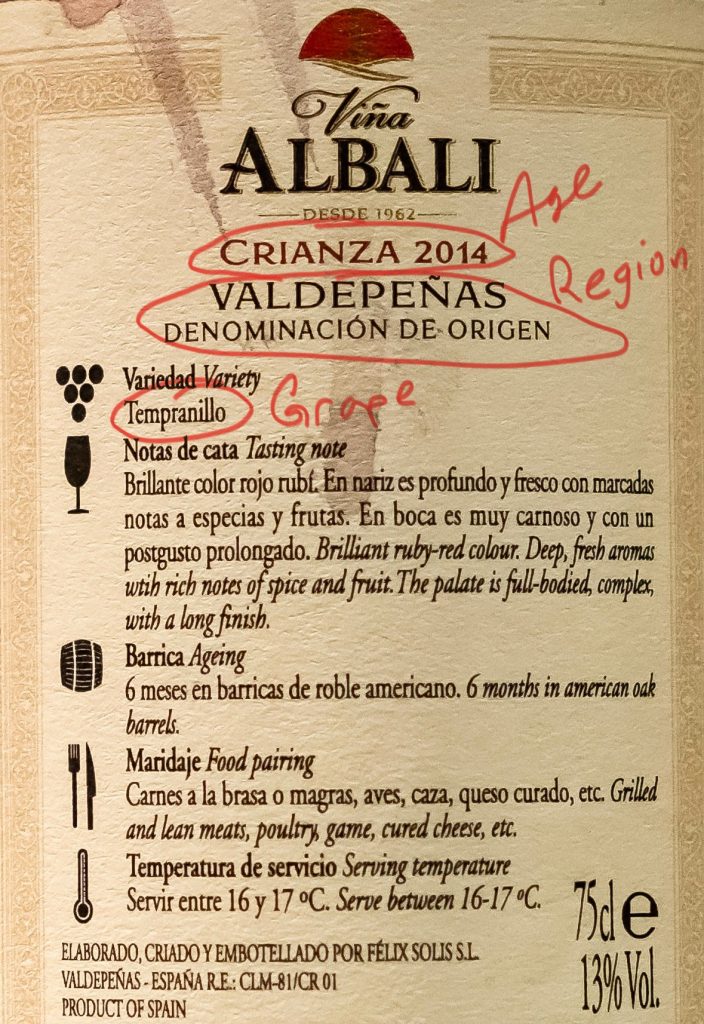
Standing confidently next to the Baron, is an offering from Viña Albali. Al, as we like to call him, is an easygoing fellow prone to politely laughing at all of your jokes – an overall amiable companion to your jamón y queso. But Al isn’t telling you all of his secrets up front. An initial inspection reveals that he is a Crianza (at least two years old) and made in Spain. You’ll have to ask him some probing questions or read the label on the back to find out more. And there he’ll gladly tell you that, like the Baron, he too is from the Valdepeñas region and also made from tempranillo grapes.
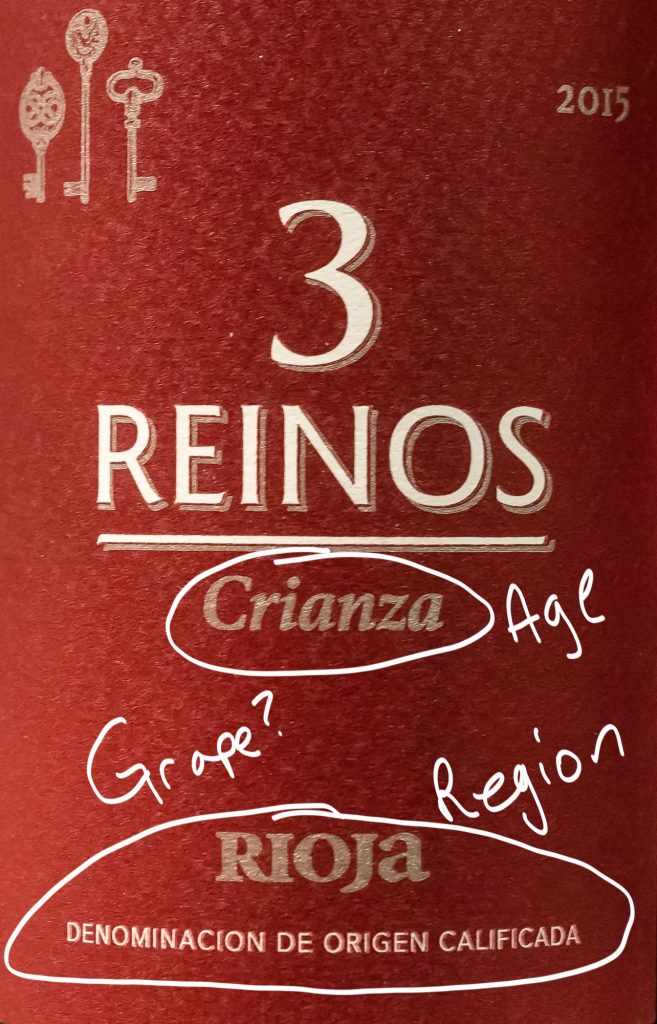
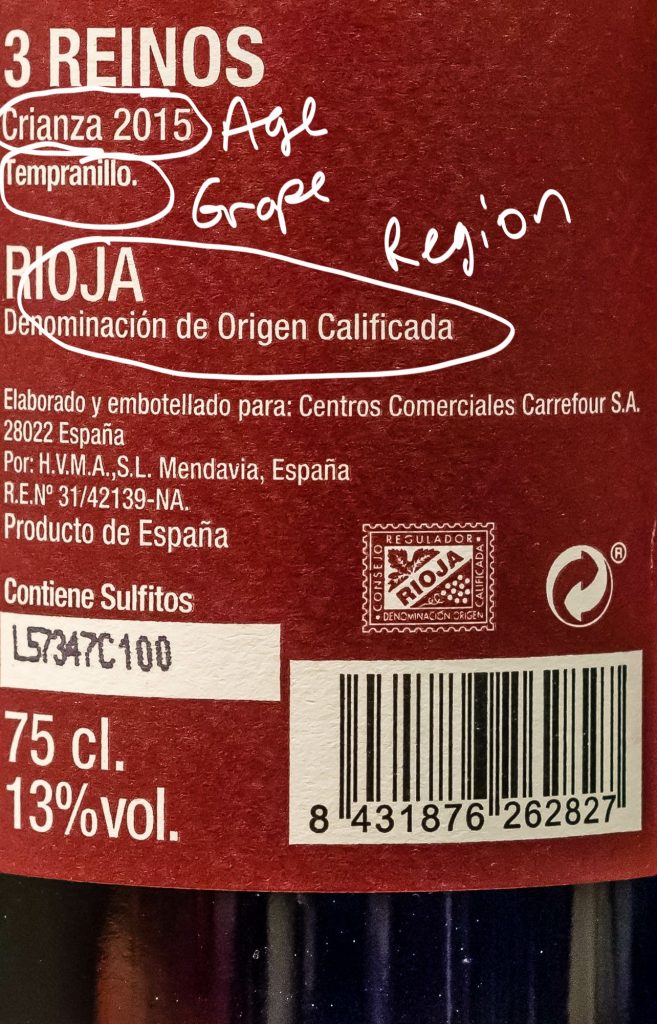
Stepping forward after Al are three kings. Unlike this wine’s name, there’s no royal presence with this one. Sure, you’d invite it to your roscón de reyes party, and might even go to its, but let’s just say you’re not making brunch plans with this mellow conversationalist. The three kings are at least two years old, being a Crianza, and they are a Rioja – a DOCa. But, you’re going to have to prod the kings into spilling their royal secret of their vegetival origin – tempranillo.
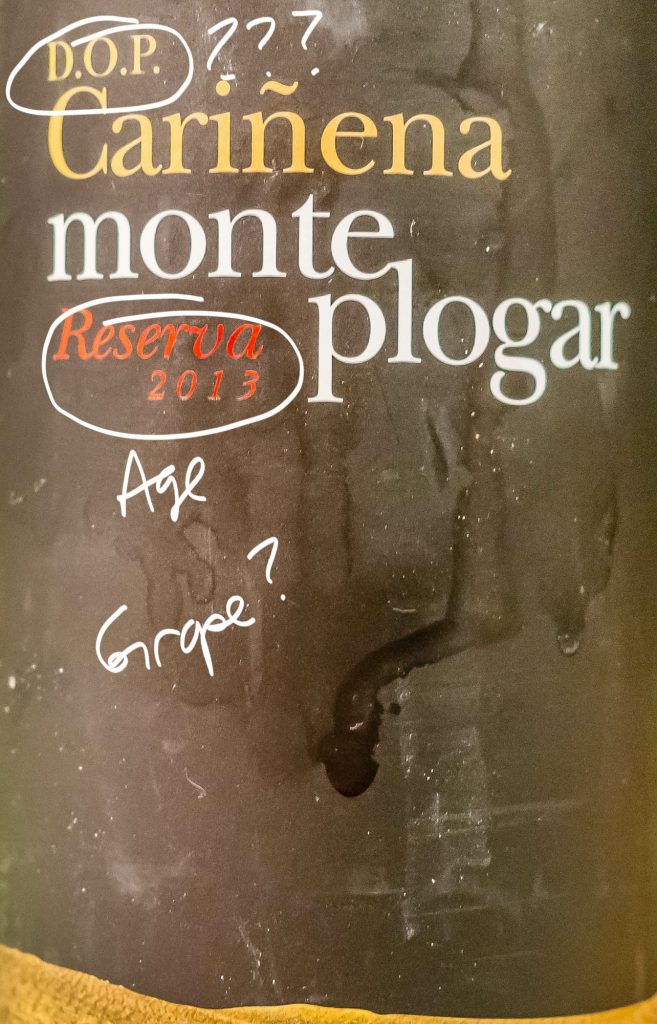
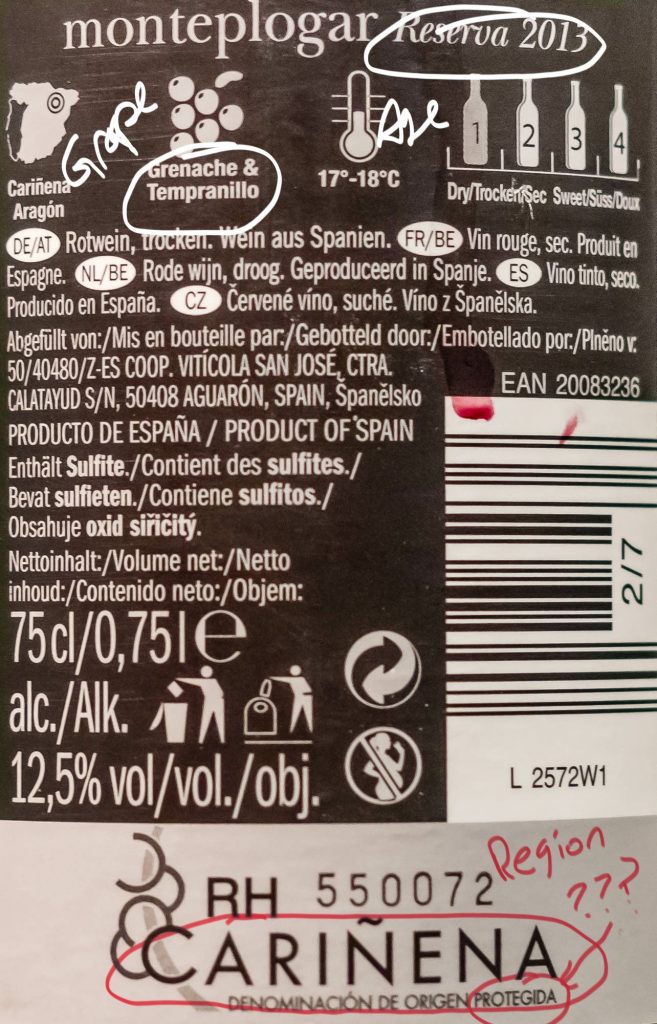
Lastly, the dour Cariñena Monte Plogar stands quietly to the side hoping you won’t notice it. This wine will never meet your gaze, but you’ll have it at your table anyway to bring its wry sense of humor and a much needed wit, as is so badly needed in these times. The label on this one-card Monte has a hidden door. Up front, you’ll quickly notice that this wine is a five-year-old Reserva, but it’s that “D.O.P” that’s going to ratte you. Turn this one around, and you’ll be pleasantly surprised to see that Monte is a granche-tempranillo, but you’ll probably be confused by the mysterious “Denominación de Origen Protegida,” or “D.O.P.” DOP happens to be an EU designation not unlike DO used to indicate a level of quality and regional origin of a food or wine. Cariñena is a DO, but I’m not sure why in this instance the DO marking is not on the label. It’s entirely possible that Monte here dropped out of Spanish DO school and earned its DOP later through the EU, denoting a similar, but not equal, promise of quality.
So, now you know that that Rioja Reserva you’re drinking is a Spanish red wine, probably from a Tempranillo grape, made in the Rioja region of Spain (northeast Spain), and aged three years.
¡Salud!
A witty education to Spanish wine! Glad you all are enjoying your time in Spain, I’m slowly catching up on your reports 🙂 Craig- I know you miss TBM, perhaps you could make a wine taxonomy!