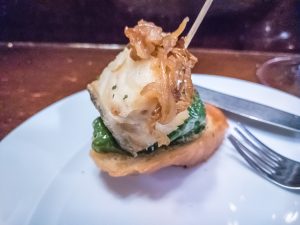
The food in San Sebastián is reason enough to visit, the gorgeous beaches and lovely buildings notwithstanding. similar to other Spanish cities, the bars and restaurants offer tapas (small plates), but here they are pintxos, and the portions are a little bigger than the standard tapas in, say, Madrid. They’re also a little more elaborate, often involving more ingredients and presented in interesting ways. At Gandarias, we tried a crab pastry, rare beef something-or-other that Craig ordered by (happy) accident, pan-fried cod, and shrimp skewers with ham.
Anchovy, Anchoa, Antxoa
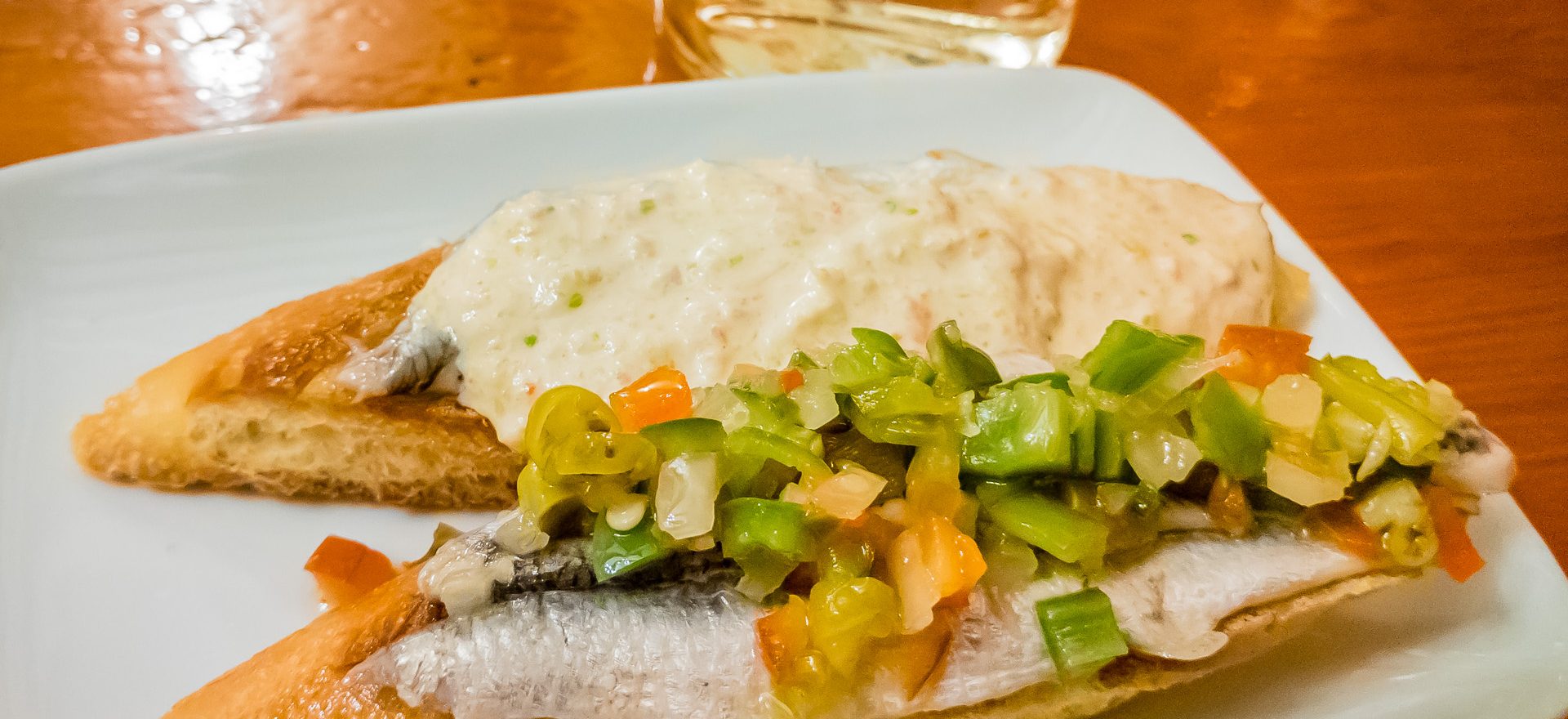
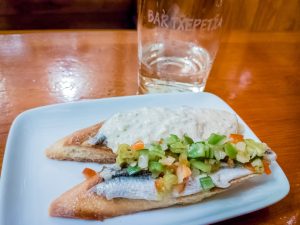
We also went to Txepetxa, a place that informed us that they are famous for their anchovy pintxos, which I believe even if it’s just for their extensive selection. Who knew you could do so many things with what my dad would probably consider bait? The other thing that was funny about this place is that they had plastic versions of their pintxos on the bar, rather than the real thing like most other places. Personally, I appreciated it from both olfactory and hygiene perspectives, but I also had to wonder how they got such great replicas of their anchovy toasts. It was also unnerving with the guy behind the bar started touching the “food” as he was explaining the options to us in a hybrid of Basque, Spanish, and English. We tried anchovies with a creamy crab sauce, with sea urchin, and with a chopped pepper mixture that looked like something you’d get on a taco in Texas and was just as tasty.
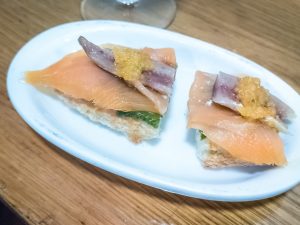
Don’t tell the famous anchovy place, but our favorite anchovy-involved pintxo was actually at a different bar, Goiz-Argi. Mari juli (which, per their menu, translates to “mari juli”) is a pintxo that involves smoked salmon and some kind of tasty sauce, and it was really nice and smoky – not very fishy at all.
Sweet & Bubbly
The other things San Sebastián is known for is txacolí and sidra. Txacolí is a slightly-bubbly white wine that is inexplicably served in large glass canisters even though the quantities are small and is poured by holding the glass at hip level and the bottle at head level. It goes well with fish, so it’s often paired with the many seafood pintxo options. It’s nice and light, and I bet it’s particularly refreshing in warmer weather. Sidra is cider, and you can travel outside the city to see where it’s made. (We did not do this.) I only tried one type of sidra, and I was underwhelmed. It’s not bad, but it wasn’t interesting in the way that English ciders are. I probably just needed to try more of the options.
Forever Tourists
Despite being in Donostia (that’s San Sebastián’s Basque name) for a week, we only went out to a few places. Remember, we’re on a budget, so most of our meals we prepared ourselves. We’re still pintxos neophytes and are remain perplexed by the pintxo system. That is, at bars, all the pintxos are arrayed on the bar on plates. The tour books say that cold pintxos you can you just pick up from the plate by its toothpick and pay by the toothpick. Hot pintxos are ordered and are served in a few minutes by the bartender. We were never brave enough to just grab food off the bar and just responded to the bartender when he or she prompted us with dígame (literally, “tell me”), and food came to us. We remain tourists, less so in Madrid, but we’re doing an odd mix of “living” in a place by staying in apartments with kitchens and doing cooking, but when we’re outside we’re tourists through and through.
More Pictures of Pinxtos in San Sebastián


