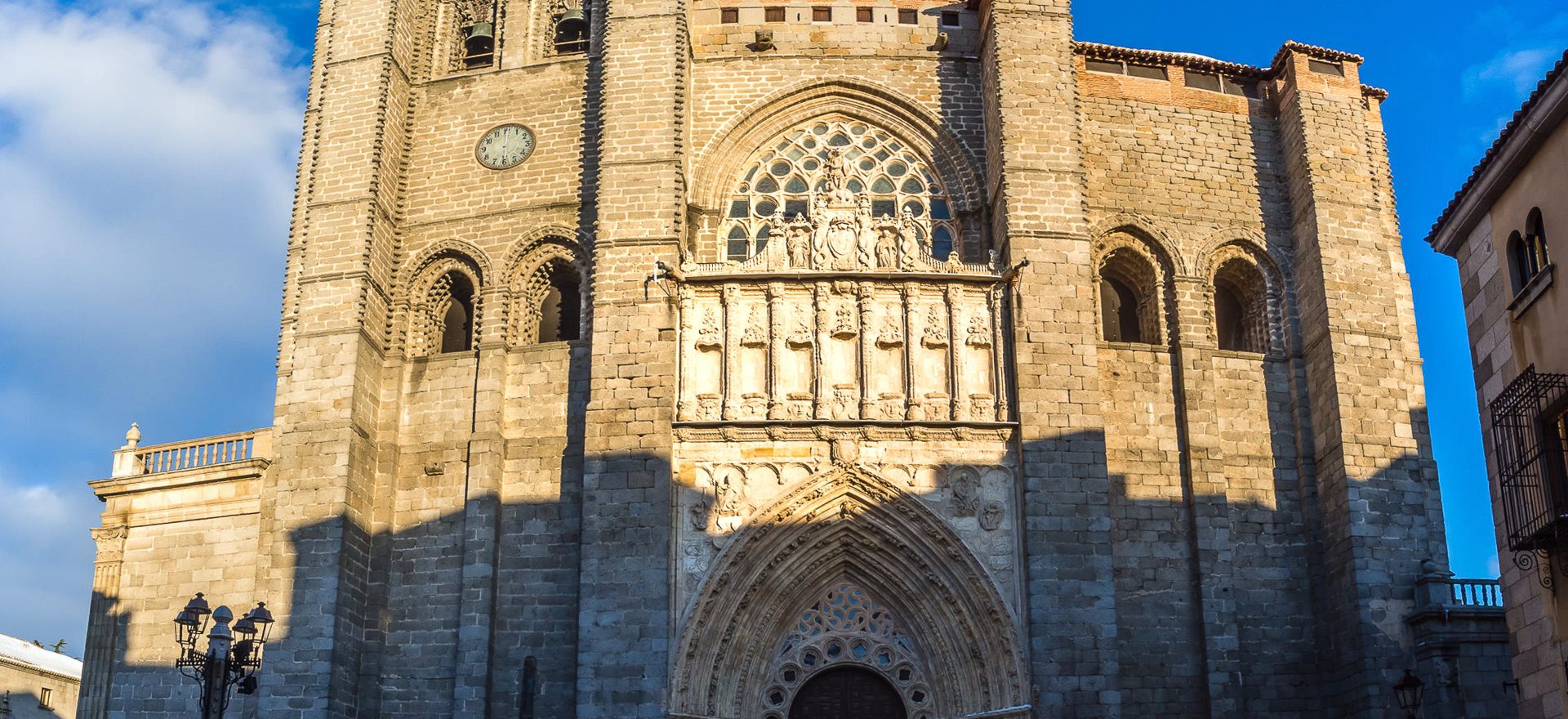
West Facade of Cathedral of Ávila (Catedral del Salvador de Ávila)
The western portal is an 18th century construction over the original Gothic entrance. Above the archivolts of the door is a balustrade with niches in which statues of local saints are placed (absent in this picture). To the right and left of the door are two club-wielding “savages” known as Gog and Magog, who, are supposed to intimidate visitors into good behavior.

The East Facade of the Cathedral of Avila (Catedral del Salvador de Ávila)
The apse is of mostly Romanesque design, but incorporates early Gothic and some Moorish influence in the horseshoe arches. But more than the interesting incorporation of Romanesque and Gothic is the melding of the militaristic and ecclesiastical in the temple. The apse of the cathedral is built into the city wall, incorporating a fortified, crenelated eastern facade.

Nave of the Cathedral of Avila (Catedral del Salvador de Ávila)
Construction began around the time the great city walls were repaired after the reconquest of Avila by Alfonso VI in 1091, and most of the cathedral was completed around 1432. After 1470, the choir was moved from the apse to the nave, and subsequent changes and fortifications were made.

Detail of the Retrochoir in Cathedral of Ávila (Catedral del Salvador de Ávila)
The cathedral’s retrochoir is a 1527 work by Juan Rodríguez and Lucas Giraldo, containing reliefs of the life of Christ.

Detail of the Retrochoir in Cathedral of Ávila (Catedral del Salvador de Ávila)
The cathedral’s retrochoir is a 1527 work by Juan Rodríguez and Lucas Giraldo, containing reliefs of the life of Christ.

Apse and Main Altar of the Cathedral of Ávila (Catedral del Salvador de Ávila)
The apse is of mostly Romanesque design, but incorporates early Gothic and some Moorish influence in the horseshoe arches. But more than the interesting incorporation of Romanesque and Gothic is the melding of the militaristic and ecclesiastical in the temple. The apse of the cathedral is built into the city wall, incorporating a fortified, crenelated eastern facade.
Depicting the life of Christ and the Virgin Mary, the main altarpiece is product of three painters, completed in 1512 after 13 years of work. The gilded frame was started by Maestro Roldán in the same year as the painting, 1499, but was completed in 1508 by Vasco de la Zarza.

Main Altarpiece in the Cathedral of Ávila (Catedral del Salvador de Ávila)
Depicting the life of Christ and the Virgin Mary, the main altarpiece is product of three painters, completed in 1512 after 13 years of work. The gilded frame was started by Maestro Roldán in the same year as the painting, 1499, but was completed in 1508 by Vasco de la Zarza.

A Panel in the Main Alatarpiece in the Cathedral of Ávila (Catedral del Salvador de Ávila)
Depicting the life of Christ and the Virgin Mary, the main altarpiece is product of three painters, completed in 1512 after 13 years of work. The gilded frame was started by Maestro Roldán in the same year as the painting, 1499, but was completed in 1508 by Vasco de la Zarza.

Choir in the Cathedral of Ávila (Catedral del Salvador de Ávila)
When the cathedral was built, the choir was in the apse, but it was moved into the nave after 1470. The stalls in the choir date from 1536, replacing the original fourteenth century stalls.

Detail of the Choir Stalls in the Cathedral of Ávila (Catedral del Salvador de Ávila)
When the cathedral was built, the choir was in the apse, but it was moved into the nave after 1470. The stalls in the choir date from 1536, replacing the original fourteenth century stalls.

Epistle Side (left when facing the main altar) Organ in the Cathedral of Ávila (Catedral del Salvador de Ávila)
When the cathedral was built, the choir was in the apse, but it was moved into the nave after 1470. The stalls in the choir date from 1536, replacing the original fourteenth century stalls.

Gospel Side (left when facing the main altar) Organ in the Cathedral of Ávila (Catedral del Salvador de Ávila)
When the cathedral was built, the choir was in the apse, but it was moved into the nave after 1470. The stalls in the choir date from 1536, replacing the original fourteenth century stalls.

Gospel (left when facing the main altar) Pulpit in the Cathedral of Ávila (Catedral del Salvador de Ávila)
Gilded and made of wrought iron, two pulpits flank the main altar. The Gospel side (left when facing the main altar) is Renaissance, while the Epistle side (right when facing the altar) is Gothic.

Souther Edge of the Ambulatory of the Cathedral of Ávila (Catedral del Salvador de Ávila)
A number of elements in the cathedral stand out. The first is the use of bloodstone (ferruginous sandstone) as construction material. The red and white swirled stones provide a noticeable decorative element to the interior. At the eastern end, there is a double ambulatory that features two sets of columns with differing designs (slender, uniform and polygonal).

Decorated Columns in the Transition from the South Transept to the Ambulatory in the Cathedral of Ávila (Catedral del Salvador de Ávila)
The Cathedral of Avila was constructed throughout an architectural transition period from Romanesque to Gothic, and is thought to be the first Gothic cathedral in Spain. Construction began on the apse in 1091, when Gothic design was in its infancy in Spain. But more than the interesting melding of Romanesque and Gothic is the melting of the militaristic and ecclesiastical in the temple.

Relief of St. George Slaying a Dragon in the Ambulatory in the Cathedral of Ávila (Catedral del Salvador de Ávila)
43198629711_0b851c9d64_b

Stained Glass in the Cathedral of Ávila (Catedral del Salvador de Ávila)
Like the transition in the design of the cathedral from Late Romanesque to Early Gothic, the stained glass in the Cathedral of Avila also follows a transition from International Gothic to Renaissance. Most of the glass dates from the 15th and 16th centuries, with only a single example from the 14th.

Stained Glass in the Cathedral of Ávila (Catedral del Salvador de Ávila)
Like the transition in the design of the cathedral from Late Romanesque to Early Gothic, the stained glass in the Cathedral of Avila also follows a transition from International Gothic to Renaissance. Most of the glass dates from the 15th and 16th centuries, with only a single example from the 14th.

Stained Glass in the Chapel of Our Lady of Grace (Nuestra Señora de Gracia) in the Cathedral of Ávila (Catedral del Salvador de Ávila)
The chapel of Our Lady of Grace (Nuestra Señora de Gracia) contains a 1497 work by Juan de Valdivieso and Diego de Santillana that is influenced by Flemish art.

Chapel of the Virgin of Piety or Sorrows (Capilla de la virgen de la piedad o de los dolores) in the Cathedral of Ávila (Catedral del Salvador de Ávila)
The white marble statue in the Chapel of the Virgin of Piety or Sorrows (Capilla de la virgen de la piedad o de los dolores) is a copy of Michelangelo's Pieta by Juan Bautista Vázquez "el Viejo", from, made in 1560.

Baptistry of the Cathedral of Ávila (Catedral del Salvador de Ávila)
The Cathedral of Avila was constructed throughout an architectural transition period from Romanesque to Gothic, and is thought to be the first Gothic cathedral in Spain. Construction began on the apse in 1091, when Gothic design was in its infancy in Spain.

Baptismal Font of the Cathedral of Ávila (Catedral del Salvador de Ávila)
The Cathedral of Avila was constructed throughout an architectural transition period from Romanesque to Gothic, and is thought to be the first Gothic cathedral in Spain. Construction began on the apse in 1091, when Gothic design was in its infancy in Spain.

Chapel of the Conception (Capilla de la Concepción) in the Cathedral of Ávila (Catedral del Salvador de Ávila)
Construction began around the time the great city walls were repaired after the reconquest of Avila by Alfonso VI in 1091, and most of the cathedral was completed around 1432. The Chapel of the Conception (Capilla de la Concepción) was added to the temple in the 16th century.

Silver Altarpiece in the Chaple of the Conception (Capilla de la Concepción)
Construction began around the time the great city walls were repaired after the reconquest of Avila by Alfonso VI in 1091, and most of the cathedral was completed around 1432. The Chapel of the Conception (Capilla de la Concepción) was added to the temple in the 16th century.

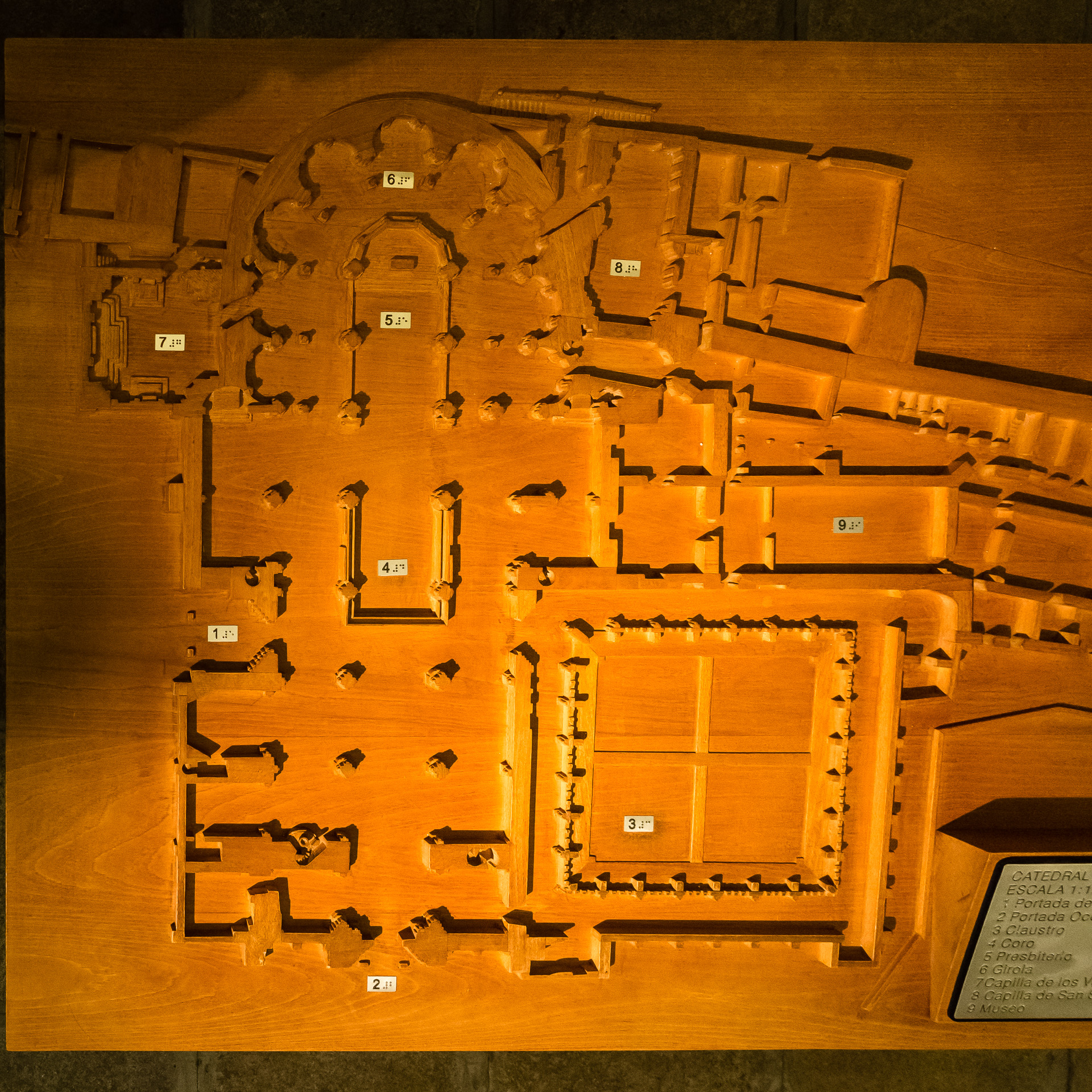
Scale Model of the Cathedral of Ávila (Catedral del Salvador de Ávila)
The Cathedral of Avila was constructed throughout an architectural transition period from Romanesque to Gothic, and is thought to be the first Gothic cathedral in Spain. Construction began on the apse in 1091, when Gothic design was in its infancy in Spain. But more than the interesting melding of Romanesque and Gothic is the melting of the militaristic and ecclesiastical in the temple. The apse of the cathedral is built into the city wall, incorporating a fortified, crenelated eastern facade.

Scale Model of the Cathedral of Ávila (Catedral del Salvador de Ávila)
The Cathedral of Avila was constructed throughout an architectural transition period from Romanesque to Gothic, and is thought to be the first Gothic cathedral in Spain. Construction began on the apse in 1091, when Gothic design was in its infancy in Spain. But more than the interesting melding of Romanesque and Gothic is the melting of the militaristic and ecclesiastical in the temple. The apse of the cathedral is built into the city wall, incorporating a fortified, crenelated eastern facade.

Scale Model of the Cathedral of Ávila (Catedral del Salvador de Ávila)
The Cathedral of Avila was constructed throughout an architectural transition period from Romanesque to Gothic, and is thought to be the first Gothic cathedral in Spain. Construction began on the apse in 1091, when Gothic design was in its infancy in Spain. But more than the interesting melding of Romanesque and Gothic is the melting of the militaristic and ecclesiastical in the temple. The apse of the cathedral is built into the city wall, incorporating a fortified, crenelated eastern facade.