Facades | Nave | Apse | Chapels | Stained Glass | Features &Details

Madrid’s cathedral is pretty new as those things go. Consecrated in 1993 by John Paul II, construction on Santa María la Real de La Almudena began in 1883, with Madrid becoming an bishopric in 1884 (later an archbishopric in 1964). The cathedral’s physical origins date back to the 11th century, as it sits on the former site of a medieval mosque destroyed in 1083 during the reconquista of Spain. The cathedral’s namesake is the Virgin of Almudena. “Almudena” derives from an Arabic word meaning “city wall.” The almudena in this case was the city walls of Madrid which miraculously crumbled to reveal a long-ago hidden icon of the Virgen.

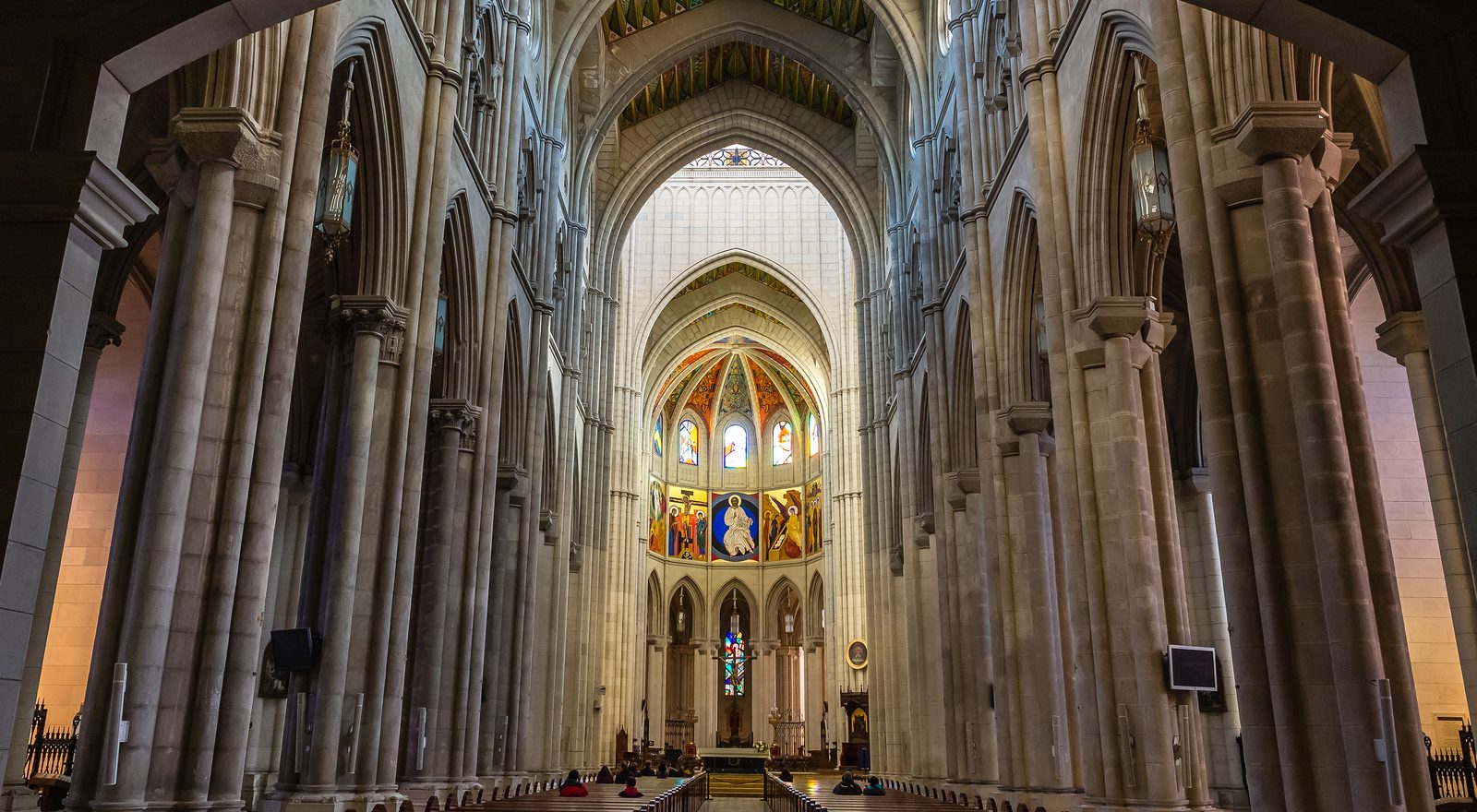
After multiple redesigns of the cathedral by a string of architects, the cathedral’s ultimate design is a duality of styles: a neo-gothic interior wrapped up in a neo-classical exterior. The Almudena Cathedral was initially designed by the Don Francisco de Cubas, Marquis of Cubas. After de Cubas’s death in 1899. It’s plans were later revised by subsequent architects. Construction was completely halted during the Spanish Civil (1936 - 1939) and didn’t resume until 1950 when architects Fernando Chueca Goitia and Carlos Sidro whose revised cathedral design won a competition for the completion of the work.
Facades


Nave


Apse


Chapels

Stained Glass


Features & Details


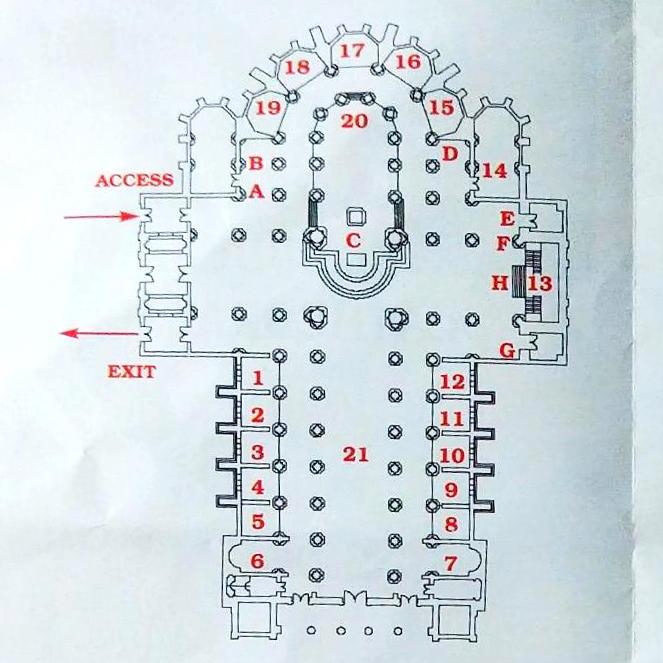
Floor Plan
All Photos


